Hardware & Components · 3 min read
A $0.20 USB GPU: Bitluni Squeezes Video Out of One RISC-V Chip
YouTuber Bitluni turned a $0.13 CH570 RISC-V microcontroller into a monochrome USB 'graphics card' worth about $0.20 in parts, driving a CRT via PWM tricks and a 24x SRAM-caching speedup.
Key takeaways
- Total component cost of the USB 'GPU' board was roughly $0.20, with the CH570 chip at $0.13.
- Moving executing code into SRAM cache made picture generation run 24 times faster.
- The design renders 34x37 characters at half vertical resolution with 16 gray levels.
- PCBs cost $15 for a pack of 10; output went to a CRT TV over improvised composite.
- USB CDC serial connectivity initially degraded the video signal until further optimization.
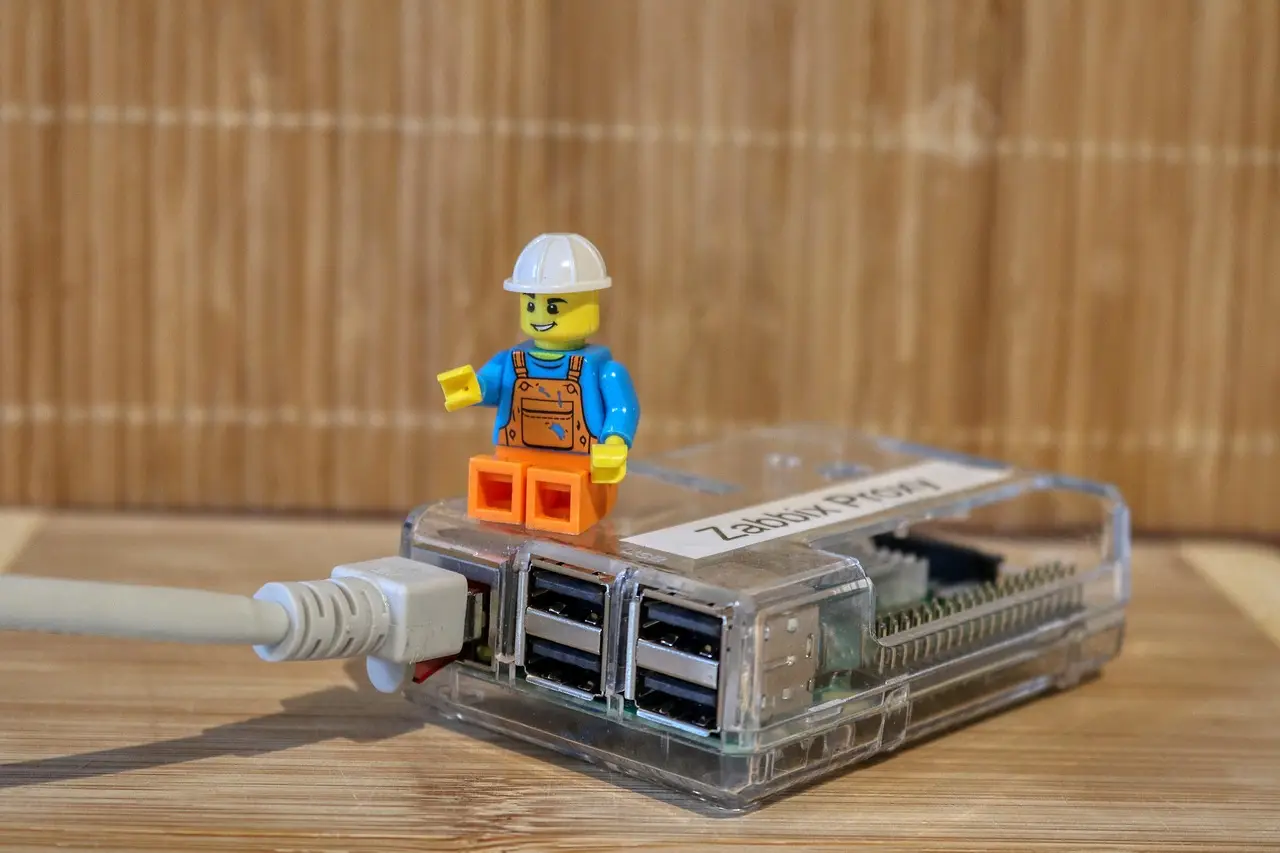
A hobbyist has built a working USB "graphics card" from roughly $0.20 of parts, with a single CH570 RISC-V microcontroller doing all the work. YouTuber Bitluni, known for low-level hardware experiments, output monochrome video to a CRT television from a board whose dearest component, the CH570 itself, costs $0.13.
The project follows his earlier VGA experiments with the CH32V003, a cheaper RISC-V part he found too limiting. The CH570's spec sheet offered twice the RAM, integrated USB connectivity and Bluetooth, so he moved to the successor chip and stripped the design down to monochrome video.
How do you build video without a DAC?
The CH570 has no digital-to-analog converter, the block that turns ones and zeros into voltage steps. Bitluni substituted a PWM signal as an improvised DAC. A pulse-width modulator flips on and off in rapid succession, and its duty cycle approximates a voltage over time. The principle is the same one behind modern Class D audio amplifiers in hi-fi, PA systems and instruments. The result here was 16 shades of gray, fewer than the 50 shades others might target, but enough for his purposes.
RAM remained the binding constraint. A full graphics frame would not fit in the CH570's limited memory, so he rendered text at half the possible vertical resolution. That was extremely slow. The fix: place the code he intended to run into the chip's SRAM cache before executing it. After that change, picture generation ran 24 times faster and supported a 34-by-37 character display.
What did the final board look like?
He moved from a development kit to a purpose-built PCB, designed with room for the CH570, a USB-C connector and assorted supporting parts:
- Board fabrication cost $15 for a pack of 10
- Total component cost was about $0.20
- The CH570 was the most expensive part at $0.13
- The RCA connection was an improvised barrel "jack" made from a couple of grooves in the board
The tiny board worked, and worked well, even with that grooved RCA "jack" pressing against the composite input of his CRT television.
With graphics running, he recreated a short Rick Astley animation on screen. It spanned only a few frames at low resolution, but the figure was clearly recognizable, which he treated as the traditional proof of completion for such builds.
What did USB connectivity cost?
The last stage used the USB connection as a serial bus via USB CDC, so that typed input could appear on the television. This took several attempts. The USB stack runs on the CH570's CPU, and the time slices it demanded ate into the video signal, degrading the output. Only after further optimization passes did the television reliably display what he typed.
A curiosity surfaced during testing: a jumper wire on his development kit acted as an improvised VHF antenna and nearly locked the television onto its signal. He reported it as a bonus observation, not a designed feature.
The whole exercise shows how far a 20-cent bill of materials can stretch when the engineer accepts monochrome output, 16 gray levels and half-resolution text. Bitluni's earlier CH32V003 work already proved a microcontroller could drive a display; this build adds USB input and a manufactured PCB to the same idea. Anyone who needs grayscale fidelity above 16 levels or full vertical resolution will still need a proper graphics chip, but for the cost of a gumball, the CH570 now demonstrably suffices for text and small animations on a CRT.
Tom's Hardware (Source)
More from Sophie Lindqvist
Show full bio
News editor covering money, funding and market shifts around Semiconductors, chip manufacturing, hardware, AI compute at Chip Dispatch.
1,376 articles