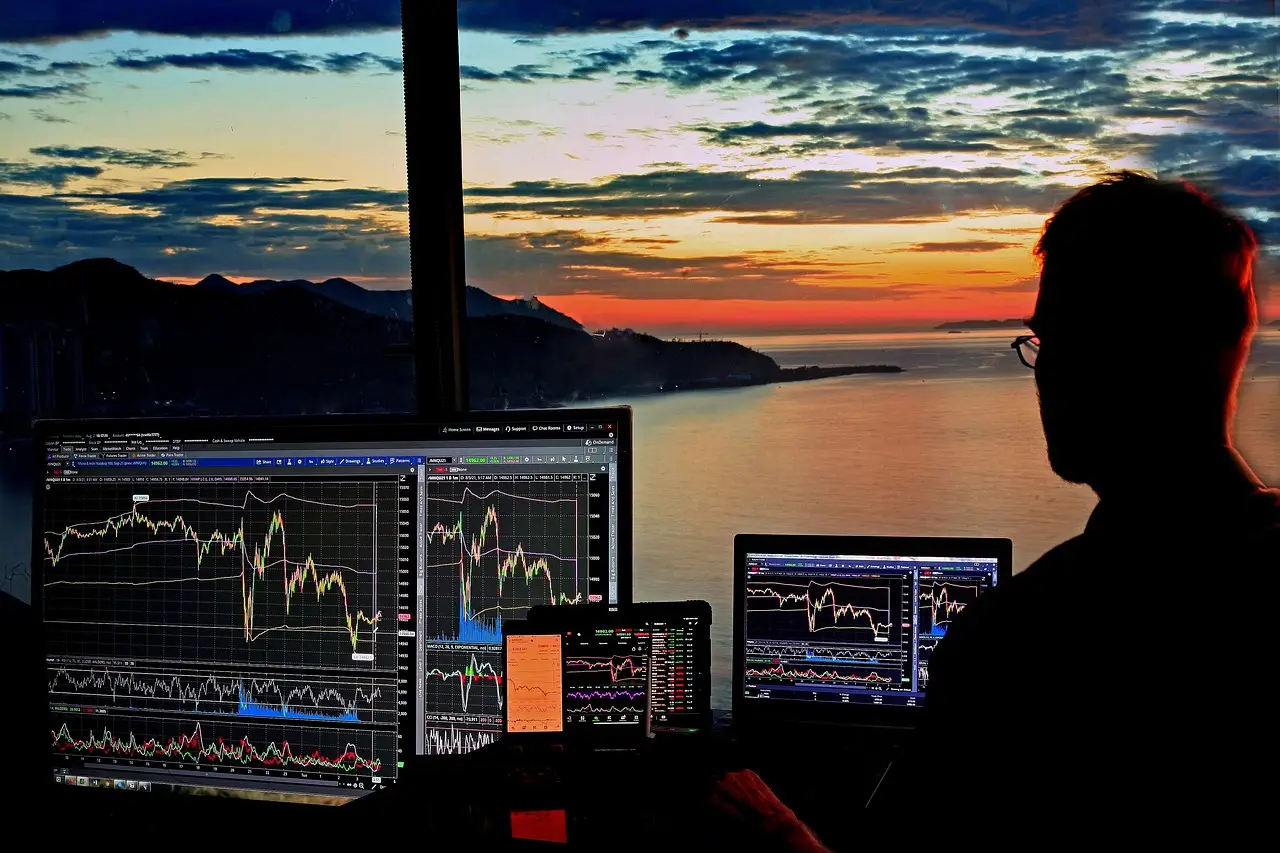
AI Stocks Face Pressure as Investors Question Future Returns
AI-linked stocks faced pressure on Nov. 9, 2026, as investors questioned returns on heavy AI spending. TD strategist Kevin Hebner expects near-term turbulence but long-term profitability.
- By
- Grace Kim
- Filed
- Channel
- AI & Compute
- Read
- 4 min read
By Grace Kim
AI-linked stocks were under pressure on November 9, 2026, as investors questioned how quickly companies will generate returns from massive artificial intelligence spending. Kevin Hebner, global investment strategist at TD Asset Management, expects short-term turbulence while maintaining that AI will likely prove profitable over the long term. The TD Wealth item carried a 3:45 p.m. ET timestamp.
What is pressuring AI-related equities?
Hebner's assessment was direct: "Tech shares are under pressure as investors question how quickly AI companies will make a return on their spending." The article ties that pressure to the scale of AI spending and uncertainty about future returns. It gives investors no spending total, revenue forecast, valuation metric, or timetable for returns.
The warning extends to broader technology shares, which could remain volatile as investors digest the political backdrop. The item presents AI development as an extended process rather than an immediate profit event. It does not assign a completion date, revenue target, or profitability target. Without a spending total or revenue forecast, investors cannot compare delivery across AI companies, even though the report presents the sector's development as an extended process.
How does the political backdrop change the trade?
The article places AI-stock volatility within a dramatically different post-midterm political landscape. Investors must digest that environment alongside questions about AI returns. The report does not identify election winners, policy changes, regulations, fiscal measures, or trade provisions.
Because the report identifies no election outcome, regulatory measure, fiscal commitment, or trade provision, readers cannot use it to quantify policy-driven changes in semiconductor demand, production capacity, equipment orders, or end-market pricing. No company-level operating forecast links those political conditions to a specific product cycle. The uncertainty remains qualitative, not a confirmed change in orders or prices.
When could returns become visible?
"Investors may see turbulence in the short term, but AI is likely to be profitable in the long term," Hebner said. His long-term view is a directional judgment, not a numerical forecast or promised return. The item does not separate hardware, software, and infrastructure companies, and it names no company as a beneficiary.
The report can therefore describe near-term pressure and long-term potential at the same time, without providing the earnings figures needed to connect those two claims. Company spending, AI adoption rates, and profit margins remain unquantified. Investors receive no evidence here for a specific hardware shipment, manufacturing capacity, or product-price forecast.
Which trading symbols appeared with the item?
The page displayed 81 ticker symbols:
- WTAI, THNQ, LRNZ, AIQ, UBOT, ARTY, ROBT, ROBO, BOTZ, ARKQ, KOMP, ARKK, DTEC, IGPT, AIBU, ALAI, SMH, XLK, IDGT, IGM, IXN, IYW, VGT, IGV, PSI, KNCT, FDN
- XSD, RSPT, PTF, FXL, XSW, BUG, TDV, XNTK, QTEC, PNQI, PSCT, NXTG, SOXX, GAMR, SKYY, SOCL, TDIV, FTEC, ARKW, HACK, CIBR, ITEQ, XITK, PRNT, FINX, SNSR, FTXL
- FITE, IZRL, BLOK, LEGR, IETC, OGIG, LOUP, QTUM, ESPO, ARKF, CLOU, IHAK, WCLD, HERO, FNGS, WUGI, TECB, ARKX, GINN, WCBR, DAPP, ILDR, SOXQ, METV, XPND, XDAT, XT
Each symbol appeared without a stated price, weighting, return, holding, or recommendation. That presentation gives readers the symbols attached to the article, but it does not establish which company or fund deserves preference based on the AI thesis.
What does TD Wealth disclose about itself?
TD Wealth described itself as an integral part of TD Bank Group. The firm reported approximately 24 million customers worldwide, 85,000 employees, and CDN $1 trillion in assets on April 30, 2015. Those figures predate the article by more than eleven years. They describe the publisher, not AI-market scale or a 2026 forecast.
TD Wealth operates through four named service groups:
- TD Direct Investing offers information, tools, and support for self-directed investing.
- TD Wealth Private Client Group provides discretionary wealth management for high-net-worth clients and businesses.
- TD Wealth Private Investment Advice provides full-service brokerage with tailored advice and solutions.
- TD Wealth Financial Planning develops and implements financial plans for individual clients.
The firm also says clients and advised investors can access investment analysts, economists, and market strategists. It provides no AI-fund size, performance, holdings, or return figure. The disclosure establishes the publisher's institutional reach, while leaving the more relevant AI spending, revenue, profitability, and market-performance measures entirely unspecified for investors evaluating the thesis.
Over coming reporting cycles, investors will judge AI companies' competitive positions by when spending produces visible returns; the source gives no capacity, pricing, or earnings deadline.
Source: seekingalpha.com
More from Grace Kim
Show full bio
Market editor covering people, launches and day-to-day practice in Semiconductors, chip manufacturing, hardware, AI compute at Chip Dispatch.
805 articles
Related articles
ai-infrastructure-reset-tests-semiconductor-investment-cycle
AI Infrastructure Reset Tests Semiconductor Investment Cycle
ai-compute-demand-holds-strong-as-chip-stocks-stay-bullish-16e9cbc7
AI Compute Demand Holds Strong as Chip Stocks Stay Bullish
tsmc-posts-surging-profit-while-ai-stocks-extend-decline-828a5c8a
TSMC Posts Surging Profit While AI Stocks Extend Decline
kkr-warns-investors-that-ai-debt-is-piling-up-faster-than-returns-90b2cf4f
KKR Warns Investors That AI Debt Is Piling Up Faster Than Returns