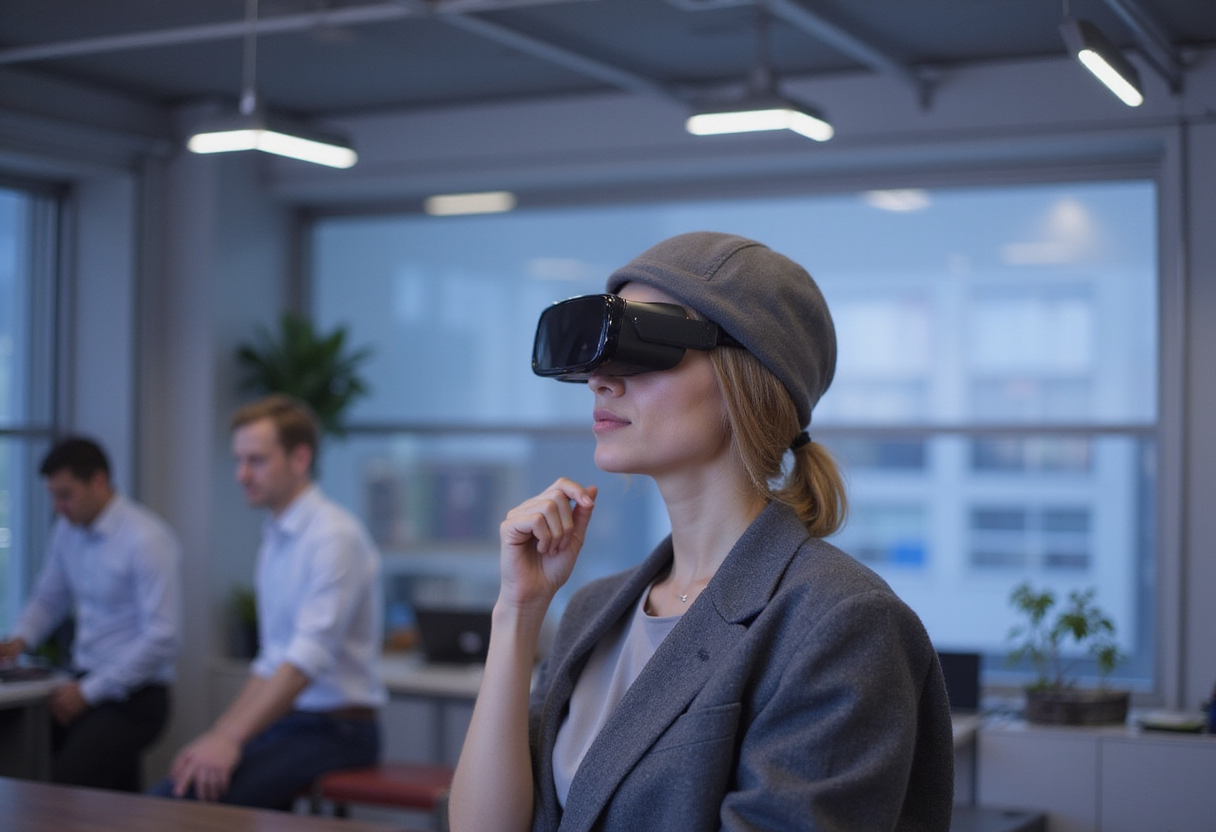
Alibaba Enters Smart Glasses Race With Qwen AI Wearable Aimed at Meta
Alibaba has unveiled Qwen-branded AI smart glasses built to compete with Meta's smart eyewear lineup. Pricing, chipset, and launch date remain undisclosed in the initial report.
- By
- Grace Kim
- Filed
- Channel
- Consumer Tech
- Read
- 3 min read
Alibaba has unveiled Qwen-branded AI smart glasses built to compete with Meta's smart eyewear lineup. Analytics India Magazine reported the launch. The Chinese cloud and commerce group did not disclose pricing, specifications, or a release date.
The Qwen brand currently anchors Alibaba's large language model and enterprise AI services. Applying that name to a wearable signals an intent to push the platform beyond cloud APIs into consumer devices. The move places a Chinese internet major inside a category Meta defined.
Alibaba's cloud business ranks among the top three in China, alongside Tencent Cloud and Huawei Cloud. Extending Qwen into a wearable gives the brand a consumer surface independent of cloud API contracts. That retail channel carries strategic value as US chip export controls constrain Alibaba's access to leading AI accelerators for data center training.
What does Alibaba's entry change for Meta?
Meta has set the commercial pace for AI eyewear since 2021. Its Ray-Ban Stories product, built with EssilorLuxottica, opened the category. The follow-up Meta Ray-Ban Smart Glasses, released in 2023, added Meta AI integration and outsold its predecessor on shipments.
That product line remains the volume benchmark for AI eyewear outside Apple's Vision Pro headset category, putting Alibaba's offering against the most established consumer AI wearable sold at scale today.
What details did the initial report leave out?
Analytics India Magazine's coverage did not name a chipset supplier. The article did not specify battery capacity, display type, weight, or wireless chipset. A retail partner, manufacturing partner, and launch date also went undisclosed.
Pricing for the Qwen smart glasses was absent from the coverage. That disclosure pattern signals a positioning announcement rather than a commercial launch event, where hardware makers typically publish component, pricing, and retail channel information in a single press release.
What silicon stack typically anchors smart glasses?
Mobile application processors from Qualcomm or MediaTek drive most AI eyewear products. Wi-Fi and Bluetooth combo radios handle wireless connectivity. Camera image sensors from Sony, OmniVision, or Samsung System LSI record video and stills. Micro OLED or LCoS panels drive display output where included.
Audio amplifiers feed speakers or bone-conduction drivers. Alibaba has not confirmed any of those suppliers for the Qwen glasses. That choice carries strategic weight under current US export controls, which restrict shipments of advanced AI and 5G chips to Chinese firms seeking to run large model inference locally.
What does the launch signal for Alibaba's AI roadmap?
The launch extends Qwen from cloud software into consumer electronics. The brand now reaches a new form factor. Alibaba's earlier consumer hardware efforts, including the Tmall Genie smart speaker line, did not carry the Qwen name and did not generate meaningful consumer mindshare.
The Qwen smart glasses will test whether Alibaba pairs the device with cloud-routed AI queries or commits to on-device inference, a decision that determines silicon choice, export control exposure, and battery drain profiles.
What comes next?
Alibaba has not published a release window for the Qwen smart glasses. Component suppliers remain unnamed. Industry observers will watch whether Alibaba follows Meta's lead and pairs its eyewear with a global fashion brand.
The Qwen smart glasses will face the same commercial test as Meta's Ray-Ban product, where adoption beyond the early adopter pool depends on style, comfort, battery endurance, and price relative to competing AI eyewear products already in stores. Competitive pressure on Meta's Ray-Ban product will sharpen once Alibaba releases specifications and places the product in retail channels inside China.
Source: Google News: AI chips
More from Grace Kim
Show full bio
Market editor covering people, launches and day-to-day practice in Semiconductors, chip manufacturing, hardware, AI compute at Chip Dispatch.
463 articles
Related articles
alibaba-claims-most-powerful-ai-chip-in-china-as-beijing-races-washington-a8128154
Alibaba Claims 'Most Powerful AI Chip in China' as Beijing Races Washington
qualcomm-poised-to-supply-custom-ai-chips-to-amazon-bloomberg-reports-81a13f6f
Qualcomm Poised to Supply Custom AI Chips to Amazon, Bloomberg Reports
alibaba-unveils-new-chip-signals-expanded-ai-model-ambitions-dc4fda4d
Alibaba Unveils New Chip, Signals Expanded AI Model Ambitions
china-weighs-letting-alibaba-buy-nvidia-rtx-chips-amid-ai-shortage-45e4f210
China Weighs Letting Alibaba Buy Nvidia RTX Chips Amid AI Shortage