Analyst: Musk's Terafab Vision Is No Near-Term Problem for TSMC
An analyst assessment reported by Focus Taiwan finds no short-term threat to TSMC from Musk's Terafab concept, which currently exists without a site, budget, or node.
- By
- Nathan Brooks
- Filed
- Channel
- Chip Manufacturing
- Read
- 3 min read
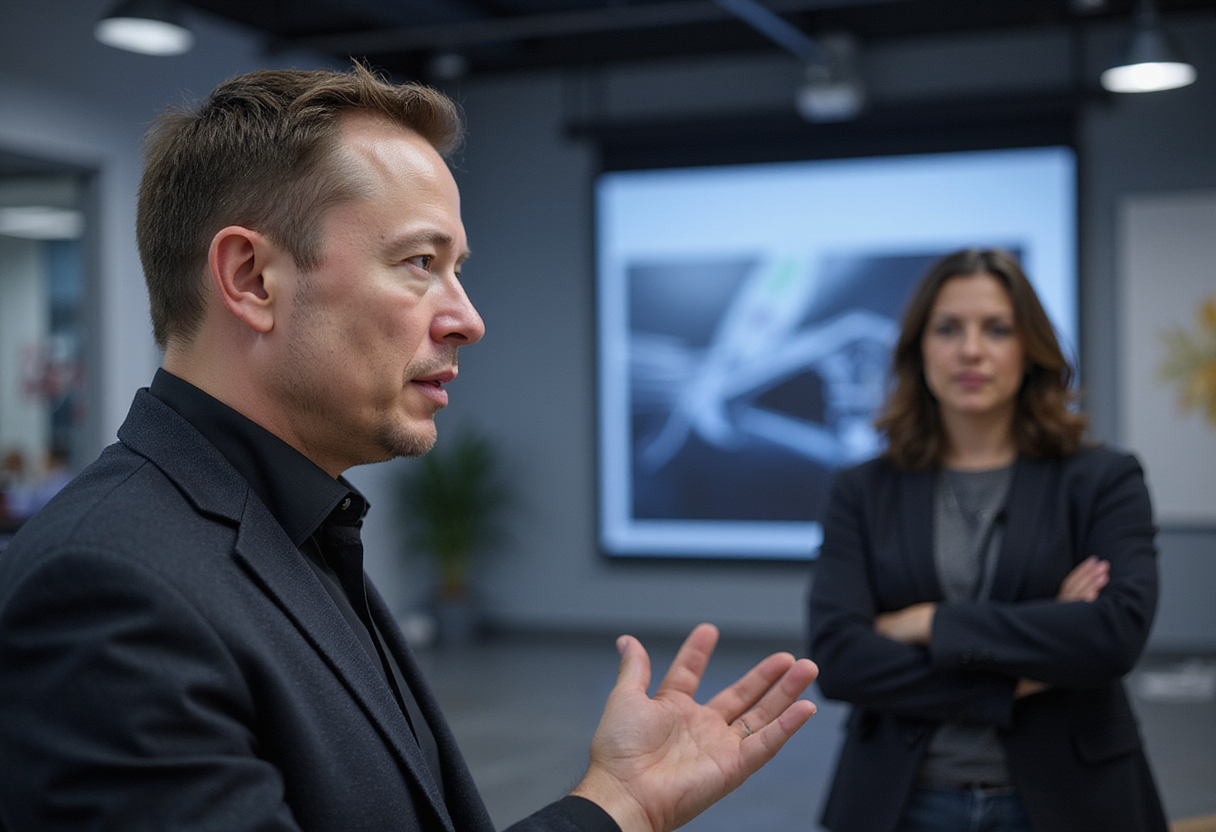
Elon Musk's "Terafab" concept poses no short-term threat to TSMC, according to an analyst assessment reported by Focus Taiwan. That is the whole verdict, and it is worth stating plainly before the speculation begins.
The claim itself is not new theatre. Musk has floated the idea of chip plants so large and so automated that they would produce at a scale the industry currently associates with entire corporate fleets rather than single sites. The word "tera" does the heavy lifting. It suggests output measured in trillions of something, and it sounds impressive precisely because nobody has built one.
What does the analyst view actually say?
The judgment, as relayed by Focus Taiwan, is narrow: whatever the Terafab becomes, it will not dislodge TSMC's position in the near term. The reasoning behind such calls usually rests on arithmetic rather than opinion.
- Leading-edge fabs take years to build and qualify before the first revenue wafer ships.
- Process leadership at the advanced nodes requires sustained R&D spending that few balance sheets can absorb.
- TSMC's customers are already contracted around its capacity roadmap.
None of these points appears spelled out in the report itself. The report gives the conclusion. The mechanics are the industry's standard explanation for why it holds.
Why scale alone does not win
TSMC's advantage is not merely that it operates large fabs. It operates a chain of them, tied to a process cadence that customers plan product launches around. A competitor announcing a bigger building does not interrupt that cadence.
The comparison that matters: a foundry relationship resembles a marriage more than a purchase. Customers commit architectures, design libraries, and verification schedules to a specific process family. They do not relocate that commitment because someone drew a larger floor plan.
An analyst calling no short-term threat is, in effect, saying the marriage holds. The paperwork, the tooling, and the qualification cycles all bind TSMC's clients to Taiwan for the planning horizon that matters to investors.
Does the long term look different?
The word "short-term" in the analyst's framing does the quiet work. It leaves open the possibility that a decade-scale challenge could materialise if the Terafab concept ever left the slide deck.
That is a large conditional. Musk's manufacturing ventures have delivered, but on timelines that tend to slip against their original announcements. Chip fabrication punishes slippage more severely than car assembly, because a late fab does not merely miss demand; it misses a process generation.
There is also the question of what a Terafab would even produce, for whom, and on which node. None of those details accompanies the concept as reported. A plan without a node, a customer list, or a site is a hypothesis wearing a hard hat.
The commercial picture for TSMC
For TSMC's investors and customers, the practical reading is simple. Capacity planning, pricing negotiations, and allocation decisions for the next several cycles proceed as if the Terafab does not exist, because commercially it does not.
The competitive dynamics that actually set TSMC's near-term fortunes remain the familiar ones: demand for leading-edge capacity, the capital cost of each new process generation, and the pace at which rival foundries close the gap. Musk's concept touches none of those levers this year or next.
The analyst's bottom line stands as reported: no short-term threat. Whether the long term produces a different answer depends entirely on whether the Terafab acquires concrete details — a location, a budget, a process target — that would let the market price it in.
Source: Google News: TSMC
More from Nathan Brooks
Show full bio
Senior reporter covering people, launches and day-to-day practice in Semiconductors, chip manufacturing, hardware, AI compute at Chip Dispatch.
492 articles
Related articles
musk-rules-out-tsmc-operational-role-at-terafab-chip-plant-30fbece1
Musk Rules Out TSMC Operational Role at Terafab Chip Plant
tsmc-shares-hit-record-as-musk-confirms-early-terafab-talks-57032016
TSMC Shares Hit Record as Musk Confirms Early Terafab Talks
musk-bars-tsmc-from-texas-terafab-semiconductor-project-66372cbc
Musk Bars TSMC From Texas Terafab Semiconductor Project
spacex-tsmc-in-terafab-talks-as-musk-renames-ai-arm-to-spacexsi-d41608c5
SpaceX, TSMC in 'TeraFab' Talks as Musk Renames AI Arm to SpaceXSI