Startups & Funding · 3 min read
Avicena Raises Over $100 Million to Replace Chip-to-Chip Lasers With microLEDs
Avicena raised over $100 million in a Series C led by InterVest to commercialize LightBundle, a laser-free microLED interconnect for AI chips. 1 Tbps evaluation kits shipped in August 2026; first product is due next year.
Key takeaways
- Avicena raised over $100 million in Series C funding led by InterVest, announced Nov. 24.
- 1 Tbps LightBundle evaluation kits began shipping in August 2026; first product expected next year.
- SK hynix Ventures, Samsung Catalyst Fund and AMD Ventures are among the investors.
- Series B of $65 million led by Tiger Global in May 2025 brought total funding to $120 million.
- Kevin Pope succeeds Marco Chisari as chief executive.
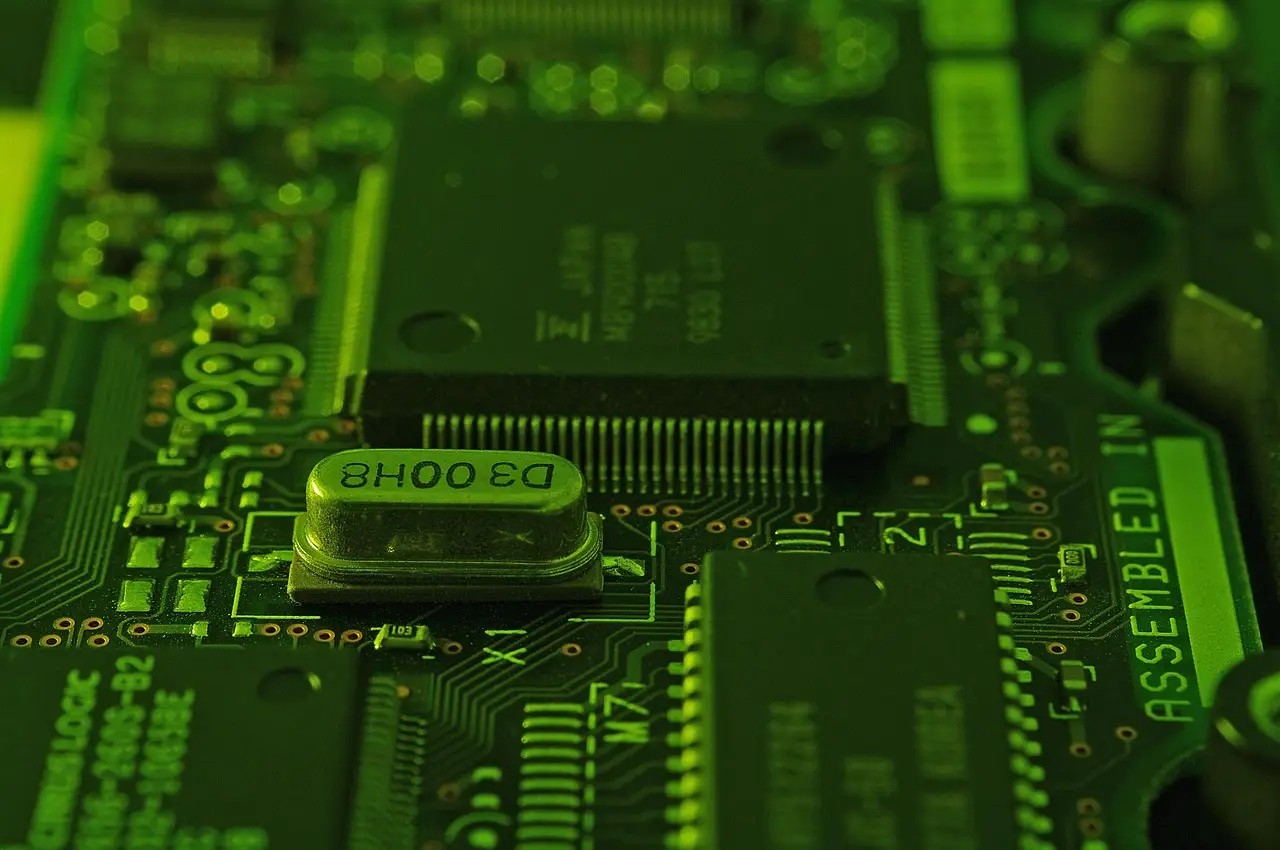
Avicena has raised over $100 million in Series C funding to commercialize LightBundle, an optical chip interconnect that uses microLED arrays instead of lasers. South Korea's InterVest led the round, the Sunnyvale, California, startup announced on Nov. 24.
The investor list reads as a map of the memory and accelerator supply chain. SK hynix Ventures, Samsung Catalyst Fund, AMD Ventures, Tiger Global, Cerberus Capital Management, Prosperity7 Ventures, Mitsubishi Chemical's Diamond Edge Ventures and Hitachi Ventures all participated. InterVest director John Dongwoo Ha joins Avicena's board.
The company also named Kevin Pope as chief executive, succeeding Marco Chisari. The Next Web reported the new capital will fund hiring, product development and engineering.
What does LightBundle replace?
LightBundle moves data between chips through dense microLED arrays and silicon photodetectors linked by multicore fiber. No lasers sit on the link. Avicena calls the architecture "wide-and-slow": bandwidth spreads across many lower-speed channels rather than a few fast ones, which the company says reduces the need for heavy data-rate conversion and complex signal processing.
Because the design needs no lasers, Avicena says the links can sit close to compute and memory chips, serving connections inside packages, between packages, and across accelerator systems. The company did not publish energy-per-bit or reach figures with the announcement.
The approach targets a specific bottleneck. "AI infrastructure needs a new approach to moving data between accelerators, memory, and switches," Pope said in the announcement.
How far along is the product?
The company began shipping 1 Tbps LightBundle evaluation kits in August 2026. It announced a connectorized version at the ECOC 2026 optics conference in September. Avicena expects its first product to reach the market next year.
SK hynix is watching the technology for memory-attached use cases. Rene Do, senior director at SK hynix Ventures, said LightBundle "offers a promising approach to low-power connectivity for future memory fabrics."
What is the funding history?
The Series C follows a $65 million Series B led by Tiger Global in May 2025. SK hynix, Cerberus, Prosperity7, Hitachi Ventures and Lam Research participated in that round. Optics.org reported the Series B brought Avicena's total funding to $120 million. The company did not give a new cumulative total with the Series C, so the figure now stands above $220 million on that basis.
Why do chipmakers care about microLEDs now?
The Avicena round is one strand of a broader microLED investment pattern. On Nov. 25, MLQ covered Samsung Display's plan to take a 9.1% stake in ams OSRAM as part of a microLED partnership.
For Avicena, the strategic investors matter as much as the money. SK hynix makes memory for AI accelerators, AMD makes the accelerators, and Samsung sits on both sides. Each has a commercial reason to test a laser-free interconnect that promises lower-power links between exactly those components.
The commercial test comes next year. Whether the first LightBundle product ships on schedule, and at what power and reach figures the company finally discloses, will determine whether wide-and-slow interconnect gains design wins in accelerator racks.
mlq.ai (Source)
More from Grace Kim
Show full bio
Market editor covering people, launches and day-to-day practice in Semiconductors, chip manufacturing, hardware, AI compute at Chip Dispatch.
1,328 articles