Bambu's $2,499 Nine-Nozzle H3C Redraws the Home 3D Printing Map
Bambu Lab's $2,499 H3C swaps between nine nozzles in six seconds, mixes rigid and flexible materials, and keeps filament dry while printing — with a cheaper seven-tool P3C already in the works.
- By
- Nathan Brooks
- Filed
- Channel
- Consumer Tech
- Read
- 3 min read
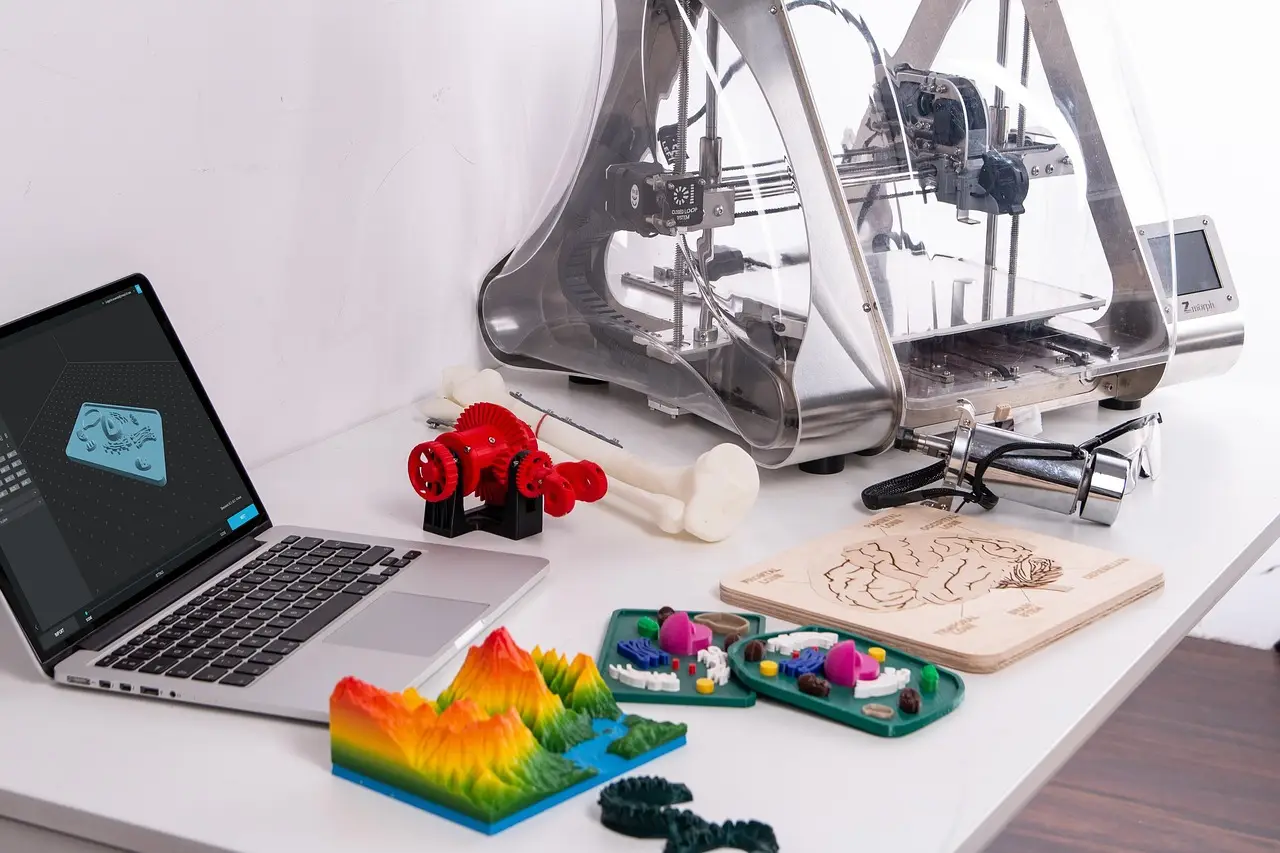
Bambu Lab today announced the $2,499 H3C, a 3D printer that loads nine filament rolls into nine print heads and swaps between nozzles in six seconds. The machine, the company's most advanced to date, signals where desktop printing is heading: multi-material, full-color output from a single unattended job.
The H3C prints in only one material at any given moment. Its new "Swaptek" system, however, lets the printer pull any of the eight other nozzles from a rack at the front of the machine. Each tool preheats independently to its correct temperature just before it is needed, so the swap itself costs six seconds.
What can nine nozzles actually print?
In testing, the results were concrete rather than theoretical:
- A rainbow bird feather printed with the new "PLA Palette" cyan, magenta, yellow and white filament, which emulated most intermediate colors.
- A rigid PLA wristwatch housing with an integrated flexible TPU band, printed as one part.
- A breathable wearable shoe combining ultra-soft 75A TPU with harder 90A filament — which, admittedly, did not fit.
Bambu did not invent tool-changing or color mixing. The $700-$900 Snapmaker U1 surprised the community earlier this year with four-color, five-second swaps, and Prusa sells its eight-tool INDX system for $2,249, though early reports suggest some issues. Bambu is, if anything, slightly behind that curve. The verdict here rests on a different feature.
Why dry storage changes the calculus
Previous toolchangers had nowhere to keep filament dry between prints, and wet filament remains one of the largest causes of print failures. The H3C stores its nine rolls in the AMS 3H, an ostensibly airtight auto-loading container. Two of the nine slots include built-in dryers that reach 85 degrees Celsius and continue drying filament during printing — a clear step up from Bambu's earlier AMS systems.
The reliability picture is mixed but improving. Early quirks included a toolhead camera that failed to initialize, forcing every print to be started twice; a false-positive failure detection that cost half a day; and a beta build of Bambu Studio that confused color mixing. Bambu says the software issue will be fixed by launch and provided troubleshooting steps for the camera near embargo time.
Flexible TPU must be loaded manually, and slot #6 accepts standard filament but jams if loaded with TPU, which another printhead can snag. Nozzle replacement now requires minor disassembly — the toolless swappable nozzles of the H, P and A series do not carry over. Bambu also leaves filament in the toolheads between prints, where it may attract moisture. The reviewer's judgment: still an easier, more reliable machine at launch than the two-nozzle H2D was.
Waste has dropped sharply. Extra nozzles mean the printer no longer produces a mountain of "printer poop" — the purged filament blobs familiar to anyone who switches colors on a single-nozzle machine.
What comes next?
Certification filing leaks show Bambu preparing a smaller "P3C" with seven tools and seven-roll storage, so the $2,499 entry price may not last long. By next spring, all three existing dual-nozzle printers — the H2D, H2C and X2D — will gain the ability to print with two different nozzle sizes.
The ambition is the inkjet model: an entire rainbow of color ready at a moment's notice, without vacuum-sealed bags of hoarded filament. Ideally without the inkjet shenanigans too.
Original: bambulab.com
More from Nathan Brooks
Show full bio
Senior reporter covering people, launches and day-to-day practice in Semiconductors, chip manufacturing, hardware, AI compute at Chip Dispatch.
763 articles
Related articles
bambu-lab-h3c-launches-with-nine-tool-changer
Bambu Lab H3C launches November 3 with nine-tool changer
curtin-researchers-trace-3d-printed-ghost-guns-to-filament-source
Curtin Researchers Trace 3D-Printed Ghost Guns to Filament Source
virginia-tech-prints-liquid-metal-composite-that-channels-heat-40x-better-170b3999
Virginia Tech Prints Liquid Metal Composite That Channels Heat 40x Better
asml-high-na-euv-intel-samsung-and-tsmc-run-on-different-clocks-ae44507e
ASML High-NA EUV: Intel, Samsung and TSMC Run on Different Clocks