Beijing Threatens Countermeasures as Congress Pushes to Write AI Chip Curbs Into Law
China vows countermeasures over US limits on remote access to Nvidia compute, as Congress pushes three chip export bills into the $1.1 trillion NDAA.
- By
- Tom Whitfield
- Filed
- Channel
- Chips & Policy
- Read
- 5 min read
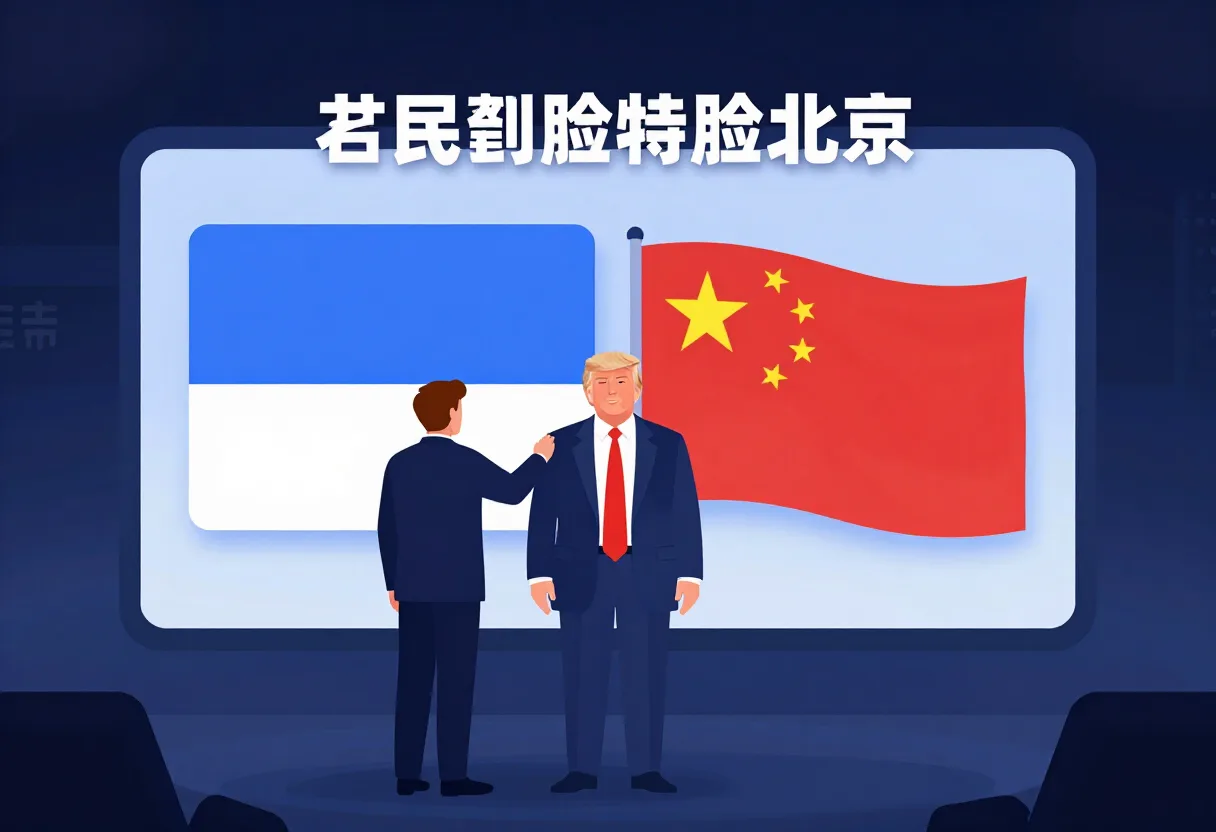
China's commerce ministry said on Tuesday, Nov. 17 that it will take countermeasures against the United States if Washington keeps restricting Chinese firms' access to advanced chips. The warning came one day after the Commerce Department issued a rule designed to stop Chinese companies from renting Nvidia computing power in data centers outside China.
A ministry spokesperson said the US had "generalized the concept of national security, abused export controls, and arbitrarily interfered in the normal trade and cooperation between Chinese enterprises and those of other countries." The measures depart from "the important consensus reached by the two heads of state," the spokesperson said, and asked Washington to return to consultation. "Should the US side insist on going its own way, China will take countermeasures to firmly safeguard its national sovereignty, security and development interests." The ministry did not specify what those steps would be. Foreign Ministry spokesperson Guo Jiakun called the rule "typical economic coercion and long-arm jurisdiction."
The takeaway: Beijing is threatening retaliation but has not yet named the tools, and its past response to tighter controls was material — it suspended rare earth exports to the US in September 2025 after Commerce widened a blacklist to cover affiliates of listed companies, Wired reported.
What does the new rule require?
The rule requires licenses for advanced chip exports to Singapore, Thailand, Malaysia, Indonesia and Brazil, which the US identifies as high-risk for illegal transshipment, according to Reuters reporting cited by the state-run Global Times. It also gives overseas data centers serving Chinese AI companies 90 days to obtain licenses.
Which bills does Congress want in the defense package?
The Jensen Huang scandal has revived a push to write chip export limits into law. Lawmakers want three bills in the final National Defense Authorization Act, which Congress is expected to take up in December. All three sat in the amendment package to the Senate version that Senate Democrats blocked in July, and the House version, passed narrowly in July, left them out.
- AI Overwatch Act — writes Trump's bans on exporting the most powerful AI chips to China, Iran, Cuba and North Korea into law, gives Congress authority to review and block specific export licenses, and fast-tracks exports to allies.
- MATCH Act — promoted by House Foreign Affairs Committee Chair Brian Mast, R-Fla., it blocks sales of chipmaking equipment to companies in "adversary countries" and penalizes allies that do not impose similar limits; it cleared his committee in April without a House floor vote.
- Chip Security Act — requires location verification, through an installed tracker, on export-controlled advanced chips and on products containing them.
Senate Minority Leader Chuck Schumer, D-N.Y., urged passage from the Senate floor on Monday and said the administration "has shown time and time again that it is completely disinterested in enforcing export controls." House Minority Leader Hakeem Jeffries, D-N.Y., said he "strongly" supports the Senate provisions. House China Select Committee Chair John Moolenaar, R-Mich., said the Huang affair "really highlights the need for export controls." Senate Majority Leader John Thune, R-S.D., has not commented publicly. The defense bill would authorize more than $1.1 trillion, and Congress has passed the NDAA for 65 consecutive years.
What would Baldwin's trade bill do?
Sen. Tammy Baldwin, D-Wis., introduced a bill on Tuesday to end China's permanent normal trade relations status one year after enactment, moving Chinese imports to higher regular US tariff rates. The bill directs the US Trade Representative, the Commerce Department and the International Trade Commission to report on trade challenges posed by China.
"We need to reset our trade relationship with China, be honest that they have undercut us at every turn, and put the focus back where it matters, prioritizing American workers, manufacturers and families," said Baldwin, who voted against granting China the status in 2000 as a House member.
A 319-page August report from the US International Trade Commission estimated that revoking PNTR would raise trade-weighted average tariffs on Chinese goods by 35.2 percentage points, raise US consumer prices by 0.7% in the long run, and cut US economic output by 0.2%. Two commissioners, one Republican and one Democrat, disputed the cost finding. Democrats won control of both chambers in this month's elections, but Trump could veto the bill.
Where do Trump and Raimondo stand?
Former Commerce Secretary Gina Raimondo, speaking at a Semafor event on Tuesday, said national security has to come before corporate revenue and criticized the administration's message on chips: "'No, you can't sell chips.' 'Yes you can, if we can get a 25% cut.'" She said "it's not at a price." Raimondo also said she began work on limiting China's ability to rent computing power two years ago and was "glad they're moving in that direction."
Trump allowed sales of Nvidia's H200 chips to approved customers in China in December 2025 in return for a 25% cut. He has defended Commerce Secretary Howard Lutnick, saying a delay in blacklisting Megaspeed avoided "a blowup with China." Two sources told Wired that Trump believes selling some advanced chips to China keeps it reliant on US technology and supports US tech stocks, and that at a Nov. 5 Oval Office meeting he chose the remote-access rule over adding Megaspeed to the entity list. A senior White House official told Wired that Trump is adamant Chinese firms cannot buy Nvidia's most advanced Blackwell and Rubin chips.
Trump and Xi meet on Thursday in Shenzhen, where a trade truce expiring in January is on the agenda. Whether Beijing's unnamed countermeasures arrive before or after that meeting will shape the pricing and supply picture for advanced compute through the truce's expiry.
Source: mlq.ai
More from Tom Whitfield
Show full bio
Staff writer covering companies, deals and strategy in Semiconductors, chip manufacturing, hardware, AI compute at Chip Dispatch.
1,054 articles
Related articles
officials-nvidia-missed-red-flags-in-china-chip-smuggling-4b661353
Officials: NVIDIA Missed Red Flags in China Chip Smuggling
china-hits-us-firms-with-export-controls-before-xi-s-washington-visit-1d66d3cb
China Hits US Firms With Export Controls Before Xi's Washington Visit
beijing-s-export-controls-mature-as-trump-pulls-back-china-tech-curbs-001e83ea
Beijing's Export Controls Mature as Trump Pulls Back China Tech Curbs
china-moves-to-restrict-tech-exports-including-ai-on-security-grounds-84166f7e
China Moves to Restrict Tech Exports Including AI on Security Grounds