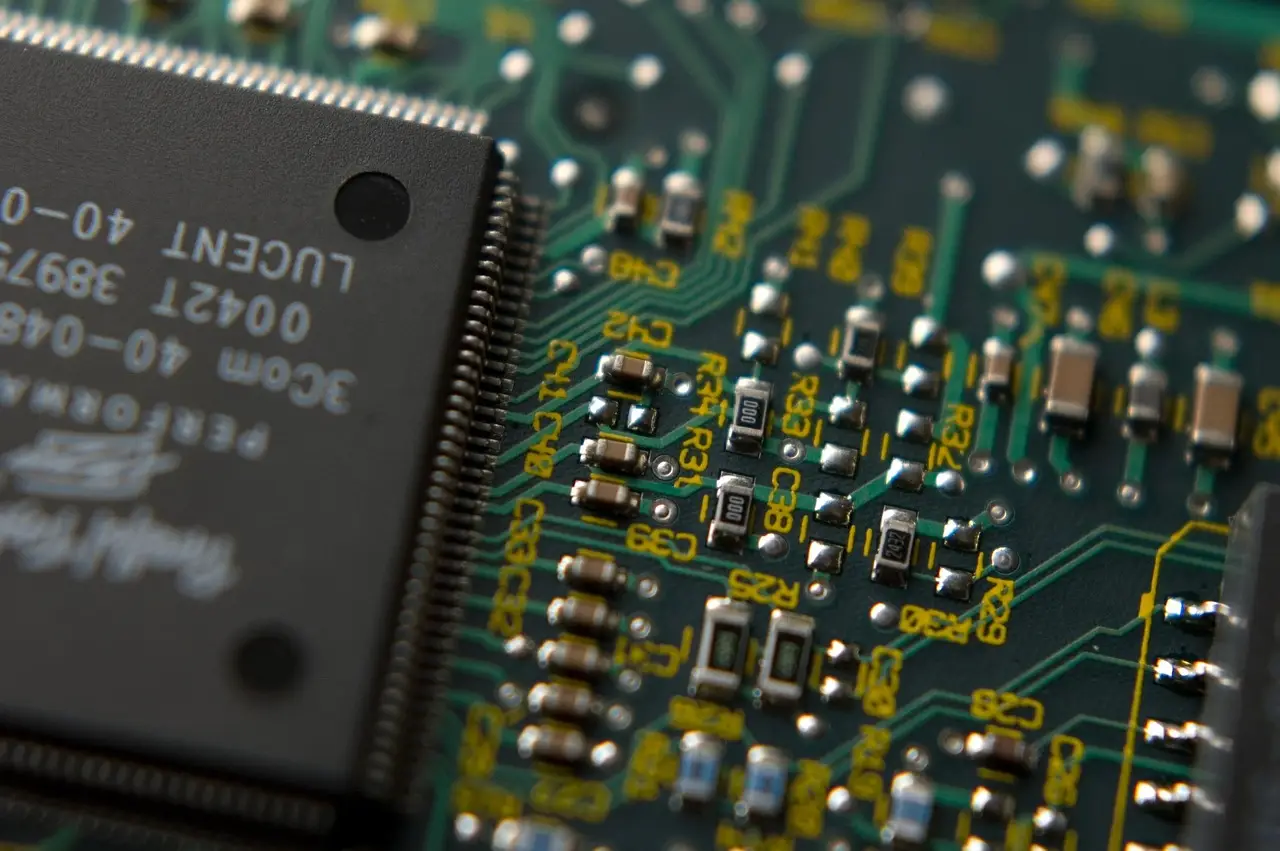
Broadcom Rallies 5% to $363.99 as Traders Rotate Out of NVIDIA
Broadcom rose 5% to $363.99 and NVIDIA fell 5% to $164.32 after Jensen Huang resigned as CEO, with AMD up 2% on analyst upgrades.
- By
- Tom Whitfield
- Filed
- Channel
- AI & Compute
- Read
- 3 min read
Broadcom stock traded at $363.99 on the morning of November 12, up 5%, as investors moved money out of NVIDIA and into its chip rivals following Jensen Huang's abrupt exit as CEO. NVIDIA fell 5% to $164.32, while Advanced Micro Devices gained 2% to $562.44.
The rotation centers on Broadcom's role as a key supplier of custom AI silicon. The company designs custom AI accelerators, including Alphabet's Google tensor processing units (TPUs), along with networking chips for hyperscale cloud providers. That product mix positions Broadcom to win more work if NVIDIA customers decide to diversify their suppliers.
The commercial case rests on numbers already on the table. In Q3 FY2026, Broadcom's AI semiconductor revenue reached $16.7 billion, up 221% year over year. The company has also forecast $21.7 billion in AI semiconductor revenue for Q4 FY2026, a figure investors will test against its upcoming earnings report.
Why did Jensen Huang leave NVIDIA?
NVIDIA announced on November 12 that Huang resigned as CEO, president and board member, effective immediately. Chief financial officer Colette Kress is serving as interim CEO while retaining her finance role, and the board is reviewing internal and external candidates for the permanent job.
Harvey C. Jones, named the board's first-ever chair, said the board has "full confidence" in Kress and expects "the company's operations, customer commitments and product roadmap to continue without interruption." Kress stated: "We will continue advancing the work that has made NVIDIA a leader in accelerated computing and AI."
The resignation confirmed what earlier reporting had signaled: NVIDIA's board was preparing to remove Huang, and the leadership change followed that process rather than preceding it.
What do the rival stocks show?
NVIDIA's decline tells its own story. The stock fell as much as 13% intraday before buyers cut the loss to 5%. Wolfe Research analyst Chris Caso told CNBC: "It's sort of like the Apple Steve Jobs moment." He added: "Nvidia sold out through the end of next year. The roadmap is set."
AMD's gains came with fresh analyst support. William Blair upgraded AMD to Outperform from Market Perform on November 12, citing NVIDIA's leadership uncertainty and AMD's improving competitive position. BofA Securities raised its AMD price target to $700 from $650 while repeating its Buy rating.
Anna Wu, founder of Floodlines Research, told Bloomberg: "AMD as a direct competitor, and Alphabet and Broadcom in the TPU space, are natural beneficiaries in the short term." Intel slid with the broader chip group, which shows the rally is selective rather than a general AI trade. Pepperstone's Chris Weston told Barron's that markets appear to be separating NVIDIA-specific risk from the wider AI theme.
How do the three business models differ?
Broadcom earns its AI revenue by co-designing custom accelerators and networking chips with a small group of hyperscale customers. Its Infrastructure Software business, built on VMware, adds a recurring software stream that NVIDIA and AMD lack. That structure ties Broadcom's growth closely to the spending plans of its largest customers.
NVIDIA sells off-the-shelf graphics processors such as Blackwell and Vera Rubin, supported by its CUDA software ecosystem. AMD pairs its Instinct GPUs with EPYC server processors in new Helios rack-scale systems sold to many buyers. Intel remains an integrated manufacturer, combining Xeon server chips, a foundry business and heavy exposure to personal computers.
What happens next?
NVIDIA has confirmed it will report Q3 FY2027 results on November 17 after the market close. Wall Street analysts expect earnings of $2.47 per share on revenue of $109 billion. In Q2 FY2027, NVIDIA's data center revenue reached $89.02 billion.
Broadcom's next hurdle is whether hyperscale customers direct more custom-chip work its way while NVIDIA rebuilds its leadership. NVIDIA's sold-out roadmap gives the bears a counterpoint, since it may limit how much business actually shifts to rivals, and a smooth CEO transition could unwind the rotation quickly.
Source: 247wallst.com
More from Tom Whitfield
Show full bio
Staff writer covering companies, deals and strategy in Semiconductors, chip manufacturing, hardware, AI compute at Chip Dispatch.
939 articles
Related articles
broadcom-semiconductor-revenue-up-68-as-analyst-cites-nvidia-opening
Broadcom Semiconductor Revenue Up 68% as Analyst Cites Nvidia Opening
nvidia-s-279-billion-supply-bet-fuels-cramer-s-data-center-warning
Nvidia's $279 Billion Supply Bet Fuels Cramer's Data Center Warning
nvidias-235-billion-buyback-authorization-faces-ceo-review
Nvidia’s $235 Billion Buyback Authorization Faces CEO Review
broadcom-s-ai-revenue-grew-221-custom-silicon-may-outgrow-gpus-c59ba5d1
Broadcom's AI Revenue Grew 221% — Custom Silicon May Outgrow GPUs