Chennai Panel: India's Chip Push Faces 37-Gas, 42-Chemical Gap
India produces only four of the 37 gases a silicon carbide fab needs, Indichip's CEO told a Chennai panel, as leaders warned chip sovereignty means resilience, not self-sufficiency.
- By
- Sophie Lindqvist
- Filed
- Channel
- Chips & Policy
- Read
- 4 min read
A silicon carbide fab consumes 37 process gases and 42 chemicals, and India produces only four of those gases domestically. Sandeep Garg, chief executive of Indichip Semiconductors, cited those figures at the Semiconductor Summit 2026 in Chennai to illustrate the gap between India's chip ambitions and its supply base. The panel, titled 'The Chip War: Technology, Geopolitics and India's Challenges', made one point repeatedly: most of the inputs do not exist in India yet.
What did the panel actually propose?
The speakers argued India must build its own technology capabilities, cut critical dependencies and form partnerships with friendly nations. Sharat Kaul, India representative of the International Electronics Manufacturing Initiative (iNEMI), said outsourced semiconductor assembly and testing (OSAT) projects deserve respect as a starting point, not dismissal as inadequate. The ecosystem — equipment, materials, talent, infrastructure — has to be built progressively.
"We have to crawl before we walk. We have to walk before we run," Kaul said.
He also pushed back on the word sovereignty. "Sovereignty doesn't necessarily mean that we do everything ourselves. It means that we build reliance and resilience. A bigger part is really resilience," he said, arguing for multiple supply-chain options rather than domestic production of everything.
Kaul identified advanced packaging as the field where India could narrow the gap with established manufacturing nations. "The tipping point in the industry is going to be advanced packaging," he said, pointing to 2.5D and 3D technologies as geopolitical pressure pushes countries such as the United States to reshore advanced manufacturing.
How much money is on the table?
Indichip is building an integrated device manufacturing facility covering fabrication, assembly and testing, and final modules, with an investment above ₹15,000 crore. Garg confirmed the figure at the panel. The company targets silicon carbide power devices for energy, electric mobility, railways, defence and data centres.
Garg estimated India's silicon carbide market could grow from roughly ₹13,000 crore in 2030 to ₹1 lakh crore by 2035. That is a forecast, not a confirmed revenue figure, and he offered no demand model behind it. He noted that major semiconductor companies have operated in India for decades without building fabs, and he warned that a large market alone will not attract manufacturing investment.
He also called for industry status for the semiconductor sector and relief from the goods and services tax burden on ecosystem suppliers. Fab projects take three to five years, he said, and asked how suppliers can absorb the tax burden across that lead time.
Where are the material bottlenecks?
Ravi Bhatkal, vice-president of strategy at MacDermid Alpha Electronics Solutions, said India needs domestic capability in mining, refining and materials production, plus secured supply from multiple countries for inputs it cannot make locally.
"The policy or the strategy, I would say, that makes most sense is a belt-and-suspenders approach," Bhatkal said.
He called government policy on localising materials and equipment directionally correct, but he stressed that execution remains unproven. He backed recycling — "urban mining" — to recover materials already in circulation, and he urged closer links between universities, research institutions, industry and government. "One of the most understated sources of technology are the key universities that we have here," he said.
Is the skills gap wider than design?
Yogan Senthilkumar, chief technology officer of iVP Semiconductor, said semiconductor education must reach beyond chip design into manufacturing, assembly, testing, materials and equipment. The 'Chips to Startup' programme gave institutions access to electronic design automation tools, he said, but students still need silicon in hand.
"The actual success of producing engineers in these domains happens when they design a chip and they see the silicon and see how it performs," Senthilkumar said. He wants curricula to cover mechanical and chemical engineering, materials safety, industrial gases and pollution control. India cannot stop talent from leaving, he conceded, but it can train engineers for domestic industry and global demand.
"My CEO used to say: design for India, manufacture in India and consume in India," he said.
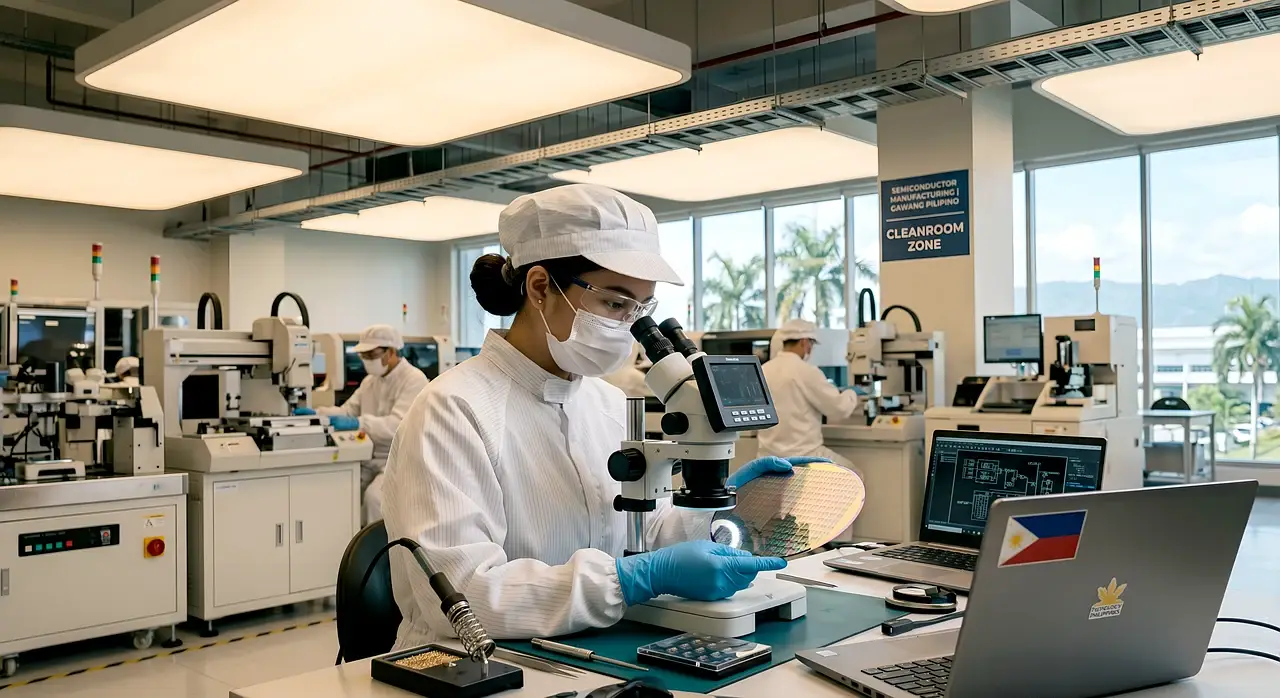
Garg added that India lacks expertise in building and operating fabs themselves — clean rooms, water systems, air-conditioning, project management — capabilities it must develop locally while drawing on foreign expertise where needed.
Can India compete on less capital?
On whether India can compete against countries spending far more, Kaul pointed to India's record in space technology and digital payments. "We have demonstrated over and over again that we can solve the toughest problems at 1/10 the cost of the Western world," he said. That claim carried no supporting figure at the panel. He closed by urging India to pick areas of genuine competitive advantage while mapping the vulnerabilities that geopolitical rivalry has exposed.
The panel set no deadlines and announced no policy. Its concrete anchors remain one ₹15,000 crore fab plan, a market forecast reaching ₹1 lakh crore by 2035, and a supply base that currently produces four of 37 required gases.
Source: Google News: semiconductors
More from Sophie Lindqvist
Show full bio
News editor covering money, funding and market shifts around Semiconductors, chip manufacturing, hardware, AI compute at Chip Dispatch.
733 articles
Related articles
why-semiconductors-won-t-be-india-s-magic-wand-f65c13c8
Why Semiconductors Won't Be India's Magic Wand
india-bets-200-billion-on-becoming-a-semiconductor-power-01036c10
India Bets $200 Billion on Becoming a Semiconductor Power
indias-20-billion-chip-push-runs-into-the-fab-gap
India’s $20 Billion Chip Push Runs Into the Fab Gap
india-clears-17-2-billion-in-semiconductor-projects-48b1948e
India Clears $17.2 Billion in Semiconductor Projects