Science & Technology · 3 min read
Danaher and Microsoft build AI agents that run lab instruments
Danaher and Microsoft are building agentic AI on Azure and Microsoft Foundry to plan experiments and control lab instruments; Molecular Devices' MetaXpress assistant ships this year, with more in 2027.
Key takeaways
- Danaher announced the Microsoft partnership on Nov. 20, building agentic AI on Azure and Microsoft Foundry.
- Molecular Devices' MetaXpress Acquire AI Assistant reaches customers this year; more agent-enabled instruments follow in 2027.
- In Danaher's internal testing on a Leica microscope, novices took up to 83% less time and up to 68% fewer steps with the AI assistant.
- The system is designed to stay open to other vendors' instruments in the same lab.
- Danaher CEO Julie Sawyer Montgomery said the companies are 'building a common foundation' for instruments and laboratories.
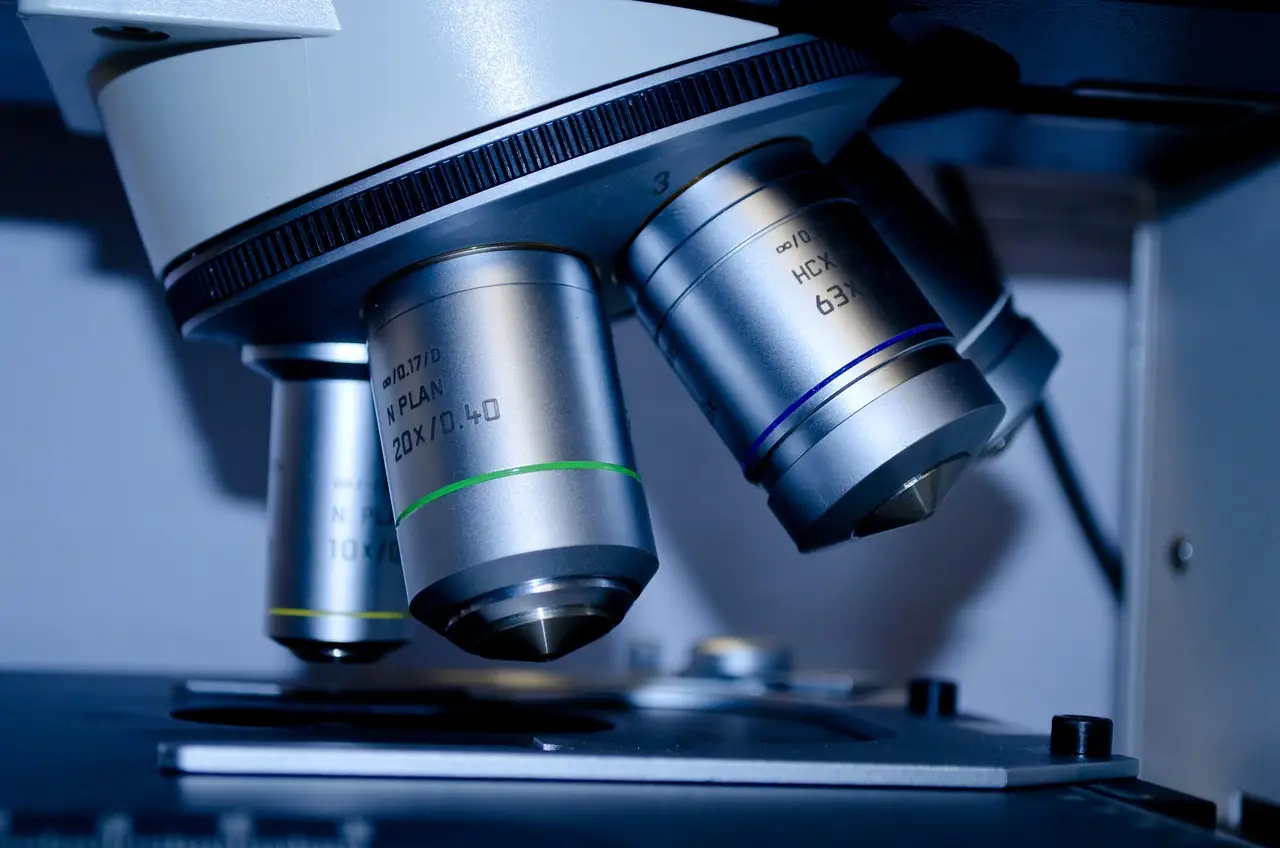
Danaher said on Nov. 20 that it will build an agentic AI platform for scientific instruments together with Microsoft, running on Microsoft Azure and powered by Microsoft Foundry. The partnership is billed as an "interoperable agentic ecosystem" — a common software foundation meant to carry a scientist from research question to experimental result faster than manual workflows allow.
The timing matters. Danaher expects one of the first commercial applications, the MetaXpress Acquire AI Assistant from its Molecular Devices unit, to reach customers this year. Software for Molecular Devices' high-content cellular imaging systems, it's the opening move in a rollout that Danaher plans to extend to more agent-enabled instruments from its businesses in 2027.
What will the agents actually do?
Danaher spells out four jobs. The agents are designed to turn a scientist's intent into an experimental plan, instrument setup and methods. They control hardware within defined safety boundaries, and only under user oversight. They interpret results and flag data-quality issues in real time. And they recommend corrective actions and next experiments for the scientist to review.
That last point is deliberate. The design keeps a human in the loop at every consequential step — the agent proposes, the scientist disposes. The system is also meant to stay open to other vendors' instruments in the same lab, which matters for labs running mixed fleets of equipment rather than Danaher-only benches.
How well does it work?
Danaher's own preliminary internal testing offers the most concrete numbers in the announcement. Novice scientists running an AI-assisted experiment on a Leica microscope took up to 83% less time and up to 68% fewer steps than novices working without the assistant. They also produced high-quality data in roughly the time an expert would need, Danaher said.
MedTech Dive noted the obvious caveat: these results come from Danaher's own testing, not independent evaluation. They're preliminary, internal and vendor-run. Still, an 83% time reduction for untrained users points at the real commercial logic here — the agents compress the expertise gap between novice and expert operators, which could expand the usable base of expensive instruments that often sit idle or underused because too few people can run them well.
Who said what
"With Microsoft, we are building a common foundation, so our instruments and laboratories work together consistently," Danaher CEO Julie Sawyer Montgomery said in the announcement.
Microsoft's Deb Cupp framed the deal around user autonomy, saying the combination "aims to give scientists more choice and control."
Why pair with Microsoft?
For Danaher, the draw is Azure's AI infrastructure and Microsoft Foundry as the orchestration layer for deploying and managing agents across instrument families. Rather than building bespoke AI software per device, Danaher gets a shared platform where the same agent framework can plan experiments on a high-content imager today and on other instruments in 2027.
For Microsoft, Danaher's installed base of lab instruments — and Molecular Devices' high-content cellular imaging systems in particular — adds a vertically specific beachhead for Azure AI in life sciences, a sector where instrument vendors increasingly compete on software and workflow integration rather than optics alone.
The open, multi-vendor posture is the claim to watch. If Danaher's ecosystem genuinely accepts other vendors' instruments, it could set a de facto interoperability standard for agentic lab software. If it doesn't, rivals have an opening.
What comes next is concrete enough to measure: the MetaXpress Acquire AI Assistant ships to customers this year, and the broader wave of agent-enabled Danaher instruments follows in 2027 — with independent performance data still to come.
mlq.ai (Source)
More from Rebecca Stone
Show full bio
Correspondent covering technology and product news in Semiconductors, chip manufacturing, hardware, AI compute at Chip Dispatch.
1,285 articles