Europe's Electronics Gap Runs Through PCBs, Not Just Chips
Europe lacks PCB manufacturing capacity as sharply as chip capacity, DirectIndustry reports, exposing OEMs to Asian supply chains and weakening returns on fab investment.
- By
- Grace Kim
- Filed
- Channel
- Chips & Policy
- Read
- 3 min read
Europe's electronics industry lacks printed circuit board manufacturing capacity, and that shortfall now constrains the region as sharply as its better-publicized chip deficit. The headline finding from DirectIndustry's e-Magazine reframes the European supply chain debate. The continent has a PCB problem, not just a chip problem.
For two years, European policy and capital have concentrated on front-end semiconductor fabrication. The European Chips Act anchored that push. Investment flowed to wafer fabs, packaging pilots and design centers. Almost none of it addressed the substrate layer that connects finished die to finished products.
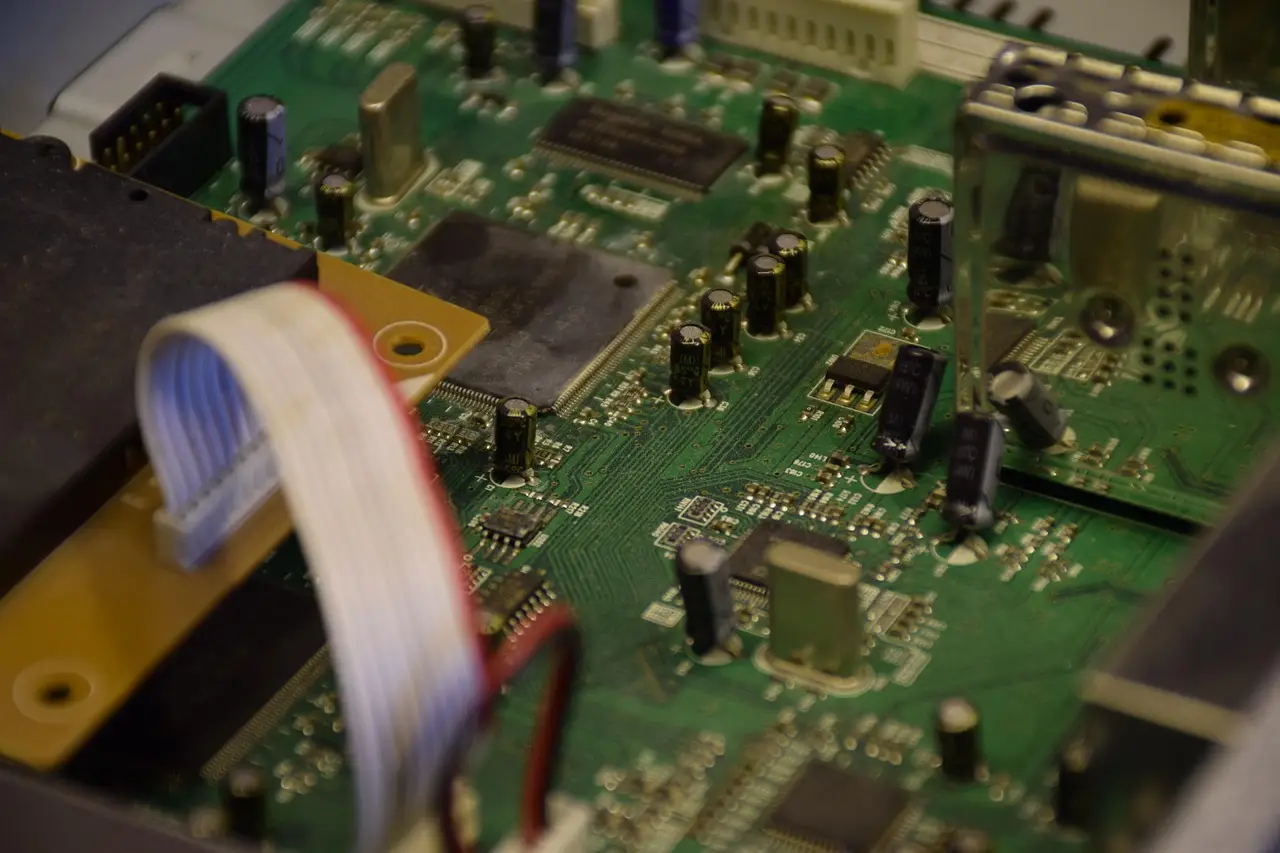
PCBs sit one step below chips in every electronic assembly. A fab can produce leading-edge silicon. Without circuit boards built nearby, that silicon still travels to Asia for integration. The board is the point where components become systems.
Why did Europe lose its PCB base?
European board makers spent two decades ceding volume production to Asia. Chinese, Taiwanese and South Korean suppliers captured scale-driven commodity output first. Cost pressure then removed the region's mid-tier producers. What remains in Europe serves niche, high-reliability and quick-turn segments.
DirectIndustry frames the consequence bluntly: Europe's electronics industry has a PCB problem. The region can fund chip plants. It cannot currently surround them with a domestic board ecosystem of matching depth.
The dependency mirrors the chip story in structure but differs in visibility. Chips attract headline investment figures and summit announcements. Boards attract neither. Yet a missing PCB supplier can halt an assembly line as completely as a missing processor.
What does the gap change commercially?
The immediate effect lands on European OEMs and contract manufacturers. They source boards across long logistics chains, with the lead times, freight exposure and single-region concentration that implies. Disruption in Asia propagates directly into European production schedules.
Defense, automotive and industrial equipment makers carry particular exposure. These sectors form the core of European electronics demand. They also face the strictest requirements for traceability, qualification and supply assurance. A thin domestic board base makes those requirements harder to meet.
The gap also weakens the return on chip-side investment. A European fab without a European board partner sends value abroad at the integration stage. The DirectIndustry analysis implies that subsidies aimed only at silicon will leave the regional value chain incomplete.
Can Europe rebuild board capacity?
Rebuilding differs from building. PCB production needs less capital per plant than a wafer fab. The barriers are less financial than structural:
- Raw materials supply, especially copper-clad laminate and substrate-grade inputs
- A trained workforce in chemically intensive process steps
- Customer willingness to pay above Asian commodity pricing
- Environmental permitting for etching, plating and waste treatment
Each barrier is manageable alone. Together they explain why the base eroded and why no single subsidy reverses it.
Policy attention is beginning to shift toward substrates and packaging across the industry debate. Whether that attention extends to the humble circuit board remains the open question. Boards lack the political imagery of nanometer nodes. The DirectIndustry piece argues the omission carries real cost.
What comes next?
The competitive logic favors regional rebalancing. Asian board makers consolidated scale while Europe exited, and geopolitical pressure now rewards geographic redundancy across the electronics stack. Automotive electrification adds board content per vehicle, raising demand precisely where European capacity is thinnest.
European producers that survive hold specialist positions. High-mix, high-reliability and rapid-prototyping work still pays in the region. The question is whether that base can widen into volume segments before the next supply shock forces the issue.
DirectIndustry's framing sets the agenda: treat PCB capacity as strategic infrastructure alongside fabs. Expect substrate and board investment to enter the European policy conversation as the chip build-out matures, because a supply chain is only as regional as its least glamorous layer.
Source: Google News: semiconductors
More from Grace Kim
Show full bio
Market editor covering people, launches and day-to-day practice in Semiconductors, chip manufacturing, hardware, AI compute at Chip Dispatch.
646 articles
Related articles
advanced-packaging-emerges-as-the-new-bottleneck-for-asia-s-ai-chips-0932a6dd
Advanced Packaging Emerges as the New Bottleneck for Asia's AI Chips
key-meps-back-dropping-eu-s-20-chip-market-share-target-67e44137
Key MEPs Back Dropping EU's 20% Chip Market Share Target
semi-joins-eu-panel-to-address-semiconductor-skills-shortage-33ec4355
SEMI Joins EU Panel to Address Semiconductor Skills Shortage
semiconductor-investment-widens-korea-s-regional-growth-gap-e1346dfa
Semiconductor Investment Widens Korea's Regional Growth Gap