Fiber Costs Jump Six- to Tenfold for Ukraine's Drone Makers
BlueBird Tech says Ukrainian fiber-optic drone makers face six- to tenfold price increases. TrendForce forecasts a 180 million fiber-kilometer deficit in 2026 as AI data centers absorb supply.
- By
- Sophie Lindqvist
- Filed
- Channel
- Hardware & Components
- Read
- 3 min read
By Sophie Lindqvist
Optical fiber prices for Ukrainian fiber-optic drone makers rose roughly six- to tenfold between 2025 and 2026, according to BlueBird Tech research and development representative Oleksiy, who told Ars Technica.
The claim is a company account, not an audited market price index. Ars Technica identified him only as Oleksiy for security reasons. The shortage and price pressure peaked around March. The market has since “stabilized to some extent,” he said. TrendForce's global forecast supports the shortage diagnosis, but it cannot validate BlueBird's full premium.
What is driving the fiber squeeze?
TrendForce expects 577 million fiber-kilometers of global demand in 2026, forecasting a shortfall of 180 million fiber-kilometers as data centers claim 18% to 20% of consumption. That share should reach 30% to 35% in 2027.
TrendForce expects average 2026 spot prices for bend-insensitive fiber to exceed five times 2025 levels. Mainstream telecom fiber should average around 3.7 times its prior-year price, while AI backbone fiber should reach about 2.8 times. Bend-insensitive fiber serves data-center internal cabling and is also prized for drone spools.
TrendForce forecasts global production utilization at 92% for 2026. It estimates inventories at about one month, down from four months in 2024. The shortage should last through at least 2028 because adding preform capacity takes 18 to 24 months.
These are whole-market estimates. They do not isolate how much of BlueBird's increase stems from AI data centers. They also do not establish any specific fiber allocation to Ukraine.
How much fiber does battlefield demand consume?
Ukraine and Russia produce an estimated 50,000 fiber-optic drones each month, according to Ars Technica, and every spool is a one-time consumable that adds recurring fiber demand with each unit.
Ukraine's Defense Procurement Agency blamed wartime demand, the AI data center boom, and production concentrated largely in China for the pressure, according to Defender Media. That attribution identifies three forces but does not quantify each one.
Defender Media reported in March that VYRIY saw 1 km of G.657.A2 fiber rise from about $4 to $29 in less than a quarter. The report did not disclose purchase volume, contract terms, or whether spool winding was included.
How does Russia's supply position compare?
The Russian buying data reinforces the imbalance: The Insider and Vedomosti, as cited by Ars Technica, reported that Russia purchased more than 60 million kilometers of fiber in 2025, exceeding 10% of world output.
Chinese customs data reported by The Washington Post show a much larger monthly gap. In August 2025, Russia imported 328,000 miles of fiber-optic cable from China; Ukraine imported 72 miles. These customs figures do not establish total national imports or military allocations. They do show Russia's much greater access to Chinese cable supply that month.
Why are Ukrainian manufacturers winding spools themselves?
Larger Ukrainian manufacturers now buy fiber on bulk spools and wind smaller drone spools in-house, Oleksiy said, after defects appeared in finished spools from China.
“If a fiber-optic spool has a defect, you can lose the drone, lose the mission, and lose the target,” Oleksiy said.
The move can cut costs and reduce dependence on finished Chinese spools. It does not remove Ukraine's dependence on Chinese fiber.
Some Chinese manufacturers told Ukrainian buyers they had no material for them because the buyers were Ukrainian, Oleksiy said. The report does not quantify the affected volume.
Customs delays and air-raid alerts add time to deliveries. Radio-controlled drones still make up the larger share of drones on the battlefield.
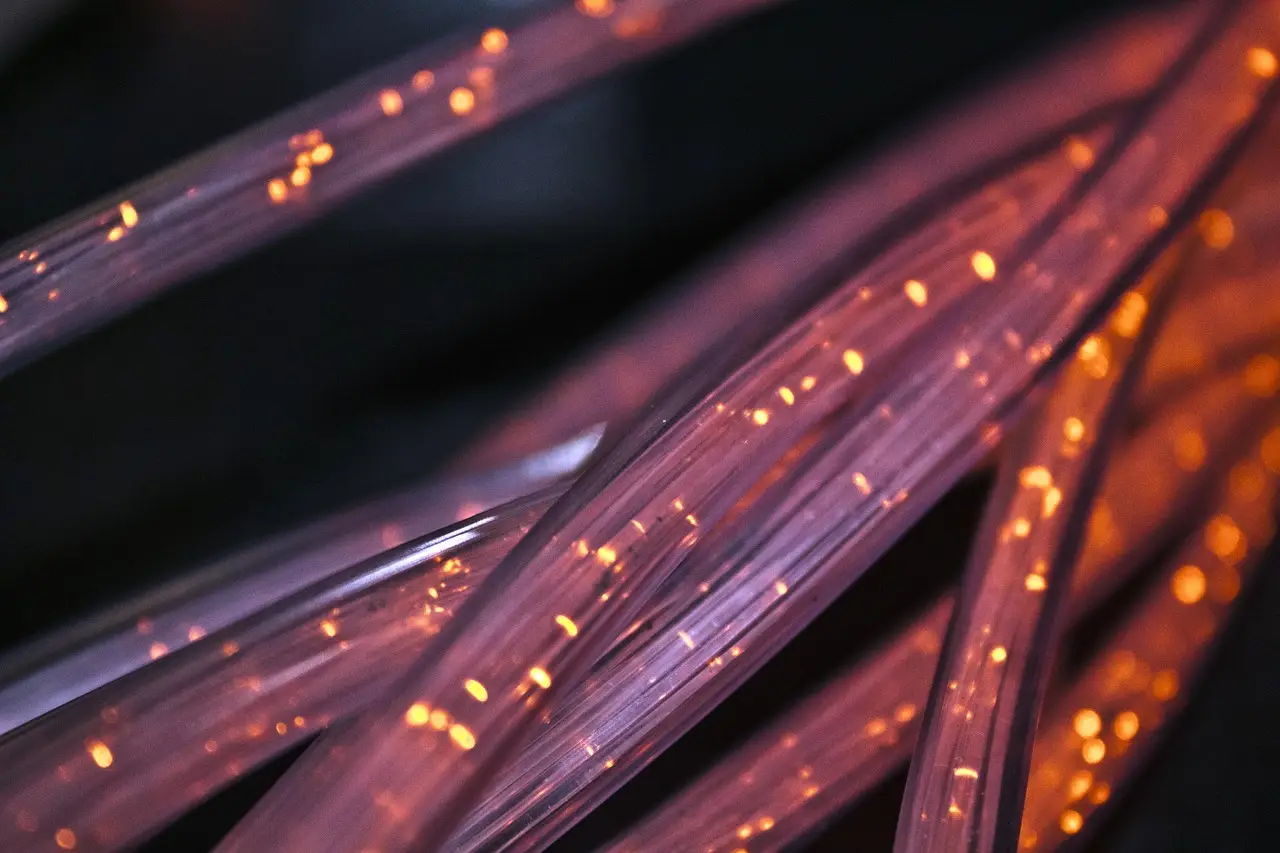
Fiber guidance travels through a hair-thin cable that radio jammers cannot disrupt. For fiber-guided programs, the shock moves the bottleneck toward raw fiber, winding quality, and import logistics.
TrendForce expects scarcity to last at least until 2028 because new preform capacity requires 18 to 24 months. Until supply catches up, Ukrainian makers remain exposed to global fiber prices and AI data-center competition.
Source: mlq.ai
More from Sophie Lindqvist
Show full bio
News editor covering money, funding and market shifts around Semiconductors, chip manufacturing, hardware, AI compute at Chip Dispatch.
864 articles
Related articles
memory-capacity-ceiling-slows-ai-spending-forecasts-gartner-data-shows-fae40af6
Memory Capacity Ceiling Slows AI Spending Forecasts, Gartner Data Shows
server-shipments-forecast-to-rise-5-5-as-arm-gains-ground
Server shipments forecast to rise 5.5% as Arm gains ground