Hardware & Components · 4 min read
FPGA Logic Capacity Grew 3.3X in Seven Years, and the Market Noticed
AMD's VP1902 packs 18.5 million logic cells, 3.3X the 2016 VU440. From 190 million Xilinx automotive devices to Microsoft's cloud, programmable logic is now shipping at volume.
Key takeaways
- AMD's Versal Premium VP1902 (2023) provides 18.5 million system logic cells, 3.3X the 2016 VU440.
- FPGA market valued at $9.93 billion in 2025 (Mordor Intelligence) versus $40.2 billion for MCUs (Grand View Research).
- Xilinx shipped over 190 million automotive FPGA devices by 2020, including 75 million for ADAS.
- Lattice Semiconductor's server-related revenue grew about 85% in 2025 versus 2024.
- FPGA engineers per project rose 18% from 2012 to 2022 (Wilson Research Group).
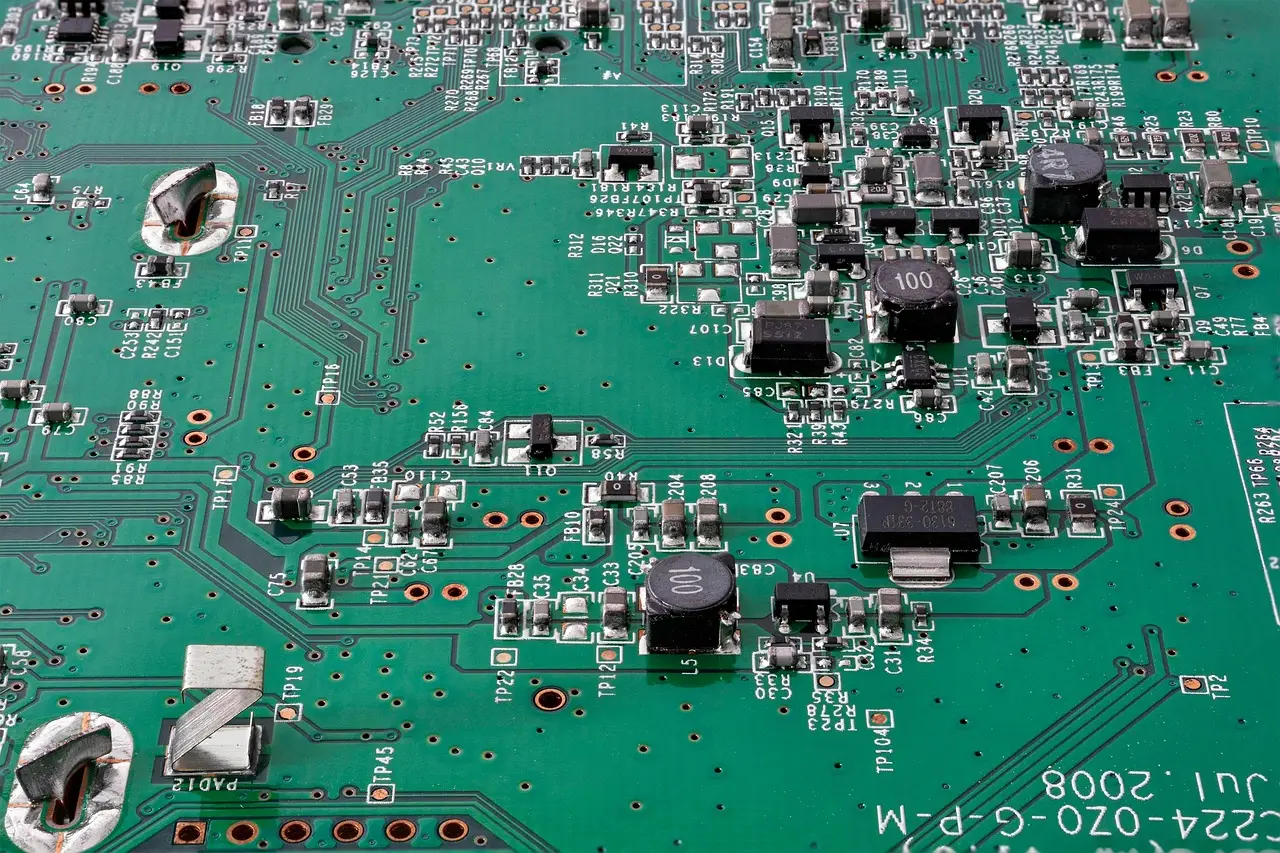
AMD's Versal Premium VP1902 delivers 18.5 million system logic cells, 3.3 times the capacity of the 2016-era Virtex UltraScale VU440 and roughly double the 2019 VU19P. That single device encapsulates a decade in which field-programmable gate arrays stopped being a prototyping curiosity and became a shipping component of high-volume commercial products.
The numbers come from a recent editorial by Electronic Design technology editor Cabe Atwell, who surveyed FPGA capacity, market size, and engineering staffing. His verdict is blunt: FPGAs have been keeping pace behind the scenes while microcontrollers and data-center silicon absorb the headlines.
What is actually inside an FPGA?
An FPGA implements digital circuits through configurable logic blocks containing lookup tables, flip-flops, and programmable interconnects. A configuration bitstream programs those resources to build custom combinational and sequential logic. The consequence is architectural rather than incremental: multiple hardware operations execute in parallel without a processor's instruction-execution cycle.
Or, as Atwell puts it, an FPGA can be configured to replicate any logical processor. One visible demonstration sits in retro gaming, where FPGA-based recreations of vintage consoles have been built for years. Atwell notes he had assumed remaking legacy processors was wishful science fiction, then discovered it was already standard practice in exactly that market.
How big is the FPGA market next to MCUs?
The market comparison is less flattering but still substantial. Grand View Research values the 2025 global microcontroller market at approximately $40.2 billion; Mordor Intelligence puts the FPGA market at $9.93 billion. Earlier estimates placed MCUs at $16.49 billion in 2019 and FPGAs at $7.18 billion in 2020, implying revenue growth of roughly 144% for MCUs against 38% for FPGAs over the period.
Despite the gap, Atwell expects FPGAs to post the bigger jump in years to come. Wider survey figures support the direction, if not the pace. Variant Market Research valued the FPGA market near $6.9 billion in 2016, while 6Wresearch estimated $12.3 billion for 2025 — figures from different firms, but ones that together indicate real expansion.
Where are FPGAs actually shipping?
Production deployments, not forecasts, carry the argument:
- Xilinx shipped more than 190 million devices for automotive applications by 2020, including 75 million for advanced driver-assistance systems, averaging 19.3 million automotive devices annually over the preceding four years.
- A 2026 Microsoft research paper documents millions of FPGAs deployed across its cloud infrastructure for network acceleration, storage, and search.
- Lattice Semiconductor reported server-related revenue up approximately 85% in 2025 versus 2024, alongside rising FPGA integration per system.
Adoption has also broadened across industrial systems, communications equipment, and data centers generally. Programmable logic is now an established component of commercial products, not merely a tool for test and measurement.
Has logic density kept up with Moore-era silicon?
The capacity trajectory is unambiguous. Xilinx's 20-nm Virtex UltraScale VU440 offered roughly 5.54 million system logic cells in 2016. The 16-nm Virtex UltraScale+ VU19P raised that to 8.94 million cells by 2019, a 61% improvement. AMD's 2023 VP1902 then more than doubled it again, adding 8.46 million lookup tables and 6,864 DSP engines.
Atwell is careful about what these figures mean. The 3.3-fold increase reflects total programmable-logic capacity per device, driven by semiconductor fabrication advances, new FPGA architectures, and multi-die integration — not a directly measured rise in logic cells per square millimeter. He could not find exact data on physical density.
What do hiring patterns say?
The Wilson Research Group's 2022 study found the average number of FPGA engineers per project rose 18% between 2012 and 2022, while verification engineer staffing grew 38%. Atwell frames the modest 18% as steady, fad-free growth rather than disappointment. The U.S. Bureau of Labor Statistics does not track FPGA engineers directly but projects 8% growth for electrical and electronics engineers from 2025 to 2035 — a pool from which some share will inevitably land in programmable logic.
The forward picture, on the source's own numbers, favors the underdog: if a market growing 38% since 2020 already ships 190 million automotive devices and earns 85% server-revenue growth at Lattice, the coming decade should test Atwell's bet that FPGAs finally outgrow the microcontroller's shadow.
grandviewresearch.com (Original)
More from Nathan Brooks
Show full bio
Senior reporter covering people, launches and day-to-day practice in Semiconductors, chip manufacturing, hardware, AI compute at Chip Dispatch.
1,258 articles