France Accuses Iran Over October Refrigerator Cyberattacks
French officials blamed Iran’s Revolutionary Guards for October refrigerator hacks. More than 100 European establishments were hit later, including units used by French blood banks.
- By
- Sophie Lindqvist
- Filed
- Channel
- Hardware & Components
- Read
- 3 min read
Sophie Lindqvist
Hundreds of French supermarkets suffered refrigeration failures on October 11, and a second wave this month disrupted more than 100 establishments across Europe, Reuters reported.
What did France accuse Iran of doing?
French officials on Monday accused Iran’s Revolutionary Guards of responsibility for the cyberattacks that knocked out commercial refrigerators and freezers across France in early October.
Foreign Minister Jean-Noël Barrot summoned the Iranian ambassador to the French foreign ministry and threatened further European Union sanctions against Iran.
The announcement came only minutes after Reuters reported that investigators had privately suspected Iran.
Reuters could not establish how French officials reached their determination.
Iran’s mission to the United Nations did not respond to messages seeking comment. Iran routinely denies carrying out malicious cyberoperations.
How did the attack override refrigerator controls?
The October 11 cyberattack overrode temperature controls on commercial refrigerators in hundreds of establishments.
Cybersecurity experts previously told Reuters that the attack appeared easy to execute.
The firm behind many affected units said several were obsolete or ran outdated firmware, which could have made an intrusion easier.
Reuters did not identify that firm, the intrusion method or any specific firmware version.
Without a count of exposed units or a technical explanation, the full scope of the vulnerable installed base across France remains unquantified.
What did the first wave cost?
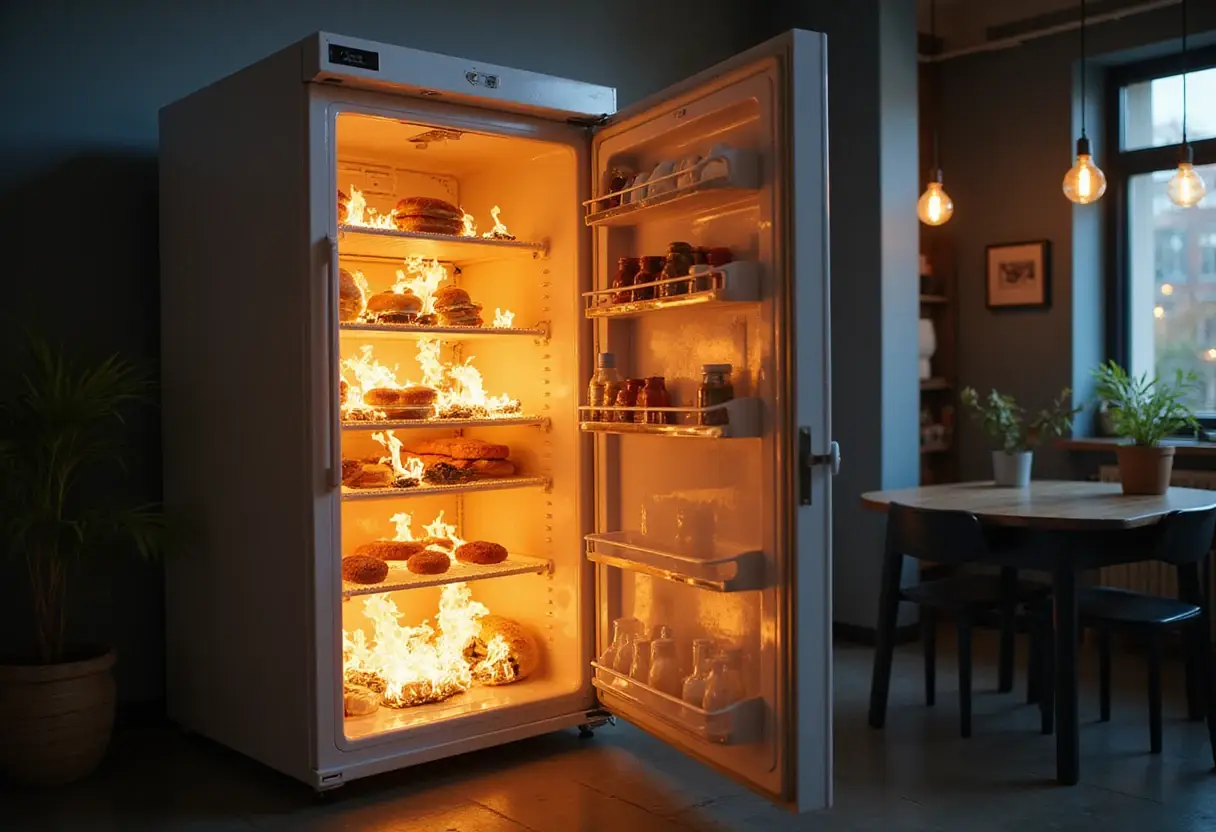
Some refrigerators were turned up so high that they caught fire.
In the hours after the attack, supermarket employees carted boxes full of perished meat and melted ice cream into giant trash containers.
One French supermarket owner estimated that nationwide costs could add up to tens of millions of euros, although the report supplied no itemized accounting for that figure.
That estimate came from a single supermarket owner rather than an independent assessment.
The visible damage to refrigerated stock was severe, but the total financial exposure was not independently established.
How far did the second wave spread?
The second wave struck more than 100 establishments across Europe this month.
It also affected refrigerators used by French blood banks, prompting employees to move some blood into different cold-storage units.
Reuters did not provide a country breakdown, a loss estimate for this wave or a technical description of the equipment.
The straightforward nature of the refrigerator attacks prompted speculation about responsibility.
That discussion included Russia’s suspected sabotage campaign in Europe, the war between the United States and Iran, and the global rise of AI-powered cyberattacks.
No attribution accompanied the second-wave report.
What links the French and U.S. incidents?
At least one similar U.S. incident preceded the European supermarket attacks.
In August, refrigerators in at least half a dozen military commissaries went out of commission.
Pentagon investigators treated those malfunctions as a suspected cyberattack and worked with French officials, Reuters reported last month.
The shared symptom was a refrigeration failure, not a proven technical signature.
Reuters could not independently establish a link among the August commissary failures, the French hacking campaign and the later European wave.
A person familiar with the matter said the Pentagon considers Iran a suspect in the August incidents.
That investigation remains in progress, and Reuters could not establish how the military reached its assessment or whether investigators were also examining other suspects.
Nextgov first reported last month that the U.S. military considered Iran a suspect.
What does the Pentagon say?
On Monday, the Pentagon said it was “aware of speculation regarding a potential cyber incident.”
It also said military investigators were on the case and could not comment further for security reasons.
Neither statement establishes who caused the refrigeration failures.
The supermarket hacks were among the most disruptive cyberattacks of the Iran war that began in February, according to Reuters.
The wider conflict produced scattered incidents of alleged digital disruption:
- The Los Angeles transit system in March.
- U.S. water treatment plants in July.
- Ships bound for the United States in August.
The source described the pattern as alleged digital disruption and did not establish one common operator.
Source: businessinsurance.com
More from Sophie Lindqvist
Show full bio
News editor covering money, funding and market shifts around Semiconductors, chip manufacturing, hardware, AI compute at Chip Dispatch.
835 articles
Related articles
france-blames-iran-for-cyberattacks-on-thousands-of-cold-chain-units
France blames Iran for cyberattacks on thousands of cold-chain units
hackers-turned-supermarket-freezers-to-50c-in-belgium-and-sweden
Hackers Turned Supermarket Freezers to 50°C in Belgium and Sweden
hackers-force-supermarket-fridges-into-50c-defrost-cycle-across-europe-620fd38c
Hackers Force Supermarket Fridges Into 50°C Defrost Cycle Across Europe
hackers-fried-700-french-supermarkets-fridges-using-flaws-vendors-knew-about-d2abc4e4
Hackers Fried 700 French Supermarkets' Fridges Using Flaws Vendors Knew About