GlobalFoundries Stock Rallies on $2 Billion TSMC Agreement
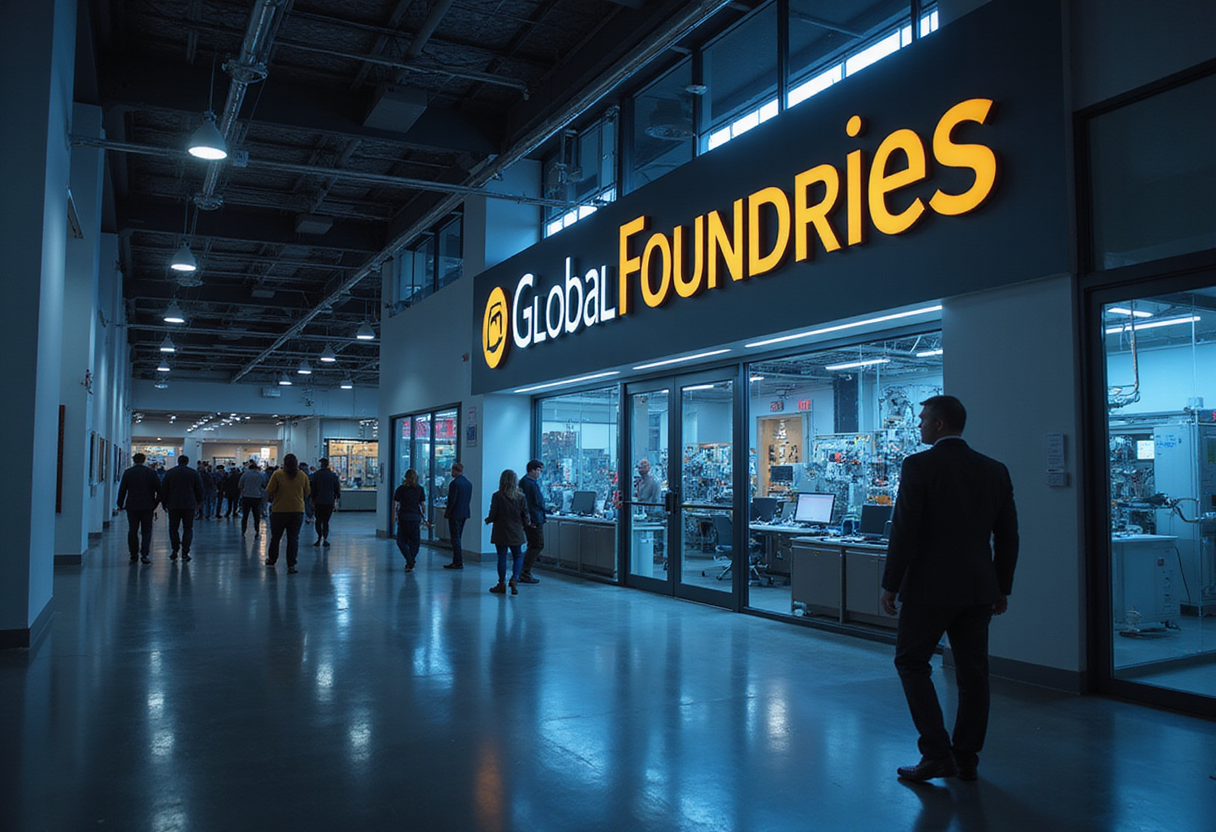
GlobalFoundries shares rose after the specialty-node foundry disclosed a $2 billion agreement with TSMC, its largest competitor in contract chipmaking.
- By
- Rebecca Stone
- Filed
- Channel
- Chip Manufacturing
- Read
- 3 min read
GlobalFoundries shares rose after the company disclosed a $2 billion agreement with TSMC, its largest competitor in the contract chipmaking market. The stock move signals that investors read the deal as commercially material for GlobalFoundries rather than a routine cross-licensing or supply arrangement.
The confirmed figure attached to the announcement is $2 billion. Neither company has yet detailed in the initial disclosure how the payment breaks down — whether it covers licensing, capacity, wafer supply or a settlement of pending litigation between the two foundries. What is confirmed is the direction of the market reaction: GlobalFoundries stock moved higher on the news.
Why does a TSMC payment matter for GlobalFoundries?
GlobalFoundries operates fabs differentiated from TSMC's leading-edge roadmap. The company exited the race to 7nm and below years ago and concentrates on mature and specialty nodes — the process generations used in automotive, power management, RF and embedded components. TSMC dominates advanced nodes and holds the majority of global foundry revenue.
A $2 billion agreement between a specialty-node supplier and the industry's advanced-node leader is unusual precisely because the two compete directly for customers at trailing-edge nodes, where TSMC has been expanding its own footprint to capture automotive and industrial demand.
For GlobalFoundries, a payment of this scale compares favorably with its recent capital-raising efforts. The U.S. government awarded the company $1.5 billion in direct funding under the CHIPS and Science Act to support fab construction and expansion in New York and Vermont. A $2 billion commercial agreement with TSMC now matches or exceeds that federal commitment — from a single counterparty, and on commercial terms rather than a grant.
What could the deal cover?
The announcement leaves the structure of the agreement open, and several industry-standard formats could fit a transaction of this size:
- Patent licensing or cross-licensing, resolving intellectual property exposure between two foundries with overlapping process portfolios
- Capacity or wafer supply arrangements, in which TSMC secures output at nodes it does not prioritize internally
- A settlement component, closing outstanding disputes without prolonged litigation
The companies have not publicly specified which of these applies, so any weighting among them remains analyst inference rather than confirmed fact.
How does this reshape the competitive picture?
Any durable arrangement between the number-one foundry and the largest specialty-node supplier would consolidate demand-side power at the mature nodes where GlobalFoundries, UMC, SMIC and TSMC itself all compete for sockets. Customers at those nodes — automotive Tier 1s, industrial suppliers and analog chipmakers — watch cross-agreements between foundries closely, because capacity commitments can tighten availability for everyone else.
The share-price reaction suggests the market expects the $2 billion to strengthen GlobalFoundries' balance sheet and its position relative to its direct mature-node rivals, rather than signal distress or a fire sale of technology.
For TSMC, the deal's cost is modest against its capital budget — the company routinely spends well over $30 billion a year on capacity and technology — but its strategic value depends entirely on terms that have not yet been disclosed.
Investors will now look for the follow-on detail: the duration of the agreement, whether it includes exclusivity or capacity guarantees, and whether GlobalFoundries quantifies the revenue impact in its next earnings call. Until those terms surface, the confirmed facts stand at a $2 billion agreement, a rising share price, and two rivals now formally entangled.
Source: Google News: TSMC
More from Rebecca Stone
Show full bio
Correspondent covering media and advertising at Chip Dispatch.
280 articles
Related articles
tsmc-signs-2-billion-u-s-chip-deal-with-globalfoundries-9deada08
TSMC Signs $2 Billion U.S. Chip Deal With GlobalFoundries
globalfoundries-shares-climb-on-2-billion-tsmc-agreement-f7fe644d
GlobalFoundries Shares Climb on $2 Billion TSMC Agreement
tsmc-taps-globalfoundries-for-2b-ai-chip-production-deal-df55033f
TSMC Taps GlobalFoundries for $2B AI Chip Production Deal
globalfoundries-to-manufacture-key-ai-chip-component-for-tsmc-46e9e28e
GlobalFoundries to Manufacture Key AI Chip Component for TSMC