Startups & FundingLOT 261122 · 4 min read
Google Commits Over $500 Million to Quaise's Super-Hot Rock Geothermal
Google will pay over $500 million for 50 MW from Quaise Energy's Oregon project, as super-hot rock geothermal startups race to drill three miles deep for AI-scale power.
Key takeaways
- Google committed more than $500 million for 50 MW from Quaise Energy's central Oregon project, announced Tuesday.
- The U.S. holds up to 57 terawatts of potential geothermal capacity; a single super-hot rock well could yield 15 MW or more.
- Mazama Energy raised $171 million; Quaise has raised over $270 million, per PitchBook.
- Mazama drilled its second well 80% faster than its first, with CO2 cooling cutting a further 20% of drilling time.
- XGS Energy received a DOE grant last week for materials and well design at super-hot rock depths.
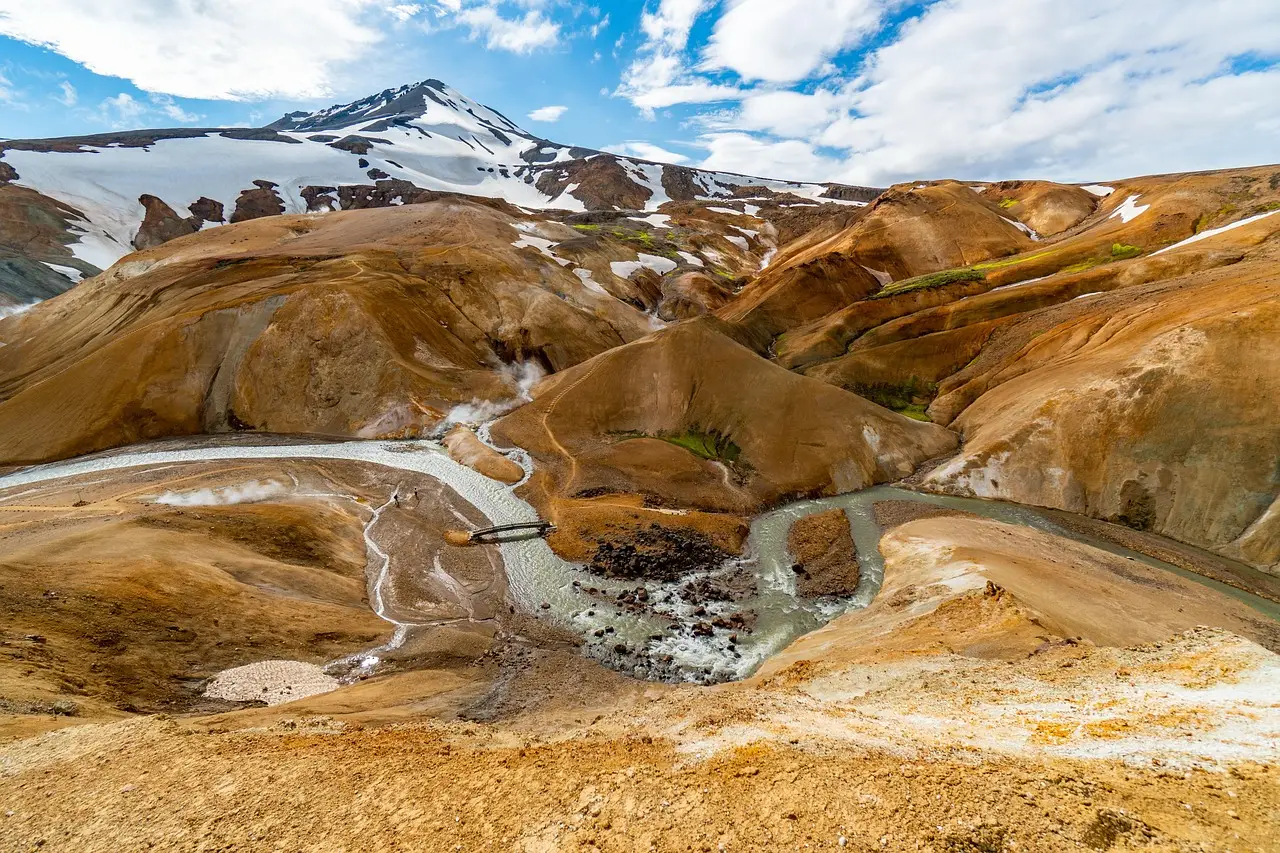
Google will pay more than $500 million for 50 megawatts of power from a Quaise Energy project in central Oregon, the clearest signal yet that super-hot rock geothermal is moving toward commercial reality. The deal, announced on Tuesday, commits the hyperscaler to a project that taps heat three miles underground, where temperatures and pressures turn water into a supercritical fluid capable of carrying far more energy than ordinary steam.
The commitment is a premium price for the amount of power delivered. That fits Google's pattern of backing suppliers early: it was both an investor in and an early customer of Fervo Energy, the enhanced geothermal developer that went public earlier this year and gave broader markets their first exposure to the sector.
How much geothermal capacity does the U.S. actually hold?
The U.S. carries up to 57 terawatts of potential geothermal generating capacity, according to industry estimates — more than enough, in principle, to power the next wave of AI data centers. Geothermal has drawn interest from investors, technology companies, and the Trump administration alike. The underlying technology is decades old, but drilling techniques borrowed from oil and gas have sharply improved its economics.
Super-hot rock geothermal, an emerging class within the field, could unlock much of that potential. The mechanism is straightforward: as water approaches the superheated core of the Earth, temperature and pressure rise until the water becomes a supercritical fluid, a part-gas, part-liquid state that carries tremendous amounts of energy. A single super-hot rock well could generate 15 megawatts of electricity or more. The takeaway: fewer, hotter wells mean more power per drill hole.
What separates Quaise from Mazama?
Two startups dominate the week's news, and they disagree on how to drill.
Quaise's approach sounds like science fiction. Starting at roughly 2.5 miles deep, the company swaps its conventional drill bit for one powered by a gyrotron, which bombards rock with millimeter-wave radiation and turns it to ash. The company hopes the method makes drilling under super-hot conditions cost-effective, something traditional metal drill bits struggle with because they wear out quickly at those temperatures.
Mazama Energy, backed by Khosla Ventures, announced on Monday that it had solved a different piece of the puzzle: keeping conventional drill heads cool. Its new technology, Carbon Chill, replaces water-based drilling mud with carbon dioxide. At depth, the CO2 turns supercritical and holds significant energy. Just above the drill bit, the gas passes through a valve resembling a rocket nozzle; as it expands on the far side, it cools rapidly and absorbs large amounts of heat. The CO2 also carries drill cuttings to the surface, where it is filtered and reused.
A third player, XGS Energy, received a Department of Energy grant last week to refine materials, well designs, and models that improve reliability at super-hot rock depths. XGS is testing the waters; Mazama and Quaise have made super-hot rock their core focus. The point: both leaders are betting that deeper, hotter wells will leapfrog today's state-of-the-art geothermal plants.
Why does drilling cost decide the race?
Drilling accounts for about a quarter to a third of a geothermal power plant's total costs. Any method that extracts more power from each well, or drills fewer wells for the same output, changes project economics directly.
Early results point in that direction. Mazama drilled its second well 80% faster than its first, and its CO2 cooling technology cut drilling time by a further 20%, co-founder and CEO Sriram Vasantharajan told TechCrunch. In plain terms, the learning curve on super-hot drilling is already showing up in the field.
Who is funding the field?
Investor backing has scaled quickly:
- Quaise Energy has raised more than $270 million from Prelude Ventures, Collaborative Fund, and Engine Ventures, with Vinod Khosla as an angel investor, according to PitchBook.
- Mazama Energy has raised $171 million from Khosla Ventures, Doerr Capital, and Bill Gates.
The risks remain real. Both companies depend on unproven techniques paying off at commercial depth, and neither has yet delivered grid power at scale. Google's half-billion-dollar commitment and Mazama's drilling speed gains suggest, however, that the race to super-hot rock geothermal is now backed by both capital and early performance data.
techcrunch.com (Source)
More from Tom Whitfield
Show full bio
Staff writer covering companies, deals and strategy in Semiconductors, chip manufacturing, hardware, AI compute at Chip Dispatch.
1,200 articles