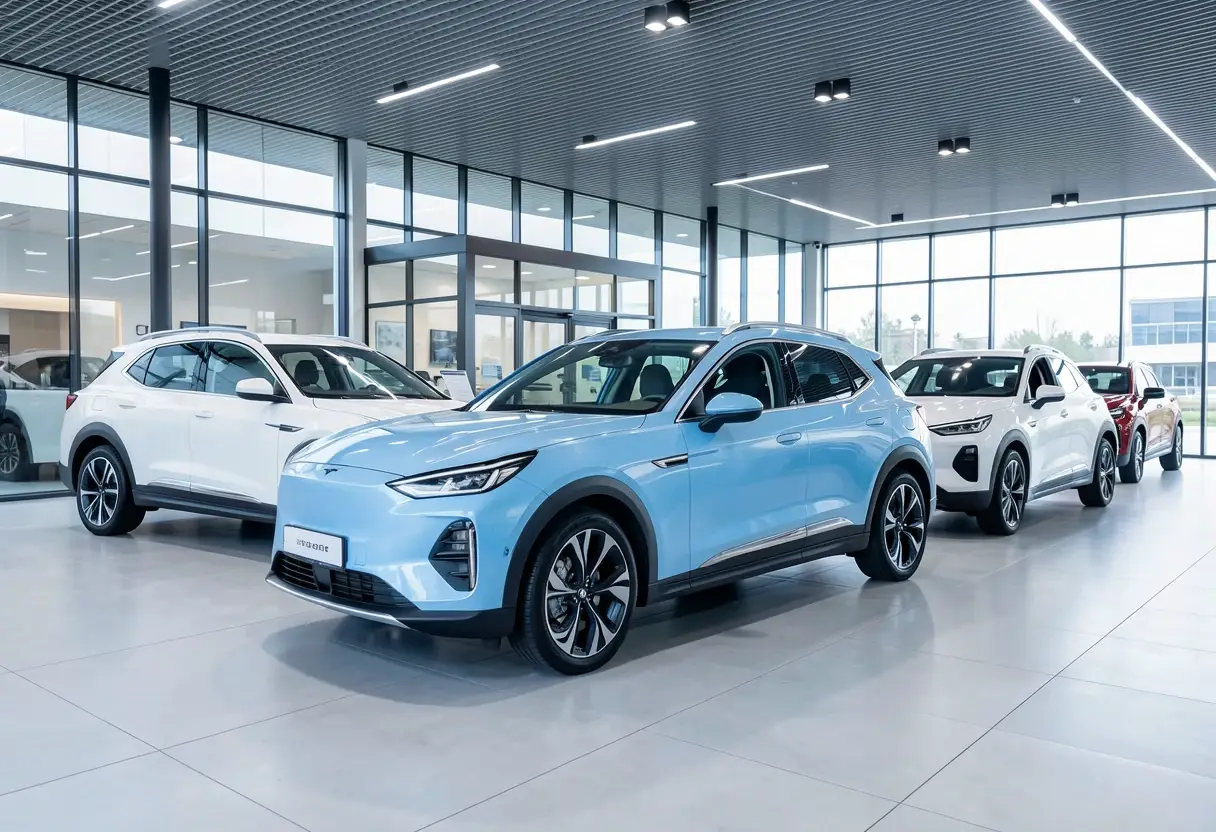
Huawei's HIMA deliveries fall 50.8% as Seres takes Aito lead
HIMA delivered 33,537 vehicles in October, down 50.8% year on year, while 2026 year-to-date deliveries fell 3.9%. Seres now leads Aito product, retail and service.
- By
- Tom Whitfield
- Filed
- Channel
- Tech Business
- Read
- 3 min read
Huawei's Harmony Intelligent Mobility Alliance delivered 33,537 vehicles in October, down 50.8% from a record 68,216 a year earlier and 10.5% from September, according to figures HIMA published and CnEVPost compiled.
October marked the fifth straight year-on-year decline. January-through-October deliveries reached 400,766, down 3.9%, after the total had risen 5.3% through September. That reversal produced the first negative year-to-date growth figure for 2026.
HIMA did not break out October deliveries by brand. The alliance therefore offered no direct measure of the Aito contribution, nor of performance at Luxeed, Stelato, Maextro and Shangjie. The figures left HIMA with negative year-to-date growth for the first time in 2026.
Why is HIMA losing momentum?
Nikkei Asia reported on Wednesday that HIMA was "showing signs of stress" as member brands, including Seres, sought more independence amid competition inside the group. It also reported that "sales of the Huawei-Seres Aito M9 have been sluggish."
The wider market also weakened. China's car sales fell more than 20% over roughly the first three quarters, while new energy vehicle sales fell 13%, according to China Passenger Car Association data cited by CNBC. BYD and Leapmotor continued to grow during that period.
Seres's Shanghai-listed shares had fallen more than 60% during 2026 as of early October, according to CNBC. HIMA's lack of brand-level figures prevents a precise allocation of the delivery decline between weak end demand and pressure on individual products.
Three indicators now point in the same direction: HIMA's October vehicle count, the reported weakness in Aito M9 sales and Seres's share-price decline. They do not measure the same thing. The alliance figure covers several brands, the M9 report concerns one model, and the share price reflects investor expectations about Seres.
Without a brand split, HIMA cannot quantify how these effects combine. The delivery figure therefore shows the scale of the setback, but not its internal mix.
The slowdown reflects a weak Chinese market and internal competition, although the available figures do not show which factor had the larger effect.
What changes under the Seres-led Aito model?
Huawei does not build cars. It supplies vehicle software and driver-assistance systems for products made by partners including Seres and Chery. That structure gives the technology group a central role in the vehicle stack without making it the automaker.
In September, Huawei and Seres agreed that Seres would lead product definition, design, marketing, retail and service for Aito. Huawei would provide support, and the companies signed a new five-year agreement.
Seres now runs the brand's customer-facing operations, including retail and service, while Huawei moves into a supporting position. The arrangement gives Seres greater control over product and commercial decisions at the marque affected by the reported M9 sales slowdown.
The five-year agreement gives the revised Aito arrangement a multi-year contractual term. Seres still operates within an alliance whose member brands are seeking greater independence amid internal competition.
Huawei still leads Luxeed, Stelato, Maextro and Shangjie, the alliance's other four brands. Seres now leads the customer-facing Aito operation, while Huawei remains the technology supplier and leader of four other HIMA brands.
Can HIMA turn around?
HIMA enters the rest of 2026 with negative year-to-date growth, weak Chinese vehicle demand and a reorganized Aito business. With no brand-level delivery split, the size and source of any recovery remain uncertain.
Seres's control could sharpen decisions around Aito products, marketing, retail and service. Whether that focus translates into more vehicles depends on demand in a market where Chinese sales have fallen and BYD and Leapmotor have continued to expand.
With China vehicle demand still falling and BYD and Leapmotor still growing, HIMA's next test is whether the reorganized Aito operation can reverse its declining delivery trend.
Source: mlq.ai
More from Tom Whitfield
Show full bio
Staff writer covering companies, deals and strategy in Semiconductors, chip manufacturing, hardware, AI compute at Chip Dispatch.
835 articles
Related articles
nvidia-s-china-ai-share-contracts-as-huawei-ascends-9189f5f6
Nvidia's China AI Share Contracts as Huawei Ascends
nvidia-s-china-ai-chip-share-drops-to-34-as-huawei-gains-idc-says-2426bef9
Nvidia's China AI Chip Share Drops to 34% as Huawei Gains, IDC Says
hua-hong-posts-record-987-1-million-quarter-guides-above-it
Hua Hong Posts Record $987.1 Million Quarter, Guides Above It
china-considers-green-lighting-nvidia-purchases-as-huawei-supply-falls-short-5f58caf2
China Considers Green-Lighting Nvidia Purchases as Huawei Supply Falls Short