iCents commits RM36.15 million to new semiconductor facility
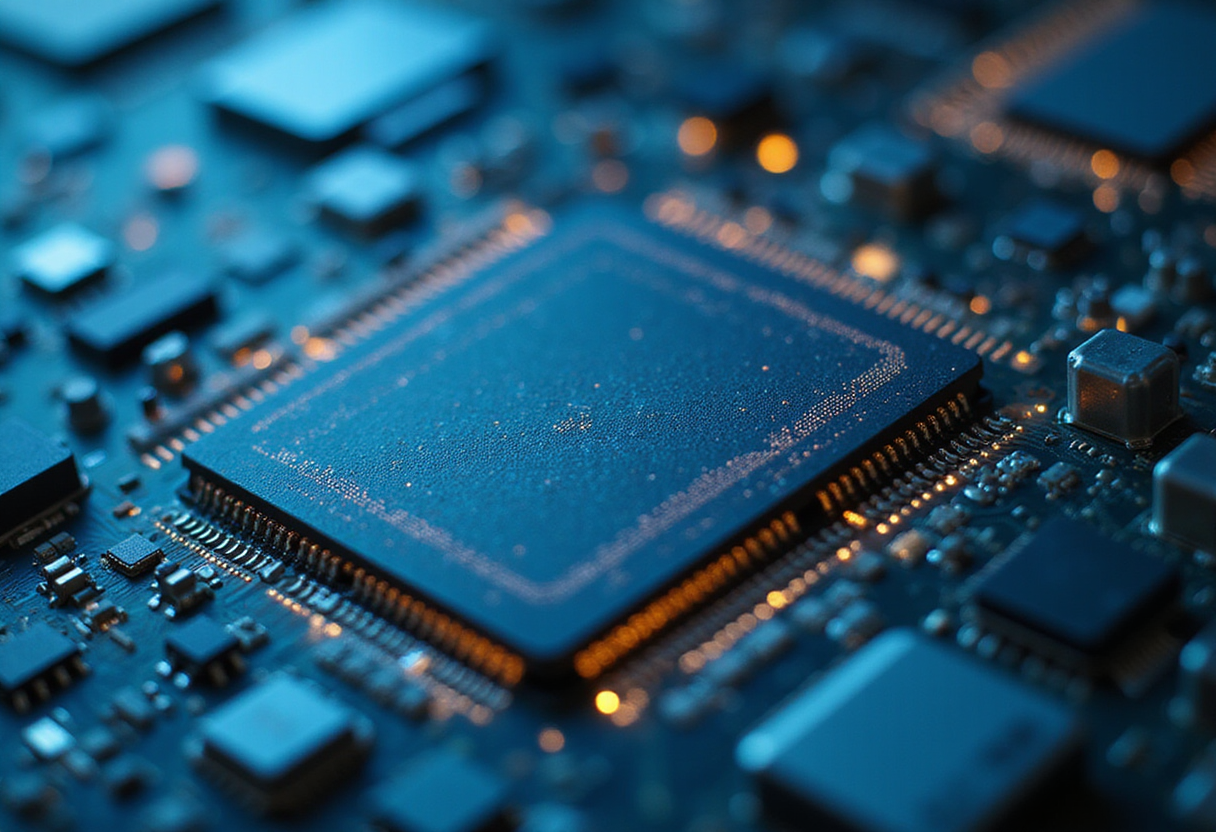
iCents will invest RM36.15 million in a new semiconductor facility, The Star reported, adding a mid-scale project to Malaysia's growing chip investment pipeline.
- By
- Grace Kim
- Filed
- Channel
- Chip Manufacturing
- Read
- 3 min read
Malaysian company iCents will build a semiconductor facility valued at RM36.15 million, The Star reported, adding one more mid-sized project to the country's expanding roster of chip-related capital investments.
The figure — roughly RM36.15 million, or about US$7.7 million at current exchange rates — positions the project firmly in the small-to-mid tier of semiconductor capital expenditure, where packaging, test, component supply and niche device production dominate rather than leading-edge wafer fabrication. The Star's report names iCents as the investor but does not specify the facility's site, production scope, timeline or process technology.
Why does a RM36 million chip facility matter?
Scale defines the story. Leading-edge fabs from the likes of TSMC, Samsung and Intel carry price tags in the tens of billions of dollars. A RM36.15 million investment cannot buy that class of capacity. What it can buy is a foothold in one of the industry's many lower-capital segments — packaging and test, discrete components, sensors, or supply-chain services — where Southeast Asian entrants increasingly compete.
Malaysia already hosts a dense cluster of such operations. Global players including Infineon, Intel and Texas Instruments run assembly and test operations in Penang and Kulim, and the country supplies a substantial share of the world's chip packaging and testing output. Malaysia's government has spent the past several years courting exactly this kind of mid-scale investment as part of its national semiconductor strategy, positioning the country as a neutral, cost-competitive node between US-China tensions.
Against that backdrop, iCents' project fits a recognisable pattern: domestic or regional companies adding capacity in segments where entry costs are measured in millions rather than billions, and where proximity to existing packaging clusters lowers the barrier to participation in global supply chains.
What is confirmed and what is not
The confirmed facts are narrow. iCents is the investor. The facility is semiconductor-related. The investment value is RM36.15 million. The Star's headline-level report does not disclose:
- The facility's location within Malaysia
- Its intended function — fabrication, packaging, test, or another segment
- A construction or commissioning timeline
- Expected headcount or output capacity
- Any government incentives attached to the project
Each of those gaps matters for assessing commercial impact. A packaging plant sited near Penang's existing ecosystem would carry different economics and a faster ramp than a greenfield site elsewhere. Analysts tracking Malaysian semiconductor investment typically distinguish announced figures — like this RM36.15 million — from contracted, financed and deployed capital, and the report does not indicate which stage this commitment has reached.
The competitive context
The investment lands during a period of heavy, policy-driven semiconductor capacity building across Southeast Asia. Neighbouring Singapore continues to attract advanced packaging and specialty fab capital; Vietnam and India are competing aggressively for assembly and test projects with tax incentives; and Malaysia's own incentive framework has drawn repeated commitments from multinationals expanding back-end capacity.
For domestic Malaysian firms, the calculus differs. Companies of iCents' scale are not racing TSMC on process nodes. They are betting on demand for mature-segment devices, packaging services and components — markets where global capacity remains tight in pockets and where regional customers want supply-chain redundancy after the shortage years of 2021-2023.
A RM36.15 million ticket also signals a company investing from operating strength or accessible financing rather than sovereign-scale subsidy programmes. That distinction shapes execution risk: smaller projects often move faster but carry less cushion against demand downturns, and their economics hinge on securing customers early.
What comes next
Watch for follow-on disclosure on site selection, function and timeline — the three details that will determine whether iCents' RM36.15 million becomes operational capacity within the typical 18-to-36-month window for facilities of this class, or remains a announced commitment awaiting ground-breaking. Until the company specifies the facility's role in the chip value chain, the investment reads as another vote of confidence in Malaysia's back-end semiconductor cluster rather than a change in the regional competitive picture.
Source: Google News: semiconductors
More from Grace Kim
Show full bio
Market editor covering people, launches and day-to-day practice in Semiconductors, chip manufacturing, hardware, AI compute at Chip Dispatch.
325 articles
Related articles
samsung-plans-1-5-billion-chip-testing-plant-in-vietnam-915d613e
Samsung Plans $1.5 Billion Chip Testing Plant in Vietnam
singapore-lands-7-8-billion-fab-with-44-000-wafers-a-month-output-0aa3deb2
Singapore Lands $7.8 Billion Fab With 44,000-Wafers-a-Month Output
intel-malaysia-expands-advanced-packaging-in-penang-for-ai-chips-dcb8f094
Intel Malaysia Expands Advanced Packaging in Penang for AI Chips
tsmc-prepares-to-pour-265-billion-into-u-s-fab-buildout-762fb55c
TSMC Prepares to Pour $265 Billion Into U.S. Fab Buildout