Intel Commits Up to $6.1 Billion to Substrates as AI Bottleneck Bites
Intel disclosed up to $6.1 billion in substrate contracts as FC-BGA shortages bite; Samsung Electro-Mechanics and LG Innotek expand capacity into a supplier-favorable market.
- By
- Rebecca Stone
- Filed
- Channel
- Hardware & Components
- Read
- 4 min read
Intel has signed two substrate supply contracts worth a combined $5.3 billion to $6.1 billion (₩7.1–8.2 trillion), with roughly $3.3 billion due by the end of 2027 — money staked on components the chipmaker won't fully use for years. The disclosure, buried in Intel's third-quarter filing with the U.S. Securities and Exchange Commission, marks the moment substrates stopped being a quiet line item and became the AI supply chain's newest choke point.
Intel told the SEC it cannot adequately meet demand for data-center CPUs because packaging substrates are short, and it expects constraints on substrates and memory to persist through next year. That admission from one of the world's largest chipmakers reframes the race: the fight has moved from chip design and production to locking up key components years in advance.
Why can't substrate supply keep up?
The bottleneck traces back to physics and calendars. AI server CPUs and GPUs keep getting more powerful, so the substrates connecting them must grow larger and stack more circuit layers with precision. That makes production hard. It makes capacity expansion slow — two to four years, by industry estimates.
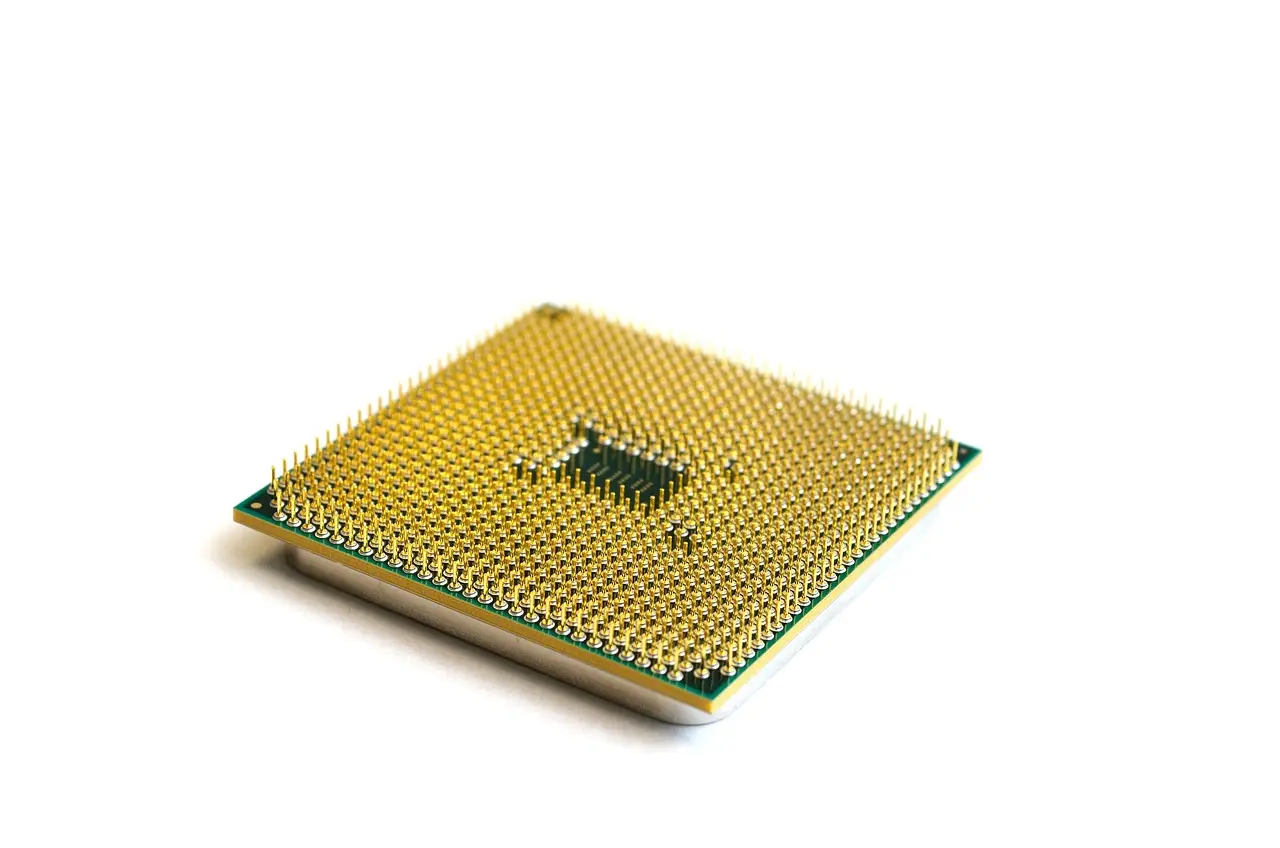
The product at the center is the flip-chip ball grid array, or FC-BGA: a high-value substrate that carries electrical signals between the chip and the mainboard, used mainly in AI servers and data centers. Counterpoint Research projects the supply shortfall for high-performance substrates will reach about 20% by around 2027.
The shortage is already rewriting deal structures. Customers now help fund substrate makers' capital expenditures and guarantee long-term purchase volumes — the ordering party effectively holding the purse strings for production facilities. Component procurement has become business competitiveness.
What is Samsung Electro-Mechanics building?
Samsung Electro-Mechanics is spending big. In September it announced a ₩6.78 trillion (about $5.1 billion) investment to expand FC-BGA capacity, split between ₩4.27 trillion ($3.2 billion) at its Sejong plant in South Korea and ₩2.51 trillion ($1.9 billion) at its Vietnam subsidiary. Mass production at Sejong is scheduled to start in September 2028; Vietnam comes online in June 2030.
The company is pursuing the buildout on the basis of funding support and mid- to long-term purchase commitments from global customers. That eases the burden of large-scale investment while locking in future sales volumes. Even so, demand keeps outpacing the plan. On its third-quarter earnings call, Samsung Electro-Mechanics said the currently planned expansion alone would struggle to fully meet customer demand, and it is reviewing the timing and scale of additional investment. Additional order requests have continued since the announcement.
The revenue confirms the pressure. Third-quarter package solution revenue hit ₩939 billion (about $699.8 million), up 58% year on year, driven by high-value FC-BGA sold into server CPUs, AI accelerators and network equipment.
Where does LG Innotek fit?
LG Innotek moved on the AI substrate market in September, unveiling an FC-BGA for AI accelerators measuring more than 100 mm on a side. It is discussing supply plans with customers and targets mass production of AI training and inference substrates in 2027, expanding into high-value server substrates by 2028. It is also in talks with two major customers on long-term supply agreements and additional investment plans.
LG Innotek President Moon Hyuk-soo said recently of the FC-BGA business: "LTAs are continuing and will improve starting next year." The company's third-quarter package solution revenue came in at ₩481.8 billion (about $359.1 million), up 10.1% from a year earlier, underpinned by expanded FC-BGA supply for PC CPUs to global customers.
How long does the shortage last?
Analysts see the squeeze as structural. "As AI semiconductor demand grows rapidly, substrate supply is not keeping pace," said Kwon Min-kyu, an analyst at Kiwoom Securities. "The shortage will continue for the time being, which will also have a positive effect on substrate makers' earnings."
Substrates were long an overlooked component in the semiconductor value chain. AI server investment has reshaped them into a supplier-favorable market. For South Korean makers, the shift cuts both ways: large upfront investment burdens and deepening dependence on customers on one side, expanding orders for high-value products on the other. With capacity taking years to build and Counterpoint's 20% shortfall looming toward 2027, the supplier-favorable dynamics look set to hold through the decade's second half.
Source: Google News: AI chips
More from Rebecca Stone
Show full bio
Correspondent covering technology and product news in Semiconductors, chip manufacturing, hardware, AI compute at Chip Dispatch.
750 articles
Related articles
applied-materials-bets-on-ai-demand-to-drive-equipment-sales-through-b3e71079
Applied Materials Bets on AI Demand to Drive Equipment Sales Through 2030
samsung-electro-mechanics-puts-6-7-trillion-won-into-ai-chip-substrates-9caed8b1
Samsung Electro-Mechanics Puts 6.7 Trillion Won Into AI Chip Substrates
intel-shares-drop-3-9-as-tsmc-packaging-remarks-cloud-expansion-plan-ce36dc99
Intel Shares Drop 3.9% as TSMC Packaging Remarks Cloud Expansion Plan
doubts-over-a-i-spending-send-tech-stocks-lower-nyt-reports-78d0eda3
Doubts Over A.I. Spending Send Tech Stocks Lower, NYT Reports