Memory & Storage · 4 min read
Kioxia previews 3-microsecond XL-Flash for 18M-IOPS GP2 SSD
Kioxia's third-generation XL-Flash prototype delivers 3 µs average reads, targets March 2027 sampling and debuts in a GP2 SSD rated above 18 million random-read IOPS.
Key takeaways
- Kioxia’s Gen 3 XL-Flash prototype averages 3 µs read latency and targets March 2027 sampling.
- The flash provides a reported 70% higher bit density and about 135% better power efficiency than Gen 2.
- The first GP2 drive is rated above 18 million 512-byte random-read IOPS.
- GP2 promises up to 28 GB/s sequential reads if it saturates PCIe 6.0 x4.
- Kioxia promises GP2 evaluation samples by the end of 2027 and later GP drives targeting 100 million random-read IOPS.
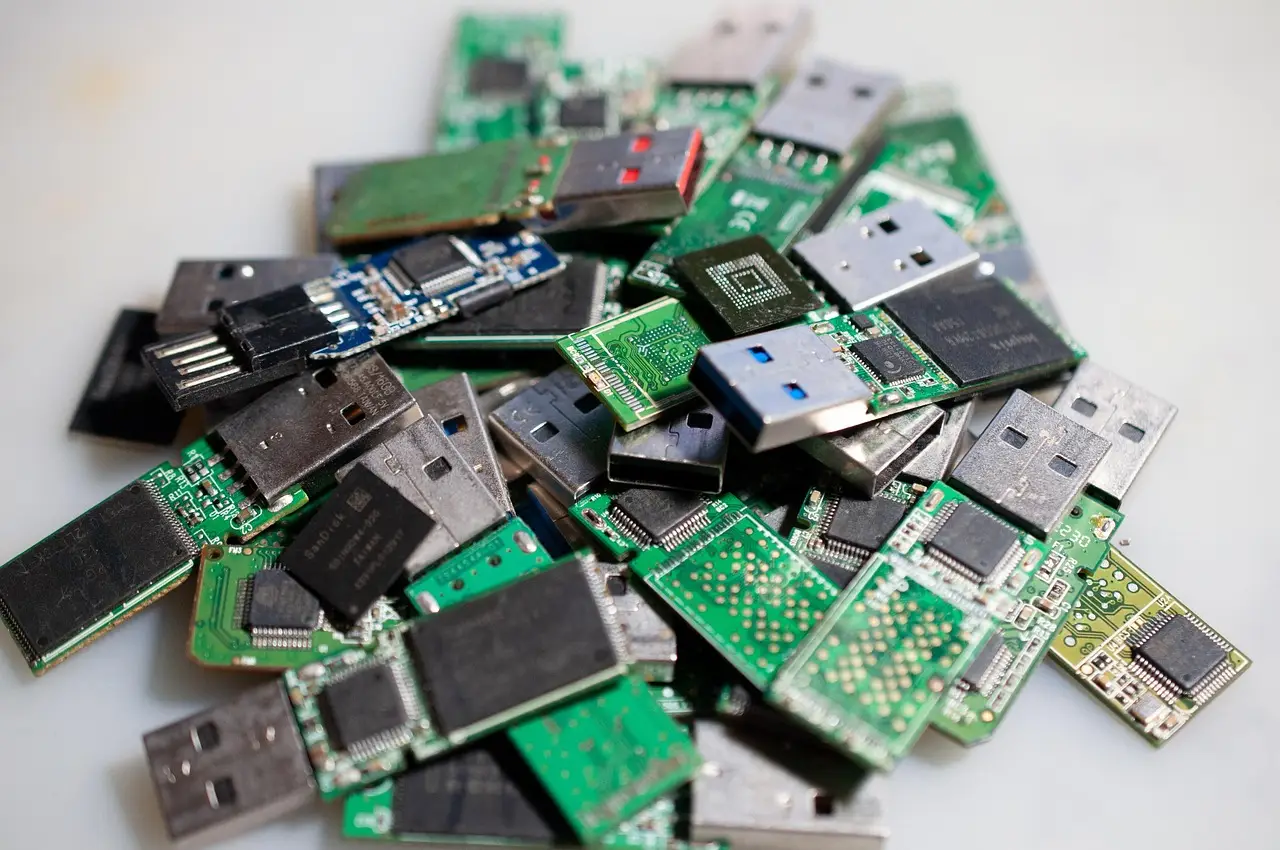
Kioxia says its third-generation XL-Flash prototype delivers 3 µs average read latency, with flash samples scheduled for March 2027. The NAND technology will first appear in the GP2 enterprise SSD, rated above 18 million 512-byte random-read input/output operations per second.
At its KIOXIA Forum in Tokyo, Kioxia described XL-Flash as “a new memory tier” between DRAM and conventional flash. The aim is to complement, or partly replace, some DRAM in AI servers and data centers, reducing system cost.
That role resembles Intel’s former Optane offering, although the memory physics differ. Optane used 3D XPoint, developed by Intel and Micron, which stored bits as resistance changes rather than the trapped charge used in NAND. Intel exited the Optane business in 2022.
How does Gen 3 reach 3-microsecond reads?
Kioxia builds Gen 3 on BiCS flash and tunes it for low read latency and high write endurance. Its main process change is CMOS directly Bonded to Array, or CBA. Kioxia fabricates the logic CMOS wafer and flash memory-cell wafer separately, then bonds them. The company says the construction provides about 135% better power efficiency and 70% higher bit density than Gen 2.
At 3 µs, the prototype’s average read latency is less than one-tenth of the 40 µs of 2023 BiCS8 TLC, built on a 1Tb die. Available prototype details list SLC on a 128Gb die, but Kioxia has not disclosed full specifications, including the flash’s layer count.
Earlier XL-Flash generations used 16 smaller planes per die with 4KB pages. That structure, common in SLC and low-latency flash, supports the fine-grained I/O that GP2 targets. Kioxia’s 2.5-times IOPS claim against typical TLC SSDs came from 512-byte testing against its own CM10 drives, not a broad competitor comparison. That makes the claim specific, not universal.
Kioxia reports SLC endurance of 150,000 to 250,000 program/erase cycles, at least 50 times standard TLC, with a 4.8 Gb/s interface. CBA also improved the efficiency of 512-byte reads in Kioxia’s own tests, supporting the GP2 design target.
How does it compare with earlier XL-Flash and Optane?
Gen 1 arrived in 2019 with SLC on a 128Gb die and read latency below 5 µs. Gen 2 followed in 2022 with SLC or two-bit MLC, offering 128Gb and 256Gb dies. SLC latency remained below 5 µs, while MLC stayed below 10 µs. MLC lowered bit cost but gave up some like-for-like performance for better price-to-density.
Gen 3 reportedly returns to SLC, with a 3 µs average that improves on Gen 1’s sub-5 µs rating. Its latency sits in the same range as Optane SSDs, although 3D XPoint would retain an advantage in write performance because it does not need to erase cells before writing new data.
When does GP2 reach customers?
The GP2 Super High IOPS SSD promises up to 28 GB/s in sequential reads if it saturates its expected PCIe 6.0 x4 link. That number remains conditional. Endurance reaches up to 50 drive writes per day, placing the drive near Optane storage in Kioxia’s framing. Kioxia is considering E1.S and E3.S form factors and says GP2 will support direct liquid cooling, increasingly necessary in GPU-heavy data centers.
The schedule separates the flash from the finished drive. Kioxia expects XL-Flash to sample with selected customers before the end of the first quarter of 2027, consistent with its March target. The company promises GP2 evaluation samples only by the end of 2027, and says exact drive specifications may change.
Kioxia first showed the GP series with Nvidia earlier this year. It positions GP2 as a flash tier intended to help a GPU use its HBM more effectively. Kioxia frames the approach as part of a wider shift toward memory offloading, even among enthusiasts, as AI workloads strain memory capacity and increase the importance of KV caching.
Later GP drives will target as many as 100 million random-read IOPS, according to the roadmap Kioxia and Nvidia are pursuing for AI servers. That figure is a future target, not an announced GP2 rating.
Kioxia announced its XL1 series of CXL memory-expansion modules in August, also using XL-Flash. The company said it “will continue to leverage the speed, power efficiency, and endurance of XL-FLASH” for emerging data-center needs.
The near-term verdict is narrower than the roadmap: whether GP2 samples arrive on schedule and whether its flash tier can cut system costs enough to compete with added DRAM.
Tom's Hardware (Source)
More from Nathan Brooks
Show full bio
Senior reporter covering people, launches and day-to-day practice in Semiconductors, chip manufacturing, hardware, AI compute at Chip Dispatch.
1,305 articles