Science & Technology · 3 min read
Long March 6C Lofts Four CAS Satellites, Pairing 200-TOPS Radar Imaging
A Long March 6C launched from Taiyuan on Nov. 29 with four CAS satellites, including two Galaxy Space X-band SAR spacecraft with sub-meter resolution and 200-TOPS onboard computers.
Key takeaways
- Long March 6C launched from Taiyuan at 11:53 a.m. Beijing time (03:53 UTC) on Nov. 29, the 683rd Long March flight.
- CAS Satellite 12 and 13 are X-band SAR satellites built by Galaxy Space with sub-meter best resolution and onboard computers above 200 TOPS.
- The launch brings Galaxy Space's total of launched SAR satellites to 20.
- The four satellites are the second batch of the CAS 'Space Cloud' program to reach orbit.
- This was the third flight of the Long March 6C; its previous flight on Aug. 25 carried seven satellites.
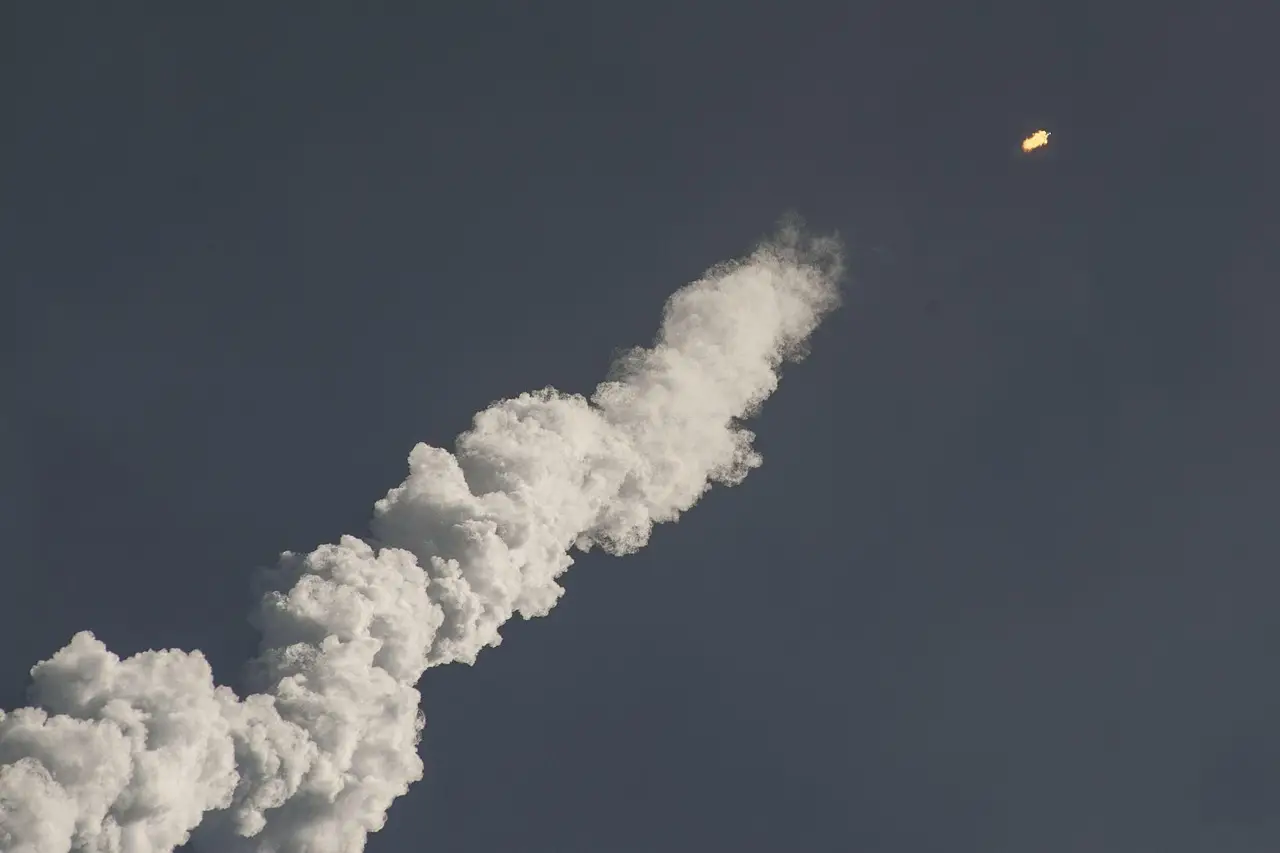
A Long March 6C rocket lifted off from the Taiyuan Satellite Launch Center in Shanxi province at 11:53 a.m. Beijing time (03:53 UTC) on Nov. 29 and placed four satellites into their planned orbits, Xinhua reported. The flight was the 683rd launch of the Long March rocket family and only the third mission of the 6C variant, according to the Y3 designation in Chinese reports.
The payload consisted of two elements: Space-based Cloud Technology Verification satellites 01 and 02, and CAS Satellite (Zhongke) 12 and 13. The four spacecraft form the second batch of the Chinese Academy of Sciences' 'Space Cloud' satellites to reach orbit, The Paper reported. Neither report gave technical details of the two cloud verification satellites beyond their names.
What is flying on this mission?
CAS Satellite 12 and 13 carry the more detailed specification. Beijing-based Galaxy Space built both spacecraft for CAS Satellite, and both are X-band synthetic aperture radar (SAR) satellites with a best resolution below one meter, The Paper reported. That resolution class allows the satellites to distinguish objects smaller than a meter across, regardless of daylight or cloud cover, which is the defining advantage of radar imaging over optical sensing.
The pair supports repeat-pass interferometry, a technique that compares radar returns from the same ground location taken on different passes. The method can measure ground deformation at the millimeter level. The report lists natural-resource surveying, agriculture, disaster monitoring, water management and urban planning as the intended applications.
The launch also carries weight for the manufacturer. The two spacecraft bring Galaxy Space's tally of launched SAR satellites to 20, The Paper reported.
Why does onboard computing matter here?
Each satellite carries an onboard computer rated above 200 TOPS, according to The Paper. That processing budget lets the spacecraft preprocess and interpret radar images, extract features and compress data in orbit. The purpose is to reduce the volume of data that must be transmitted to the ground.
This is the mechanism worth watching. SAR instruments generate large volumes of raw data, because a radar satellite continuously records echo returns across wide swaths. Downlink capacity, not the radar itself, often sets the practical limit on how much useful product a constellation can deliver. Moving interpretation and compression onto the satellite changes that balance, and the 'Space Cloud' program is built around testing exactly such in-orbit capabilities.
The four satellites will be networked with other Space Cloud satellites for in-orbit application tests, The Paper said. The program belongs to the Aerospace Information Research Institute of the Chinese Academy of Sciences.
Where does the Long March 6C stand?
The Nov. 29 mission was the third flight of the Long March 6C, per the Y3 designation in Chinese reports. The rocket's previous flight, on Aug. 25, put seven satellites into space from the same launch center, CGTN reported at the time.
The 6C is therefore flying at a low but steady cadence, with both of its 2025 missions to date launching from Taiyuan. The 683rd-flight count for the overall Long March family reflects the accumulated launch rate of China's broader fleet rather than the 6C alone.
No details on payload mass, orbit parameters or contract value appeared in either report. Those gaps leave open questions about how the 'Space Cloud' network will be assembled in later batches.
What comes next?
Neither Xinhua nor The Paper specified a date for the third batch of Space Cloud satellites. What is confirmed is the program's direction: more networked satellites, more onboard processing, and a growing SAR fleet from Galaxy Space, whose radar constellation now stands at 20 spacecraft after this launch.
mlq.ai (Source)
More from Tom Whitfield
Show full bio
Staff writer covering companies, deals and strategy in Semiconductors, chip manufacturing, hardware, AI compute at Chip Dispatch.
1,339 articles