AI & ComputeLOT 261122 · 4 min read
Meta Rethinks 2030 Net-Zero Pledge as AI Emissions Jump 45%
Meta's 2025 net emissions hit 11.8M tons CO2e, up 45%, as Scope 3 supply-chain output doubled its 2021 baseline and forced a rethink of the 2030 net-zero deadline.
Key takeaways
- Meta's 2025 net emissions rose 45% year over year to 11.8 million metric tons CO2e, per its 2026 Sustainability Report posted November 19, 2026.
- Scope 3 emissions of 11,858,913 tons are ~2.05x Meta's 5,772,583-ton 2021 baseline it vowed not to exceed by end-2031.
- Q3 capex reached $34.906 billion, up 85.38%, with free cash flow at -$2.120 billion; 2026 capex guidance holds at $135-145 billion.
- Zuckerberg said on the October 21, 2026 call that Muse is 'very compute-intensive to run' and not yet globally launched.
- META stock fell 5.93% to $560.84 on November 20 amid the report and a broader tech selloff.
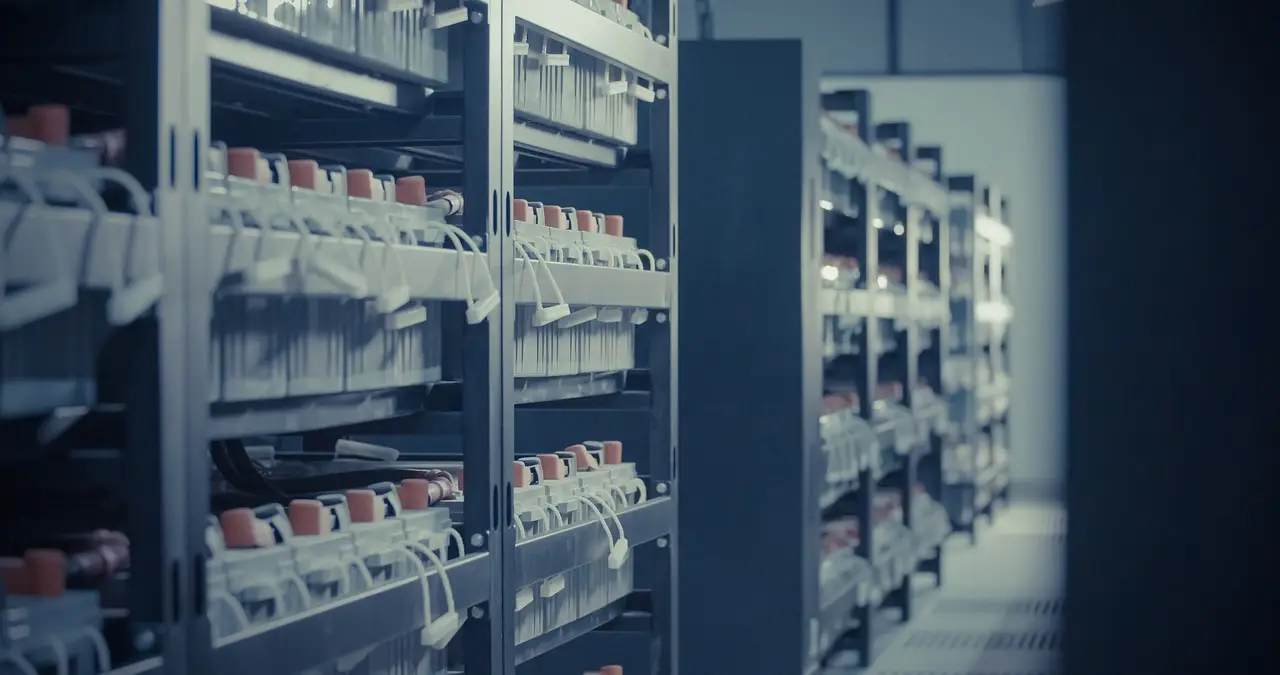
Meta Platforms posted net emissions of 11.8 million metric tons of CO2 equivalent in 2025, up 45% from 2024, and said on November 19, 2026 that it is rethinking the 2030 deadline for its net-zero goal. The admission came in the company's 2026 Sustainability Report, released Thursday — and the stock paid for it. Shares closed Friday, November 20, at $560.84, down 5.93%, part of an 11.6% slide over the week; they traded at $569.32 after hours.
The drop came during a broad tech selloff, but the report itself matters beyond the climate headline. Meta wrote it, and it is one of the few direct measurements of how physical the AI buildout has actually become.
What did Meta promise, and what changed?
The company set the goal in 2020: net zero across its entire value chain, plus water positive, by 2030. The report opens with a letter from Rachel Peterson, vice president of data centers, and Blair Swedeen, global head of net zero and sustainability. They wrote that Meta is "re-evaluating our timelines, sequencing, and interim milestones."
Their explanation is straightforward. AI demand grew faster than almost anyone projected, and clean energy fell behind because of years-long grid interconnection queues, slow permitting, and lagging transmission buildout. Meta says its long-term ambitions are unchanged. It gave no date for a revised plan.
How do emissions jump 45% on 100% clean power?
Here's the twist. Meta says it matched 100% of its electricity with clean and renewable energy for the sixth straight year. Direct Scope 1 emissions were just 33,555 tons, and market-based Scope 2 — purchased power — was 10,861 tons.
Almost the entire footprint sits in Scope 3, the emissions embedded in Meta's supply chain. Scope 3 came to 11,858,913 tons, roughly 99% of the total. Capital goods — servers, chips, networking gear, steel and concrete — made up 73% of it. Clean power contracts do little to dent that.
The numbers behind the expansion:
- Electricity use rose 34.9% to 24,849,122 megawatt-hours, of which data centers consumed 24,523,035.
- Third-quarter capex hit $34.906 billion, up 85.38%.
- Free cash flow for the quarter was negative $2.120 billion.
- Meta still guides 2026 capex to $135 billion to $145 billion.
Why emissions double as a capex gauge
Capital goods emissions rise with physical construction, so the footprint effectively tracks spending. By 24/7 Wall St.'s calculation, 2025 Scope 3 was about 2.05 times the 5,772,583-ton 2021 baseline that Meta committed not to exceed by end-2031. That interim target is now out of reach. Hitting it would require cleaner suppliers or slower building — and neither is on the menu while capex guidance sits at $135-145 billion.
The same grid bottlenecks that stalled clean energy also threaten the AI plan itself. Interconnection queues and permitting delays limit how fast new data centers can come online. Mark Zuckerberg addressed the strain on the October 21, 2026 earnings call, saying the Muse model is "very compute-intensive to run" and that "we have not launched it globally yet."
Who else is exposed?
Alphabet, Google's parent, faces the identical squeeze. It pledged in 2020 to run on carbon-free energy by 2030, stopped claiming carbon-neutral operations as of 2024, and has acknowledged its emissions are still rising. The pattern is industry-wide: hyperscalers can buy clean power faster than they can build clean supply chains.
What should investors track after the climate reset?
The climate walk-back adds some reputational and regulatory exposure, but the bigger question for the stock is whether the expansion pays off. So far, the core business is carrying it. Third-quarter revenue rose 26.07%, and the stock trades at a P/E of 21 — reasonable for that growth rate. Alphabet offers the comparison case: its AI spending is visibly converting into sales, with Google Cloud revenue up 103%.
The real test comes at Meta's fourth-quarter call, where management will issue 2027 capex guidance. If capex rises again while fourth-quarter revenue lands below the $73 billion low end of guidance, the case for the buildout weakens — and the emissions curve becomes the least of the stock's problems.
247wallst.com (Source)
More from Rebecca Stone
Show full bio
Correspondent covering technology and product news in Semiconductors, chip manufacturing, hardware, AI compute at Chip Dispatch.
1,245 articles