Meta Saved $3.9 Billion by Calling AI Data Centers 'Pilot Models'
Meta's $3.9 billion research tax credit relied on labeling gigawatt AI data centers as 'pilot models.' Reserves for uncertain tax positions hit $18.74 billion.
- By
- Grace Kim
- Filed
- Channel
- Chips & Policy
- Read
- 3 min read
Meta saved $3.9 billion in federal research tax credits in 2025 by classifying its AI data centers as "pilot models" and the Nvidia chips inside them as experimental materials, according to a New York Times investigation published September 30, 2026.
The savings have escalated fast: $700 million in 2023, $2 billion in 2024, $3.9 billion in 2025. That trajectory makes Meta the single biggest beneficiary of this research tax credit among all publicly traded companies, the Times reported, citing Meta's own disclosures.
How does a data center qualify as an experiment?
The mechanism rests on a decades-old federal research tax credit, originally passed in 1981, intended for lab experiments and prototypes. Meta applies it to some of the largest capital projects in corporate history.
In January 2025, Mark Zuckerberg announced plans for a data center exceeding 2 gigawatts of power capacity — large enough to cover a significant part of Manhattan. For tax purposes, Meta classifies this and similarly massive facilities as pilot models. The Nvidia GPUs deployed in these clusters are treated as experimental materials rather than standard production hardware.
The label sits uneasily beside Zuckerberg's own public framing at the time: the data centers would "drive our core products and business." By June 2026, Meta had begun openly sharing details of its compute infrastructure with investors, covering partnerships with Nvidia, AMD, AWS, Arm and Broadcom, plus its in-house MTIA chips. None of that disclosure reads like an experiment still in testing.
What does the buildout actually look like?
Meta's compute ambitions span multiple multi-gigawatt clusters. The first, named Prometheus, is already partly online. A second, Hyperion, is designed to scale to 5 gigawatts over several years.
In July 2025, Zuckerberg said Meta would "invest hundreds of billions of dollars into compute to build superintelligence." He added: "We have the capital from our business to do this."
Meta defends the credit by pointing to roughly $200 billion spent on research and development over the past five years, arguing that scale alone justifies the benefit. The counterargument, now surfacing in Washington, is that a credit built for 1980s-era innovation is subsidizing infrastructure explicitly designed for long-term production use.
What do Meta's own filings reveal about the risk?
Meta's accountants appear to share some of that concern. In SEC filings, the company warns investors that the tax savings could be challenged by regulators. Its reserves for uncertain tax positions climbed 45 percent to $18.74 billion — a figure that reflects genuine internal doubt about how the claims will hold up.
The downside remains asymmetric. Even if the IRS claws back part of the savings, Meta has already put the capital to work building data centers, supporting its stock price in the process.
Who approved the strategy — and who else is using it?
Meta's auditor, Ernst & Young, approved the approach and reportedly helped design it, according to the Times. EY is now marketing the same strategy to other companies looking to offset their own AI chip purchases — a dual role that adds scrutiny to a story already drawing lawmaker attention.
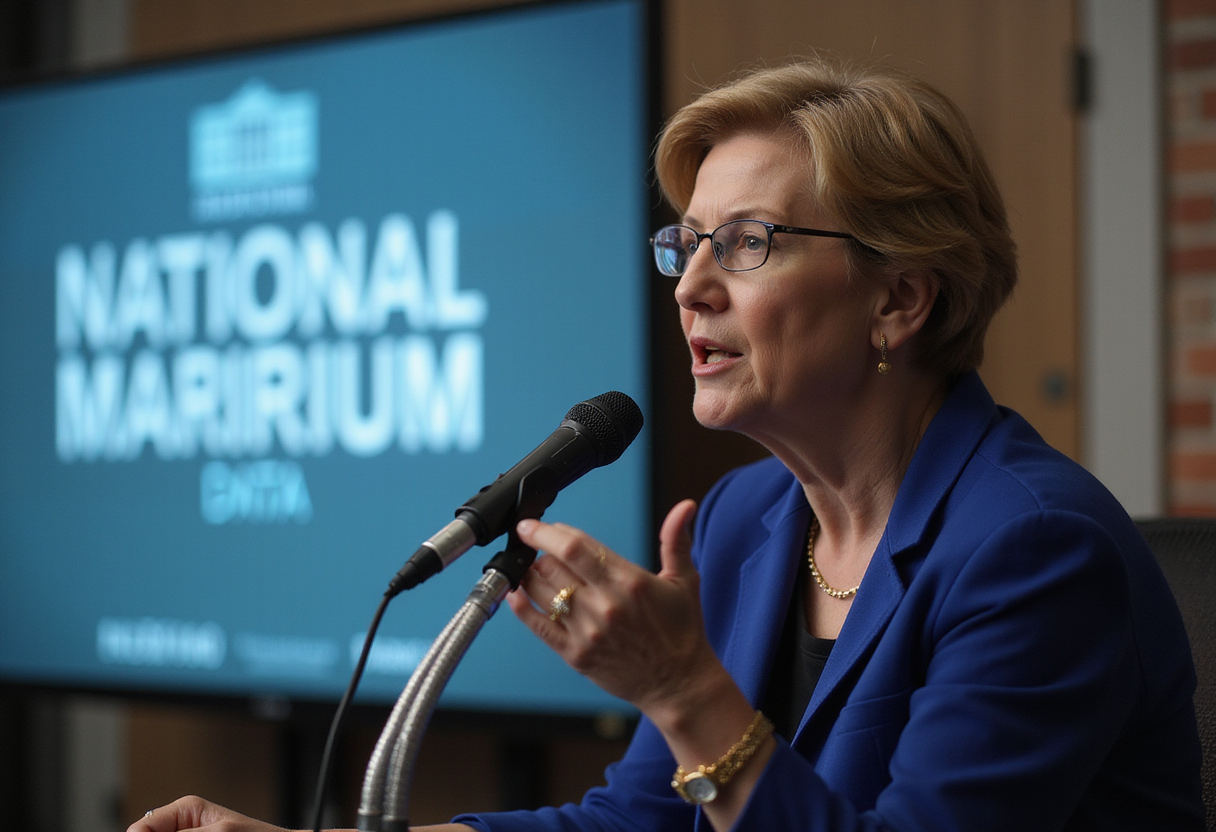
Senator Elizabeth Warren has sent questions to Meta, Google, Amazon and Microsoft about AI-related tax subsidies, CNBC reported on September 28, 2026.
What did the credit's authors intend?
James Shannon, the congressman who introduced the 1981 legislation, told the Times the credit was meant to support "people power, knowledge, information." Reviewing Meta's application, Shannon said the company's use has "gone way, way beyond what anybody could have imagined."
With hyperscaler capex still climbing and EY shopping the structure to other AI chip buyers, the question now is whether the IRS or Congress narrows the credit before the subsidy scales from one company's tax line into an industry-wide financing tool for AI infrastructure.
Original: en.cryptonomist.ch
More from Grace Kim
Show full bio
Market editor covering industry trends and analytics at Chip Dispatch.
262 articles
Related articles
meta-tells-irs-its-ai-data-centres-are-experiments-nyt-reports-38171693
Meta Tells IRS Its AI Data Centres Are Experiments, NYT Reports
meta-s-3-9-billion-r-d-credit-now-tracks-chips-not-researchers-355ef998
Meta's $3.9 Billion R&D Credit Now Tracks Chips, Not Researchers
warren-demands-national-moratorium-on-ai-data-centers-616263fc
Warren Demands National Moratorium on AI Data Centers
bank-of-america-cites-meta-s-ai-chips-and-meta-one-in-upbeat-view-da640643
Bank of America Cites Meta's AI Chips and Meta One in Upbeat View