Michael Burry Flags Nvidia With 1960s Parallel Amid AI Stock Surge
Michael Burry, the 'Big Short' investor, has issued a public warning on Nvidia, drawing a parallel to a 1960s-era market setup, per TradingView. The call lands as AI infrastructure stocks trade at elevated multiples.
- By
- Nathan Brooks
- Filed
- Channel
- Semiconductors
- Read
- 3 min read
Michael Burry, the investor who built his reputation on the 2008 housing collapse, has turned his attention to Nvidia and the broader AI-equity trade, drawing a parallel to a 1960s-era market setup, according to a TradingView report.
Who is Michael Burry, and why does his Nvidia call matter?
Burry founded Scion Asset Management and earned the moniker "The Big Short" after his bet against subprime mortgages paid off in 2007-2008, as depicted in Michael Lewis's 2010 book and its 2015 film adaptation. His macro warnings carry weight on Wall Street because documented positioning, not commentary, has historically driven his public profile. A sell-side or short-seller signal from Burry tends to move share prices within hours of posting, even when the underlying thesis remains contested.
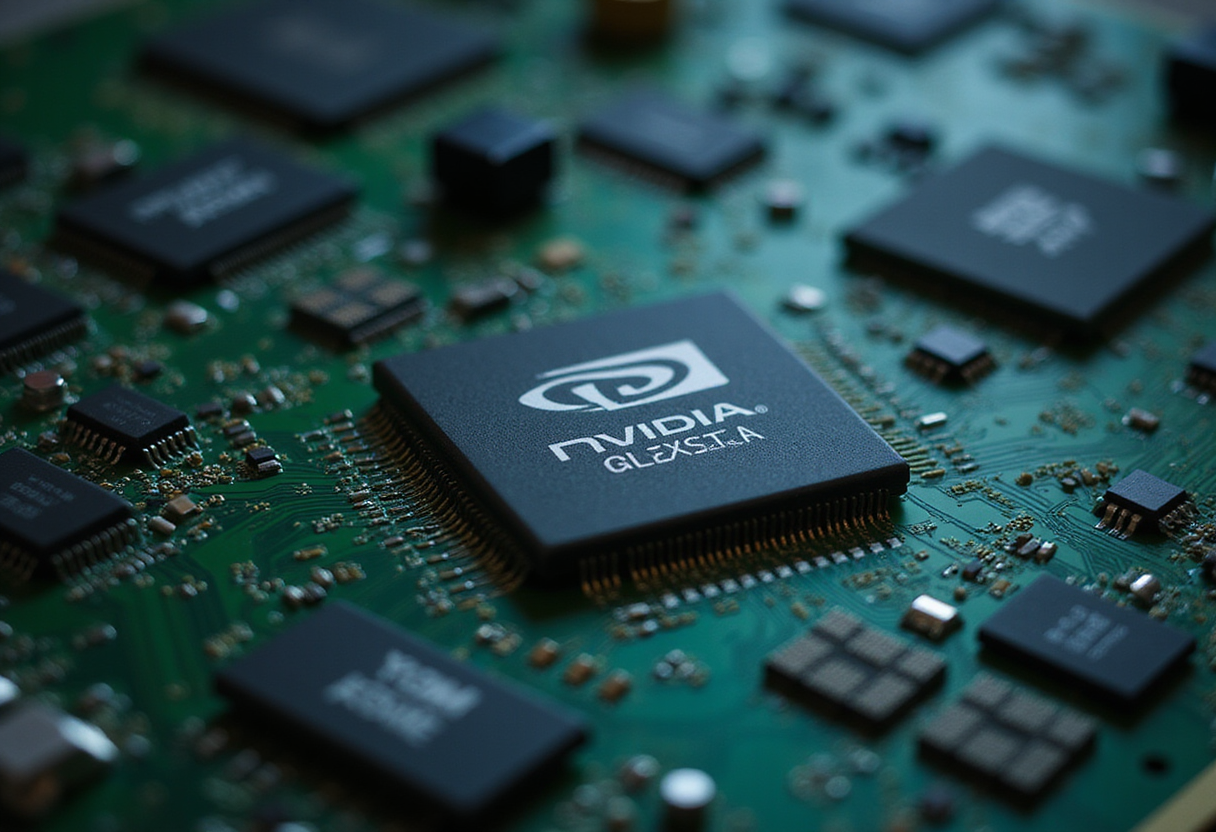
Nvidia, the Santa Clara, Calif.-based GPU designer whose Hopper H100 and Blackwell B200 systems power much of the generative-AI training market, has become the most-traded proxy for AI infrastructure spending. The company is now the world's most valuable semiconductor firm by market capitalization.
What is the 1960s parallel?
The specific historical analogue Burry invoked was not detailed in the TradingView headline, but the 1960s comparison lands in a period investors and analysts frequently cite when discussing concentrated tech rallies:
- The "Nifty Fifty" era (roughly 1965-1972) saw a small group of high-multiple growth names trade at sustained P/E ratios that later compressed sharply during the 1973-1974 stagflationary bear market.
- A separate 1960s reference point is the conglomerate bubble of 1968-1969, when accounting-driven growth narratives outran underlying cash flow and unwound rapidly.
- Periods of concentrated capital expenditure — telecom infrastructure in 1999-2000, for instance — produced similar capital-flow patterns that Burry has used as templates before.
How exposed is the semiconductor supply chain to the AI trade Burry is flagging?
Nvidia does not manufacture its own silicon. TSMC fabricates the bulk of Nvidia's data-center GPUs on 4nm and 3nm process nodes at its Hsinchu, Taiwan, facilities, with CoWoS-L advanced packaging capacity at TSMC remaining the binding constraint on AI accelerator shipments through 2025 by most analyst accounts. SK Hynix and Samsung supply HBM3E memory stacks paired with Nvidia parts, and both Korean vendors have publicly guided to multi-year supply commitments tied to AI demand.
That supply chain concentration means a re-rating of Nvidia would not stop at the GPU vendor. Memory suppliers, foundry partner TSMC, and the equipment makers — ASML, Applied Materials, Lam Research, Tokyo Electron — all derive a meaningful share of forward earnings from AI-related capex, though exact percentages remain analyst estimates rather than confirmed segment disclosures.
What is Burry's track record on this kind of call?
Burry registered Scion Asset Management with the SEC in 2013, returned outside capital to clients in 2016, and has run a family-office-style portfolio since. His public 13F filings show periodic, idiosyncratic equity positions rather than the concentrated macro bets that defined his 2007-2008 era. Past registered positions have included small-cap and special-situation names, with positions that change quarterly and rarely overlap with the headline-grabbing macro warnings that surface on his social-media account.
That asymmetry — a broad macro warning attached to a portfolio that does not necessarily reflect that warning in disclosed form — has historically led analysts to treat Burry's social posts as sentiment indicators rather than direct portfolio signals. Scion's filings, not its social posts, represent the verifiable record.
What happens next for Nvidia and AI infrastructure names?
Nvidia reports quarterly results on a fiscal calendar; upcoming earnings will give the market a fresh data point on data-center revenue, the segment that has driven consecutive record quarters. Until then, the bid-ask spread on AI infrastructure equities will likely widen around any high-profile skeptic commentary, including Burry's. Whether the 1960s parallel becomes a self-fulfilling narrative or a footnote depends on the trajectory of enterprise AI capex through the next two reporting cycles.
Source: Google News: AI chips
More from Nathan Brooks
Show full bio
Senior reporter covering industry trends and analytics at Chip Dispatch.
263 articles
Related articles
michael-burry-draws-1960s-bubble-parallel-in-nvidia-ai-debate-e9b0d9f5
Michael Burry Draws 1960s Bubble Parallel in Nvidia AI Debate
michael-burry-pivots-to-put-options-against-micron-and-ai-chips-a2fe53b0
Michael Burry Pivots to Put Options Against Micron and AI Chips
blackrock-s-fink-calls-nvidia-ai-chips-an-asset-class-1568ab60
BlackRock's Fink Calls Nvidia AI Chips an Asset Class
nvidia-shares-rise-as-morgan-stanley-taps-it-as-top-semiconductor-pick-3032079a
Nvidia Shares Rise as Morgan Stanley Taps It as Top Semiconductor Pick