Memory & StorageLOT 261122 · 4 min read
Micron Falls 13% to $603, Half Off Its June Peak, in AI Memory Selloff
Micron fell 13% to about $603, half its June record, as memory stocks sank sector-wide. Barron's calls them "agonizingly cheap" at 2.5-3.8 times forward earnings.
Key takeaways
- Micron fell 13% to about $603, 50% below its June 25 record close of $1,213.56.
- Western Digital fell 12%, SanDisk 15%, Seagate 12%; SMH dropped 9%.
- Barron's puts Micron at 3.8 times forward earnings, SK Hynix at 3.1 and Samsung at 2.5.
- Micron says more than 75% of its 2027 output is already committed to customers.
- Micron reports fiscal Q1 results on Dec. 17; TrendForce sees NAND contract prices falling from Q1 2027.
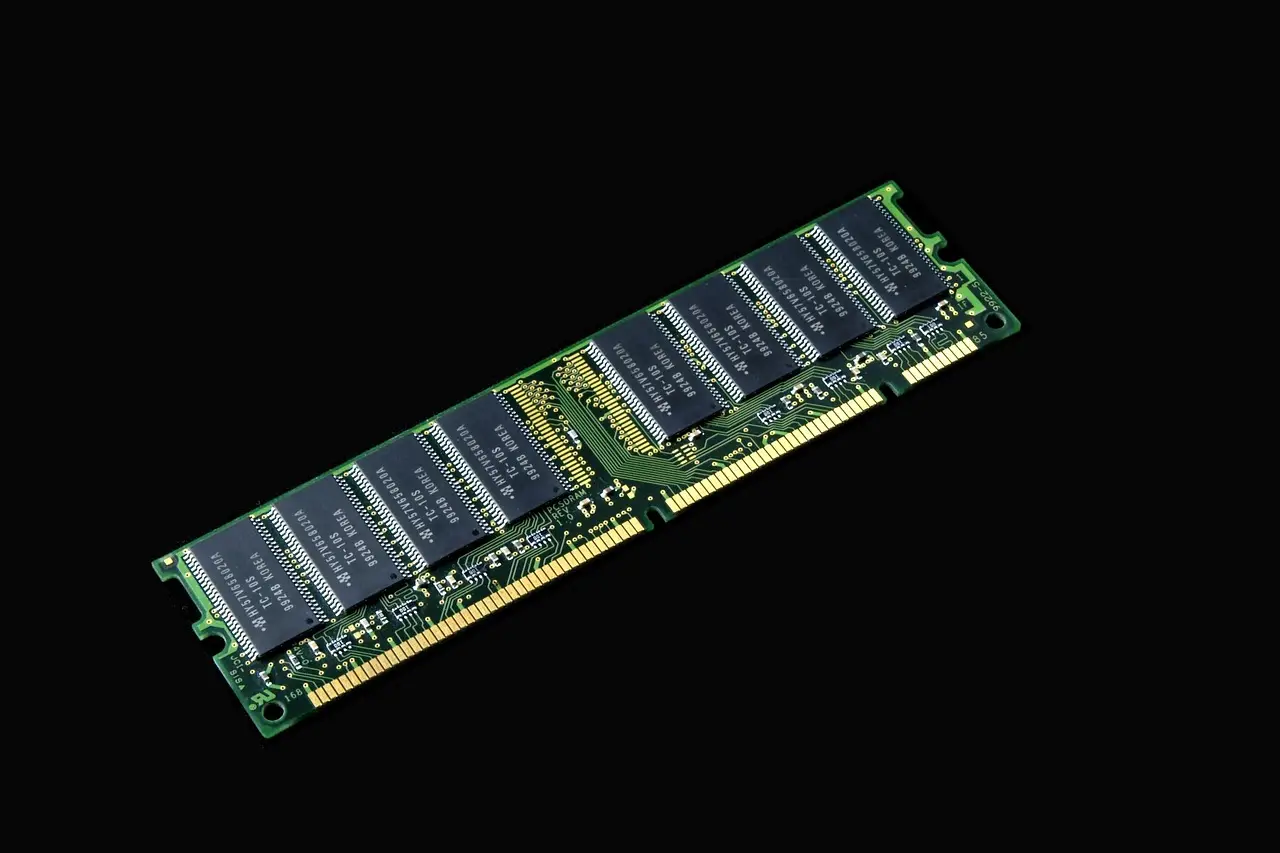
Micron Technology (NASDAQ: MU) fell 13% to about $603 on Friday, the second day of a broad selloff in AI chip stocks, and now sits 50% below its June 25 record close of $1,213.56. Western Digital dropped 12%, SanDisk 15% and Seagate Technology 12% in the same session. Prices were recorded at about 12:31 p.m. Eastern.
Before the open, Barron's called memory stocks "agonizingly cheap." The market's judgment and the valuation argument are now in open conflict, and Micron's own history supplies ammunition for both sides.
How far and how fast has the selloff run?
The selling is sector-wide. All four large U.S. memory and storage stocks were down 12% or more, and the VanEck Semiconductor ETF (SMH) fell 9%. AMD opened down another 7% before the bell.
The pressure started in Asia. In Seoul, Samsung Electronics closed down about 7% and SK Hynix about 6%, while the KOSPI lost 5.2% and Taiwan's market finished its worst week since 1991. SK Hynix's U.S.-listed shares (SKHY) fell 11%.
Anthropic, the AI company that went public Thursday, dropped 13% on its second day of trading. Barron's wrote that the IPO failed to rescue the AI trade, and that chip and memory stocks have been under pressure for months over mounting debt, doubts about how long AI spending can last, and the leadership crisis at Nvidia.
Two more things weigh on SanDisk specifically. TrendForce, a research firm, now expects contract prices for NAND flash memory to start falling in the first quarter of 2027. SanDisk's 8-for-1 stock split also took effect after Thursday's close, so Friday's drop is measured from a split-adjusted close of about $94.
What is the case that Micron is cheap?
Barron's writer Jack Denton put Micron at 3.8 times expected earnings over the next year, SK Hynix's U.S. shares at 3.1 and Samsung at 2.5. Many S&P 500 stocks trade at 15 to 20 times. He noted that Micron's multiple spent much of early 2026 between 4.5 and more than 11, and that the average analyst price target implies almost 150% upside.
Friday's drop pushed those figures lower still. At $603, Micron trades at 8 times the $75.28 a share in adjusted earnings it reported over its last four quarters, and 3.4 times the $176.50 a share analysts expect for the fiscal year ending next August, a TIKR consensus figure.
The fundamentals have not cracked yet. Micron's management has said more than 75% of its 2027 output is already committed to customers. Even after the drop, the stock is up 111% in 2026.
What does Micron's history say?
Memory profits swing hard, and a memory stock's price-to-earnings ratio is lowest when earnings peak. In 2018, Micron set its high on May 29, almost four months before reporting the best quarter of that cycle at $3.53 a share. The stock then fell 54% to $29.02 by Dec. 24, 2018, while quarterly earnings kept falling for more than a year, down 87% to $0.45 a share.
The 2022 cycle followed the same shape. The stock fell 50% between Jan. 14 and Sept. 26, and quarterly earnings swung from a $2.59-a-share profit to a $1.91 loss. The decline from December 2014 to May 2016 ran to 74%. Denton conceded the point in the current context: "There's always a chance that bad news could make the stocks even cheaper."
A 50% drop, in other words, reads as investors pricing in a memory bust that has yet to appear in Micron's earnings. The last two busts ended after declines of 50% and 54%, so much of a typical bust may already be in the price — though the 74% decline of 2014-16 and a three-cycle sample argue for caution.
What it took for the stock to bottom
In both of the last two busts, the stock stopped falling long before earnings did. The December 2018 low came 15 months before Micron's weakest quarter of that cycle; the September 2022 low came six months before its largest quarterly loss. One year after those lows, the stock was up 91% and 39%.
This decline has run about five months, against seven in 2018 and eight in 2022. Micron's earnings are still rising: $33.19 a share last quarter, up from $3.03 a year earlier. A close at Friday's price would be Micron's lowest since May, below the $656.39 of Nov. 5 — the day the stock fell 17%.
The other three names have fallen further from their June records: Western Digital 65%, Seagate 58% and SanDisk 72%.
What comes next?
Barron's named two earnings reports next week as the next read on AI spending: Hewlett Packard Enterprise on Monday and Analog Devices on Tuesday. Micron reports its fiscal first-quarter results on Dec. 17, and that print — with more than 75% of 2027 output already committed — will test whether the market has priced in a bust or invented one.
247wallst.com (Source)
More from Tom Whitfield
Show full bio
Staff writer covering companies, deals and strategy in Semiconductors, chip manufacturing, hardware, AI compute at Chip Dispatch.
1,200 articles