Microsoft bets on AI vision with premium Surface laptop
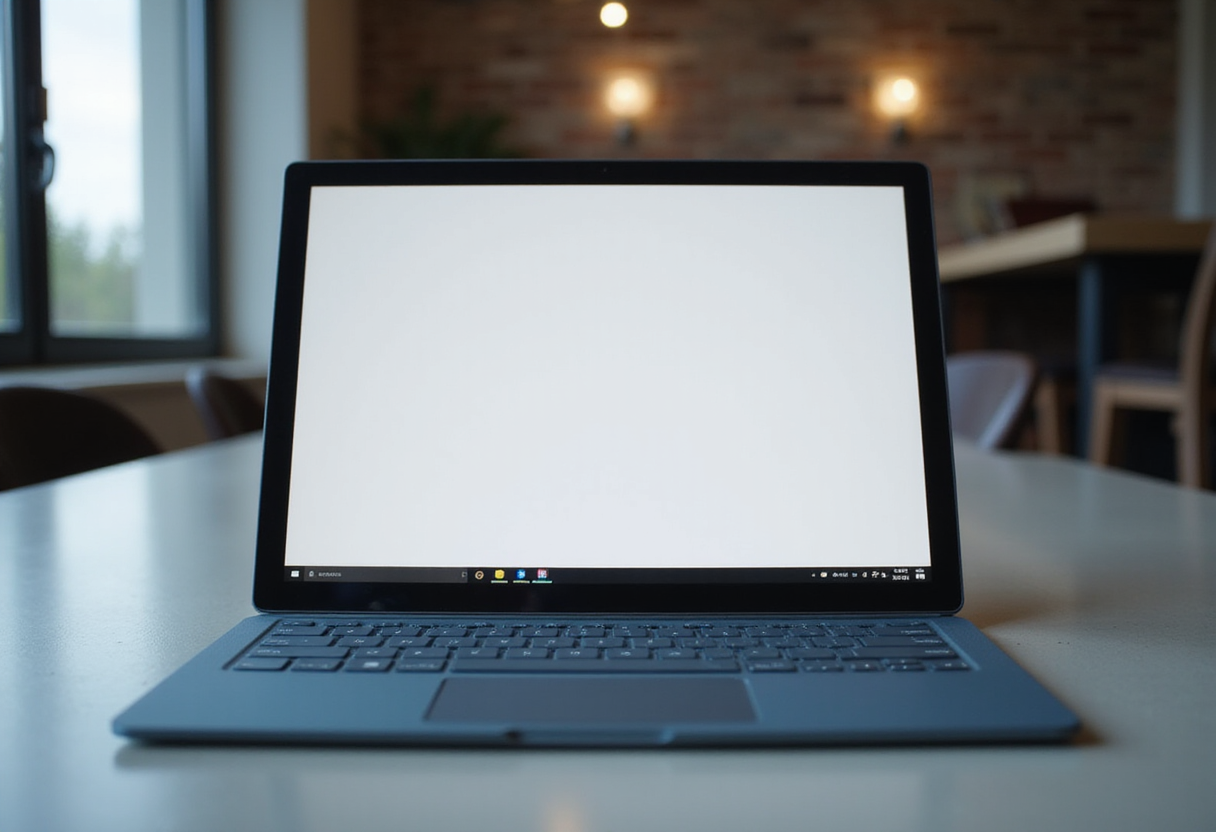
Microsoft has unveiled a premium Surface laptop built around on-device AI vision capabilities, extending its bet that consumers will pay more for PCs that run generative AI workloads locally rather than in the cloud.
- By
- Sophie Lindqvist
- Filed
- Channel
- Consumer Tech
- Read
- 3 min read
Microsoft has unveiled a new Surface laptop built around on-device AI vision features, positioning the device at the premium end of its personal computer line.
The machine extends the company's bet that consumers will pay more for PCs that run generative AI workloads locally rather than in the cloud, according to The Straits Times. Pricing has not been disclosed in materials covered by the publication, but the laptop is described as expensive — a signal that Microsoft is treating AI vision as a tier-above differentiator rather than a baseline feature.
What is "AI vision" on a PC?
Microsoft has not specified which neural network workloads the new Surface handles on-device. The company's broader AI PC strategy centers on dedicated NPUs capable of running vision and language models without round-trips to data centers. In recent PC disclosures, vision features have included camera-based scene interpretation, real-time background segmentation for video calls, and recognition of objects, text, or gestures in front of the device.
Whether the new Surface uses the latest Qualcomm Snapdragon X Elite, Intel Lunar Lake, or AMD Strix Halo silicon is not specified in the announcement covered by The Straits Times.
Where does it sit in the Surface stack?
The Surface line spans the budget Surface Go, mainstream Surface Pro and Surface Laptop, and high-end Surface Laptop Studio models. A premium AI vision machine would plausibly slot above the current Surface Laptop 7, which starts around $1,499 in the United States and ships with Snapdragon X Elite processors.
For years, Microsoft has used Surface as proof-of-concept for the broader Windows OEM ecosystem. HP, Dell, Lenovo, Acer, and Asus ship larger volumes of Windows hardware. Microsoft leans on Surface to validate premium price points and new feature categories before partners follow.
Why is Microsoft pushing AI vision now?
Microsoft needs a consumer AI story that does not depend entirely on OpenAI's cloud. On-device AI reduces latency, lowers data-center operating costs, and addresses enterprise and government buyers who want local inference for compliance reasons. The company's Copilot+ PC specification, introduced in mid-2024, set a baseline of 40 TOPS of NPU throughput for AI PCs.
Machines meeting that bar qualify for on-device Recall, Live Captions translation, and Cocreator image generation. A Surface variant positioned around AI vision suggests Microsoft wants to drive visual AI workloads as the next consumer engagement hook.
What is the competitive picture?
Apple's MacBook Pro and MacBook Air, all running Apple silicon with Neural Engines, have set the consumer expectation that premium laptops handle AI tasks natively. Qualcomm's Snapdragon X Elite has given Windows its first credible ARM-based platform for sustained AI PC performance, but software compatibility and pricing remain friction points. Intel's Lunar Lake and AMD's Ryzen AI 300 are the x86 counter-moves, each pairing CPU, GPU, and NPU on a single die to meet the Copilot+ PC floor.
A premium Surface that leans into AI vision functions as a reference design — proof that the silicon and software stack can deliver category-defining experiences.
What does the pricing signal?
The Straits Times describes the new Surface as "expensive." That phrasing matters more than any single dollar figure. Microsoft is signaling that AI vision is a tier feature, not a baseline, and that the company believes enough buyers will pay for differentiated on-device intelligence to justify the premium.
Whether that bet pays off depends on software. Vision features need compelling everyday use cases — better video calls, faster photo organization, smarter search — beyond technical demos. Microsoft has struggled historically to make Surface features compelling enough to shift OEM design priorities. AI vision is the latest test of whether the company can make its own hardware the face of the next PC category.
The new Surface laptop will need to ship with enough launch software to justify its price before competitors close the NPU gap with their own premium designs.
Source: Google News: AI chips
More from Sophie Lindqvist
Related articles
microsoft-bets-on-ai-with-new-premium-priced-surface-laptop-40b0f6eb
Microsoft Bets on AI With New Premium-Priced Surface Laptop
microsoft-s-2-599-surface-laptop-ultra-puts-nvidia-rtx-spark-in-first-arm-pc-35164c89
Microsoft's $2,599 Surface Laptop Ultra Puts Nvidia RTX Spark in First Arm PC
microsoft-plans-production-boost-for-its-ai-chips-bloomberg-reports-09f31965
Microsoft Plans Production Boost for Its AI Chips, Bloomberg Reports
sima-ai-banks-150-million-to-scale-physical-ai-chips-c5a094d3
SiMa.ai Banks $150 Million to Scale Physical AI Chips