MintNeuro Raises $5 Million for Neural Device Silicon
MintNeuro raised $5 million to scale neural-device silicon, but disclosed no node, no foundry, and no capacity targets. Here is what the number does and does not buy.
- By
- Sophie Lindqvist
- Filed
- Channel
- Semiconductors
- Read
- 3 min read
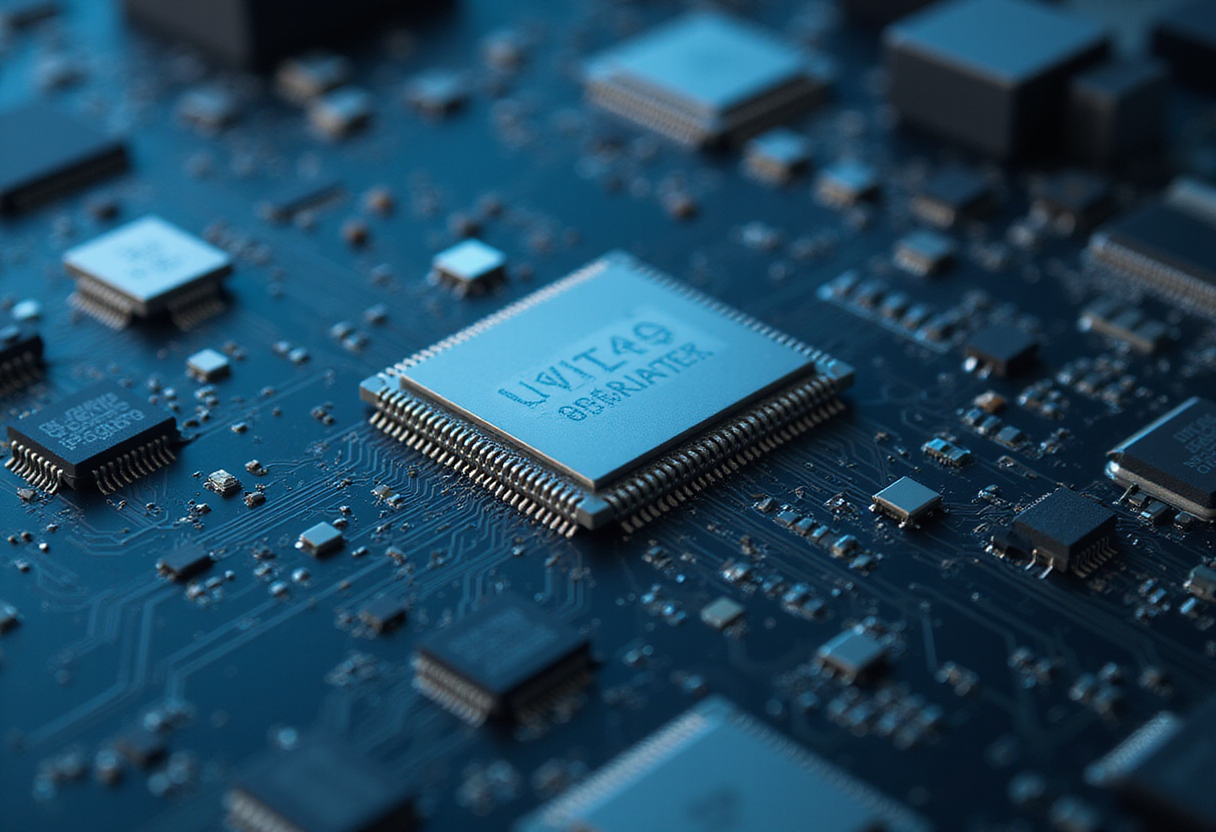
MintNeuro has raised $5 million to scale a semiconductor platform built for neural devices, according to an announcement covered by Pulse 2.0. The figure is modest by semiconductor standards. It is significant by the standards of neural-interface silicon, where most startups remain stuck at prototype stage for years.
The company did not disclose, at least in the initial coverage, which process node it will use, which foundry will fabricate its chips, or what wafer volume it expects. That absence matters. A $5 million round funds design and early tapeouts. It does not fund volume production at any leading-edge node, where a single mask set can consume a seven-figure budget on its own.
What does the money actually buy?
The company says the capital will scale its semiconductor platform for neural devices. Scaling, in this context, most plausibly means engineering refinement and pilot manufacturing rather than high-volume shipments. The announcement, as reported, offers no capacity figures, no named fabrication partner, and no shipment targets.
For comparison within the sector: neural-interface chips typically demand extreme constraints on power draw, package size, and biocompatibility. These constraints push designers toward mature nodes rather than advanced ones. A startup with $5 million would realistically target 130 nm to 65 nm class processes, where wafer costs remain tractable. MintNeuro has not confirmed its node choice, so this remains inference, not fact.
Who is backing the round?
The Pulse 2.0 coverage did not specify the investor list, the round's stage, or whether the $5 million is all equity. Seed rounds in neurotech frequently blend equity and grants. Without a cap table or lead investor named, the valuation and dilution picture stays opaque.
This is a pattern worth flagging. Funding announcements in the neural-device space routinely lead with the headline number and omit the terms. The omission is legal and common. It still limits what outside observers can conclude about commercial traction.
Why neural silicon attracts money now
The broader context favors specialized chip designers. Large players have concentrated on AI accelerators and datacenter silicon. Implantable and wearable neural devices sit in a niche too small for the giants and too demanding for general-purpose microcontrollers.
Startups in this niche must solve problems the mainstream industry largely ignores:
- Ultra-low power operation for battery-free or long-life implants
- Biocompatible packaging that survives years inside the body
- Signal chains clean enough to read individual neurons
- Regulatory pathways that hardware roadmaps rarely account for
Each of these adds cost and time. None appears in the headline number.
What is not said
The announcement contains no revenue figures, no named customers, and no regulatory milestones. There is no mention of animal trials, human trials, or certification progress. For a medical-adjacent semiconductor platform, those gaps define the timeline far more than the funding does.
The company also did not state its headcount, its design-team pedigree, or prior rounds. A $5 million raise could be a first institutional round. It could also be a bridge. The coverage does not distinguish between the two.
The skeptical read
Five million dollars is real money for a chip startup at the design stage. It is small money for anything involving clinical validation, where trials routinely cost tens of millions. The claim that this round will "scale" the platform should therefore be read narrowly: scaling engineering, not scaling deployments.
Investors in this segment often expect a longer runway to revenue than in mainstream semiconductors. Device makers face design-win cycles measured in years, followed by regulatory review. MintNeuro's announcement does not address where it sits on that timeline.
The company will need to name its foundry partner, its process node, and at least one design win before the platform's commercial viability can be assessed. Until then, the $5 million stands as a statement of intent. Whether it becomes a statement of capability depends on details MintNeuro has yet to publish.
Source: Google News: semiconductors
More from Sophie Lindqvist
Show full bio
News editor covering money, funding and market shifts around Semiconductors, chip manufacturing, hardware, AI compute at Chip Dispatch.
416 articles
Related articles
mintneuro-raises-5-million-to-scale-neural-device-chips-acd2cfe2
MintNeuro Raises $5 Million to Scale Neural Device Chips
bigendian-secures-6-million-to-build-ai-socs-320f879e
BigEndian Secures $6 Million to Build AI SoCs
hrdwyr-raises-13-mn-to-build-ai-native-silicon-7b0323fa
HrdWyr Raises $13 Mn to Build AI-Native Silicon
vervesemi-raises-10-mn-to-push-semiconductor-products-toward-scale-1a57adca
Vervesemi Raises $10 Mn to Push Semiconductor Products Toward Scale