Moonshot disputes filings on 32 Nvidia B300 servers in China
Financing filings value 32 China-hosted Nvidia B300 servers at $64.8 million, but Moonshot, Nvidia and Super Micro dispute links to the deal; U.S. export license status remains unknown.
- By
- Tom Whitfield
- Filed
- Channel
- Chips & Policy
- Read
- 4 min read
By Tom Whitfield
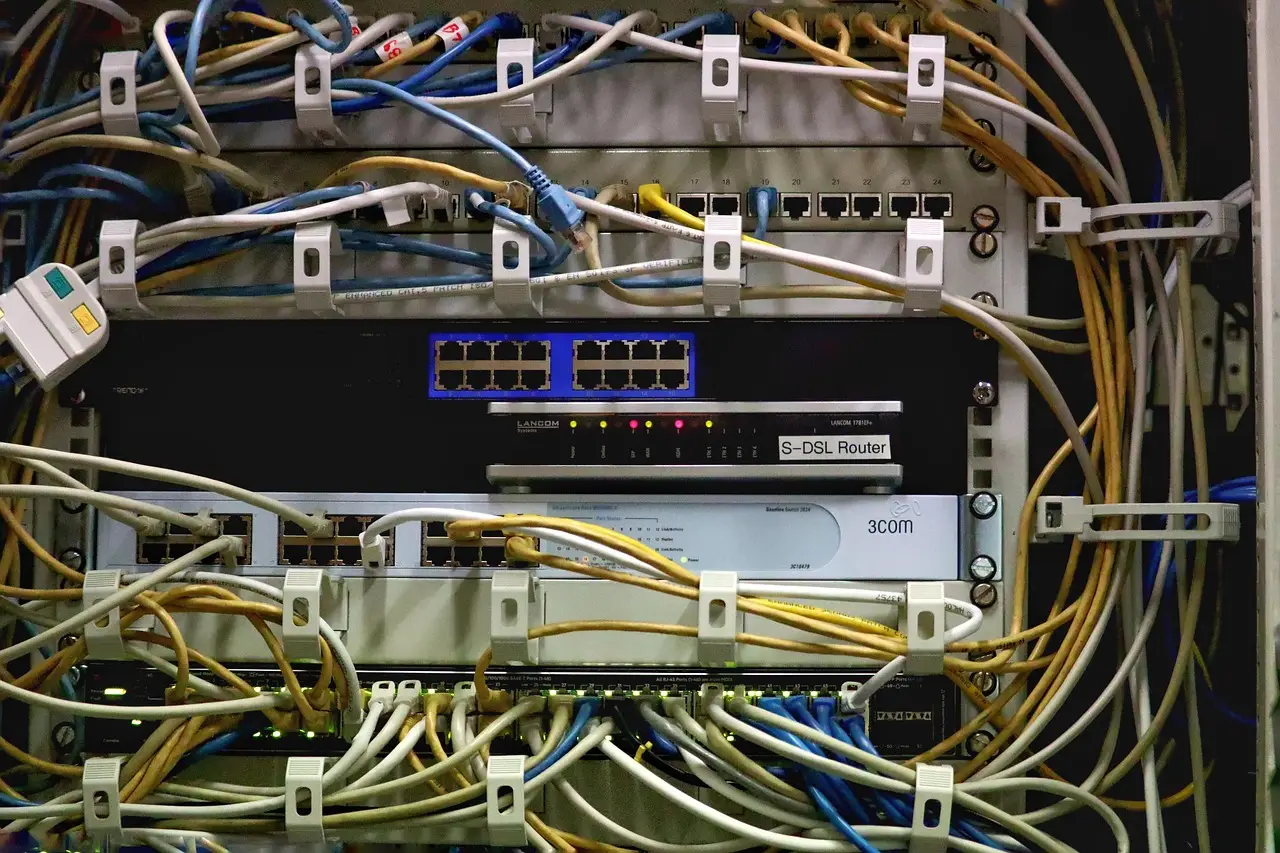
Financing documents reviewed by Bloomberg News show that Moonshot AI signed an August contract to rent 32 Super Micro Computer servers fitted with Nvidia B300 GPUs in Qingyang, Gansu. Qingyang, in western Gansu, is one of China’s eight designated national computing hubs.
The filings value the systems at 432 million yuan ($64.8 million), or 13.5 million yuan (about $2 million) per server, roughly 350% above the U.S. going rate, according to Bloomberg’s calculation. Moonshot, the Chinese AI startup that develops the Kimi models, disputes the documents. A Moonshot spokesperson told Bloomberg: “We currently have no business relationship with Lingmeixin.”
What do the financing filings show?
Two financing contracts signed Aug. 4 identify Lingmeixin (Beijing) Technology Co. as the server owner and Beijing Zhongguancun Bank Co. as lender. The bank filed the contracts Aug. 6 in a credit database run by the People’s Bank of China, where Chinese companies must report certain financing details.
Those documents describe a 200 million yuan ($30 million) loan secured by the servers and 345.6 million yuan in expected earnings from a service contract with Beijing Dark Side of the Moon Technology Co., Moonshot’s main operating entity. Bloomberg described this dual-collateral structure, combining chip assets and customer-contract income, as common among AI data-center developers.
The deal linked hardware financing to Moonshot’s expected compute payments.
How did the servers enter the financing chain?
Bloomberg calculated the per-server valuation at roughly 350% above the U.S. going rate, which it linked to a black market shaped by export controls. Lingmeixin bought the servers from a recently established subsidiary of Beijing Chunju Technology, an online seller of alcohol, including Maotai liquor, that has expanded into AI.
The documents do not say how Chunju’s subsidiary obtained the servers or what it paid.
Lingmeixin’s website lists the company as a DJI drone distributor and names China Aerospace Science and Industry Corp. and China Aerospace Science and Technology Corp. as partners. Bloomberg linked those state groups to China’s missile program; both face U.S. export controls and sanctions.
The ownership chain remains opaque at the point where export-controlled hardware entered the financing.
Who disputes the server arrangement?
Moonshot also said it neither participated in nor authorized the related financing or guarantee arrangements and had no knowledge of them. Lingmeixin gave a different account, saying the financed hardware supported a compute service contract with Moonshot. It said Moonshot had only a right to use the compute service and no ownership of the equipment.
Nvidia said the entities were not its customers and that it provides no replacement products, service or support to them. Super Micro also said it does not do business with the entities and pledged compliance with U.S. export and re-export laws. Beijing Zhongguancun Bank and Beijing Chunju did not respond to Bloomberg.
After Bloomberg requested comment on Nov. 3, the central bank’s credit database stopped mentioning Moonshot.
The denials leave the financing documents and the commercial relationship unresolved.
What does export-control scrutiny change?
U.S. rules require a license for Nvidia B300 sales to China. Bloomberg could not determine whether the servers had one.
In July, White House Office of Science and Technology Policy Director Michael Kratsios said on social media that Moonshot “acquired GB300-equipped servers and has accessed GB300s in Thailand, likely to train its AI models.”
CNBC also reported last week that Moonshot sought access to Nvidia Blackwell clusters in Europe. The B300 belongs to Nvidia’s Blackwell generation, the same product family associated with those reports.
Moonshot plans a Hong Kong listing early next year and is developing a successor to Kimi K3, according to Bloomberg. These accounts describe different routes to compute and do not resolve how the 32 B300 systems reached China.
Washington is already scrutinizing how China-bound chips reach customers. The Information has reported that Jensen Huang’s ties to Megaspeed executive Alice Huang enabled more than $7 billion in China chip sales.
Lawmakers are pushing to write China chip export limits into the defense bill, while The New York Times reported that the United States cleared a Chinese firm with an apparently empty office to assemble Nvidia H200 servers. Those separate reports do not establish the sourcing chain for Moonshot’s servers.
Research firm SemiAnalysis has estimated that hundreds of thousands of AI chips have entered China, according to Bloomberg. The estimate suggests a broad inflow, not a verified count of the systems tied to Moonshot.
Export rules therefore shape both AI capacity in China and the price premium on advanced hardware.
What matters for Moonshot’s compute strategy?
The B300 contract would give Moonshot access to advanced AI compute if the filing’s commercial description holds. Moonshot denies the financing and vendor relationship, Nvidia rejects any customer relationship, and the export-license question remains open.
Moonshot’s planned listing and Kimi K3 development make compute supply commercially relevant rather than merely a procurement detail.
The near-term commercial test is whether Moonshot can secure reliable Blackwell capacity for Kimi K3 at a cost that does not carry the roughly 350% hardware premium Bloomberg linked to export controls.
Source: mlq.ai
More from Tom Whitfield
Show full bio
Staff writer covering companies, deals and strategy in Semiconductors, chip manufacturing, hardware, AI compute at Chip Dispatch.
831 articles
Related articles
report-links-alice-huang-to-7-5b-nvidia-gpu-imports
Report links Alice Huang to $7.5B Nvidia GPU imports
china-weighs-nvidia-chip-orders-from-bytedance-and-alibaba-85a06c07
China Weighs Nvidia Chip Orders From ByteDance and Alibaba
moonshot-ai-seeks-8-000-gpu-european-clusters-to-reach-nvidia-blackwell
Moonshot AI Seeks 8,000-GPU European Clusters to Reach Nvidia Blackwell
beijing-may-greenlight-nvidia-chip-purchases-by-alibaba-and-bytedance-931762eb
Beijing May Greenlight Nvidia Chip Purchases by Alibaba and ByteDance