Mosaic Intelligence Labs Raises $47 Million for Semi-Autonomous Surgical Catheters
Mosaic Intelligence Labs raised $47 million in seed funding led by 8VC and Fundomo to build a semi-autonomous catheter that navigates blood vessels on its own during surgery.
- By
- Nathan Brooks
- Filed
- Channel
- Startups & Funding
- Read
- 3 min read
Mosaic Intelligence Labs has raised $47 million across two seed rounds led by 8VC and Fundomo, money the one-year-old startup will spend developing a semi-autonomous surgical catheter that steers itself through human vasculature. The company disclosed the funding exclusively to The Information. The sum is modest by the standards of today's AI funding frenzy, yet the target market is anything but small.
The incumbent it hopes to eventually unsettle is Intuitive Surgical, the largest pure-play robotics company in the world by both revenue and market capitalization. Intuitive built its position on the da Vinci Surgical System, a multi-armed machine that human surgeons operate on a remote-control basis across a variety of procedures. The platform is a commercial monument and an aging one. Da Vinci was first unveiled more than 25 years ago.
That gap between dominance and vintage is the commercial opening. A new generation of robotics companies aims to push surgery further toward automation by applying recent advances in AI. Mosaic sits squarely in that cohort.
What does the catheter actually do?
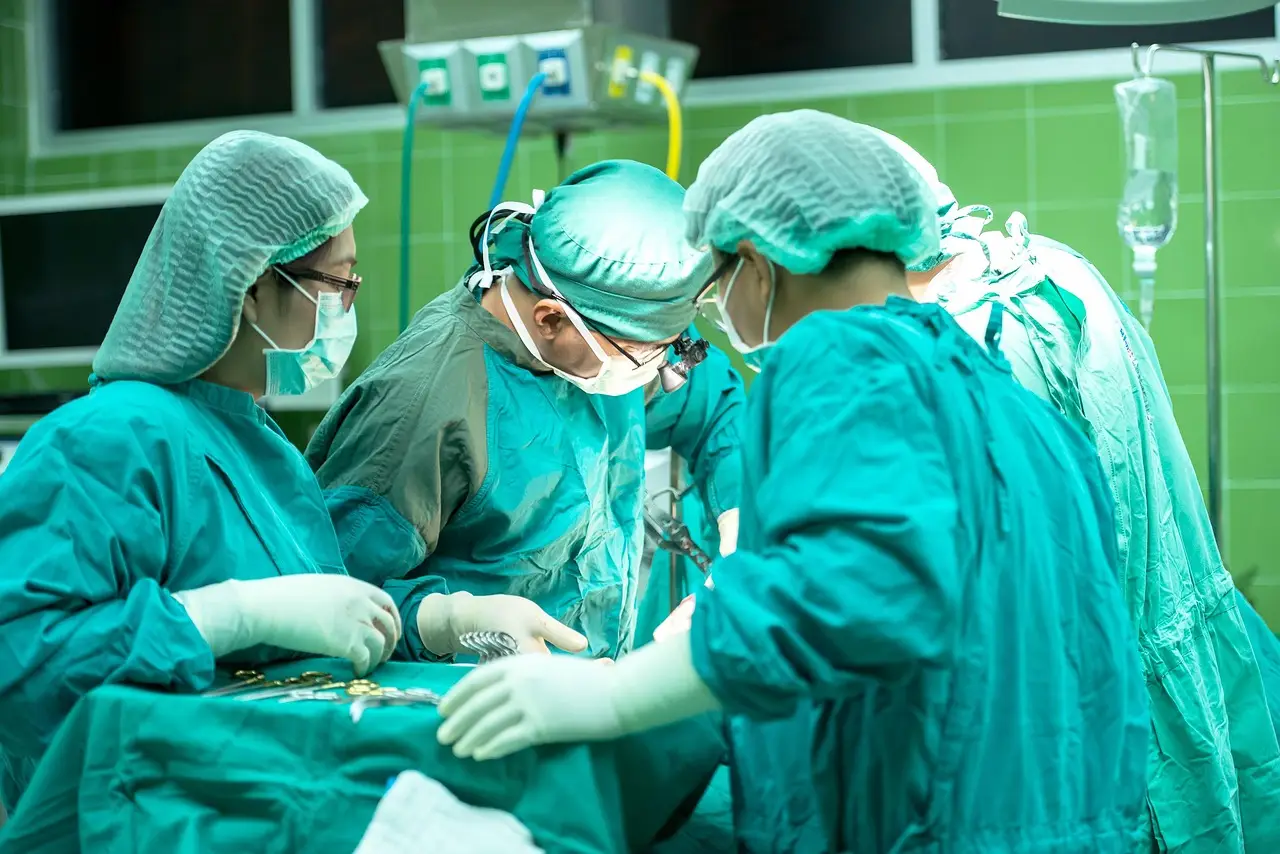
Mosaic's device is a semi-autonomous catheter designed to "find its own way" through a patient's blood network during surgery, co-founder and CEO Ileana Pirozzi said. The division of labor is specific. A human surgeon feeds the catheter into the body, and the tip of the device then bends in different directions on its own to travel down the correct veins and arteries.
In other words, the machine handles navigation while the surgeon retains control of insertion and, presumably, judgment. That split is the practical meaning of "semi-autonomous" here. Full autonomy in surgery remains a regulatory and technical distance away; steering through vessels is a bounded problem, which makes it a sensible first target.
Why does the funding arrive now?
The round lands amid a stretch when AI capital is flowing at extraordinary scale, if on uneven terms. On Tuesday, Anthropic said it had launched its roadshow, the 7-to-10-day window before an IPO in which a company pitches institutional investors such as mutual funds, pension funds and hedge funds. The Claude-maker set a tentative valuation of between $1.26 trillion and $1.4 trillion — slightly lower than investors initially expected, and roughly level with the $1.25 trillion valuation at which OpenAI recently raised $11 billion.
The comparison carries a quiet lesson for hardware startups. Anthropic generates more revenue than OpenAI yet priced itself conservatively, likely to leave its stock room to trade up after listing. Applied robotics, unlike foundation models, cannot promise trillion-dollar multiples, and Mosaic's $47 million reflects that arithmetic. Surgical robotics wins are earned procedure by procedure, through regulatory clearance and hospital procurement cycles measured in years.
Can a one-year-old company dent Intuitive's lead?
The honest answer is not soon. Intuitive's installed base, surgeon training ecosystem and service revenue give it a moat that seed money does not cross. But da Vinci's 25-year design lineage leaves room for AI-native entrants to attack tasks the older system never automated, and vascular navigation is precisely such a task.
Pirozzi's team now has capital, two lead investors and a defined technical thesis. The next milestones that matter are regulatory: a semi-autonomous catheter must clear safety review before any surgeon lets one loose in a bloodstream. If Mosaic reaches clinical trials on its current trajectory, the surgical robotics market will have its first credible test of whether AI-guided navigation can move from demo to operating room.
Source: theinformation.com
More from Nathan Brooks
Show full bio
Senior reporter covering people, launches and day-to-day practice in Semiconductors, chip manufacturing, hardware, AI compute at Chip Dispatch.
821 articles
Related articles
anthropic-sonnet-agent-ran-brain-surgery-on-a-mouse-with-no-human-choosing-the-t
Anthropic Sonnet Agent Ran Brain Surgery on a Mouse With No Human Choosing the Treatment
japan-eyes-advanced-chips-for-medical-ai-system-89e89616
Japan Eyes Advanced Chips for Medical AI System
healthcare-firms-redirect-capital-into-ai-chip-industry-0396081a
Healthcare Firms Redirect Capital Into AI Chip Industry
pronto-turns-home-cleaning-visits-into-robot-training-data
Pronto Turns Home Cleaning Visits Into Robot Training Data