Nexperia Export Exemption Eases Honda Shortage, Ownership Fight Lasts
China’s exemption let Nexperia resume Dongguan shipments and ease Honda’s shortage, while asset freezes, suspended governance and a $60 million expansion leave the ownership split unresolved.
- By
- Rebecca Stone
- Filed
- Channel
- Chips & Policy
- Read
- 4 min read
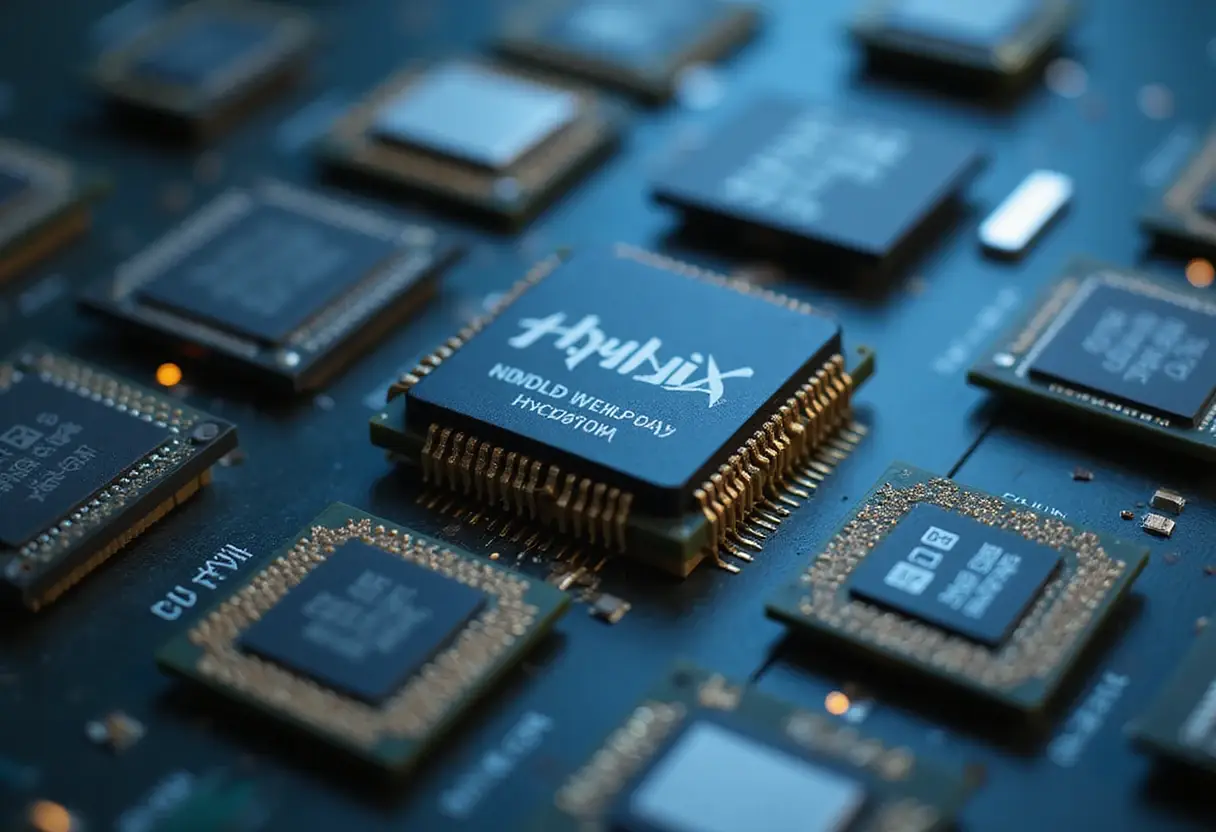
China’s November 2025 exemption for eligible Nexperia exports let the Dongguan assembly-and-test plant resume finished transistor and diode shipments, easing a shortage Honda expects will cost roughly 110,000 units of production.
Honda suspended or cut production at plants in Mexico when low-cost parts failed to arrive, and it also adjusted output in the United States and Canada. Brake systems, power windows and airbag controllers use the same devices, and one 40-cent part can idle a line building $40,000 trucks.
Reuters reported that some Nexperia parts normally sold for a few Chinese cents fetched 10 times their usual price on the gray market as buyers scrambled for inventory. Industry estimates cited by Bloomberg put Nexperia’s share of the automotive market for basic transistors and diodes at roughly 40%, and more than 6,000 of its products qualify for use in vehicles.
The dispute now cuts across Nexperia’s European headquarters, its Chinese operation and owner Wingtech Technology, leaving the legal and operating split unresolved.
How did a Dutch intervention become a chip shortage?
The sequence began on September 30, 2025, when the Dutch government intervened at Nexperia under the Goods Availability Act. A Dutch court separately suspended the chipmaker’s Chinese chief executive and put Wingtech Technology’s voting rights under independent administration, citing concern that the Chinese owner was steering European production and technology toward China in ways that threatened economic security.
Beijing banned exports of finished components from Nexperia’s Chinese subsidiary and its subcontractors on October 4, and finished goods then accumulated in customs limbo from early October. Nexperia separately cut off wafer supplies to its Dongguan plant, which handles the bulk of its assembly and testing.
On November 1, China’s commerce ministry said it would consider exemptions for eligible exports from Dongguan. A White House fact sheet separately said China would take steps to resume trade from Nexperia’s Chinese facilities; the resulting exemption allowed finished transistors and diodes to move to customers outside China. It did not resolve the underlying ownership dispute.
How far did the shortage spread?
- Honda cut or suspended production at plants in Mexico and adjusted output in the United States and Canada, targeting a return to normal by November 24.
- Bosch reported production disruptions at three factories: Ansbach and Salzgitter in Germany, and Braga in Portugal.
The shortage had spread beyond Asia into Europe’s supplier base.
What is Beijing pressing Berlin to do?
Germany’s economy ministry said it was lobbying Beijing through every available channel to protect German customers of the affected chips. China’s commerce minister, Wang Wentao, called German economic affairs minister Katherina Reiche and asked Berlin to press the Dutch government into reversing the Nexperia seizure outright.
Reiche’s ministry said she raised the importance of the broader economic relationship. She also told Wang that China’s export controls, including on rare earths, “did not meet international standards and would hurt Germany as a place to do business,” her ministry said. Beijing has thus used the supply crunch as pressure in a wider China-Europe trade argument.
Has the exemption settled control of Nexperia?
No. The Dutch government suspended its Goods Availability Act order on November 19, 2025, but court-imposed governance measures remained in force. In February 2026, the Enterprise Chamber ordered an investigation into Nexperia’s management and kept the former chief executive suspended while Wingtech continued its legal campaign to regain control.
A Chinese court has frozen $318 million of Nexperia equity in four China units through August 2029. The escalation continued in August 2026, when a Chinese court froze up to 2.14 billion yuan in Nexperia-related assets, pushing the conflict beyond export controls and into ownership of the operating entities.
Where is Nexperia adding capacity?
Nexperia is expanding back-end assembly and test capacity at its existing operations in Malaysia and the Philippines to reduce dependence on any single region. It secured a $60 million loan from Invest International, a Dutch public-private investment fund, to help fund its 2026 global capacity buildout.
By October, industry trade coverage put installed annual capacity across the two Southeast Asian sites at roughly 55 billion pieces. The estimate shows the scale of Nexperia’s attempt to spread back-end production across two countries.
Nexperia’s China unit has also moved beyond its initial plan to qualify domestic wafer suppliers. It announced small-volume production on Chinese-made 12-inch wafers in March 2026 and said in August that it intended to move the full product portfolio onto the domestic supply route.
That would let Dongguan operate independently of Nexperia’s European wafer plants, further entrenching the split created by the dispute.
Through 2026, Nexperia’s ability to fill demand will rest on the reported 55 billion pieces of annual back-end capacity in Malaysia and the Philippines, and on whether Chinese 12-inch wafers can sustain Dongguan’s full portfolio, while buyers could remain exposed to the tenfold gray-market price spike recorded for some scarce parts.
Source: Google News: chip export controls
More from Rebecca Stone
Show full bio
Correspondent covering technology and product news in Semiconductors, chip manufacturing, hardware, AI compute at Chip Dispatch.
742 articles
Related articles
cnas-dutch-export-controls-on-china-semiconductor-tools-fall-short-e5142d74
CNAS: Dutch Export Controls on China Semiconductor Tools Fall Short
sk-hynix-links-new-us-fab-plans-to-china-equipment-approvals-892f70e5
SK Hynix Links New US Fab Plans to China Equipment Approvals
trump-walks-back-us-ai-chip-export-restrictions-on-china-581e55b5
Trump Walks Back US AI Chip Export Restrictions on China
realcleardefense-china-s-semiconductor-bottlenecks-are-receding-c5df2203
RealClearDefense: China's Semiconductor Bottlenecks Are Receding