NVIDIA AI Chips To Reach Orbit Aboard SpaceX In 2026
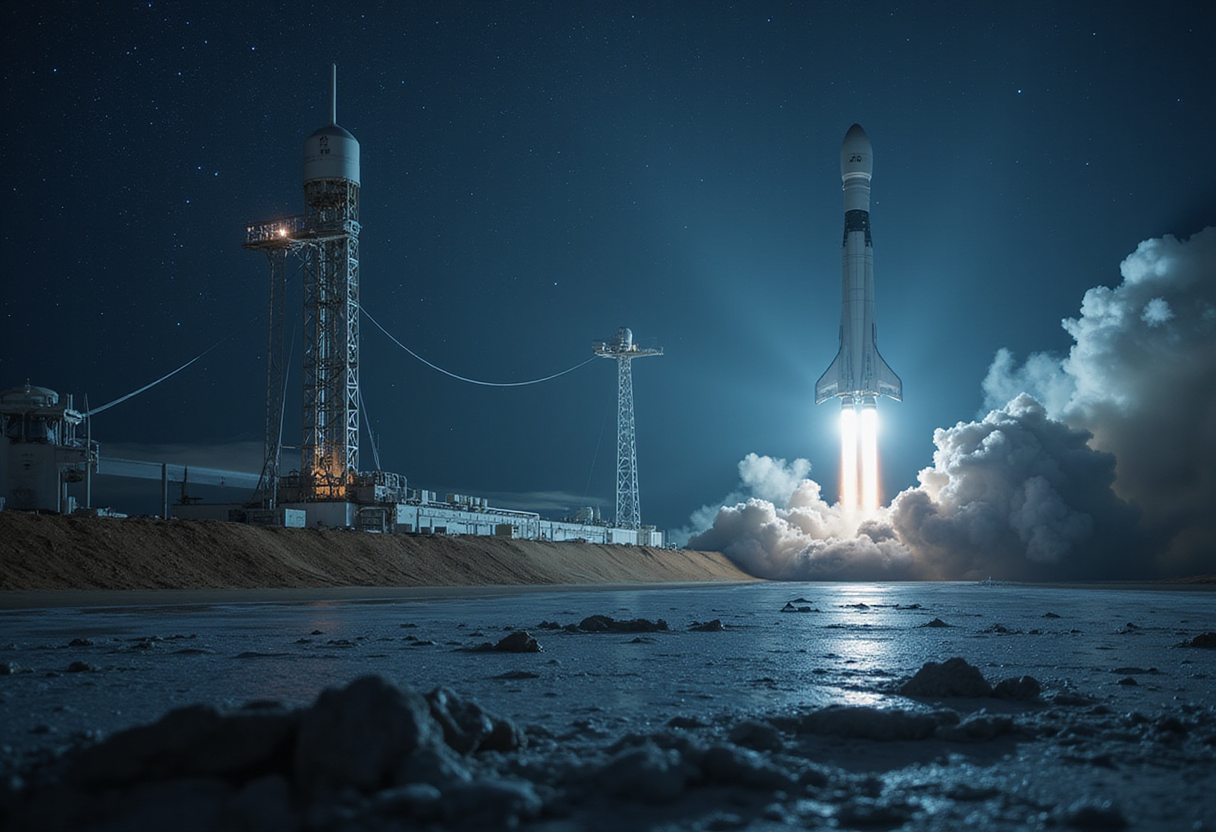
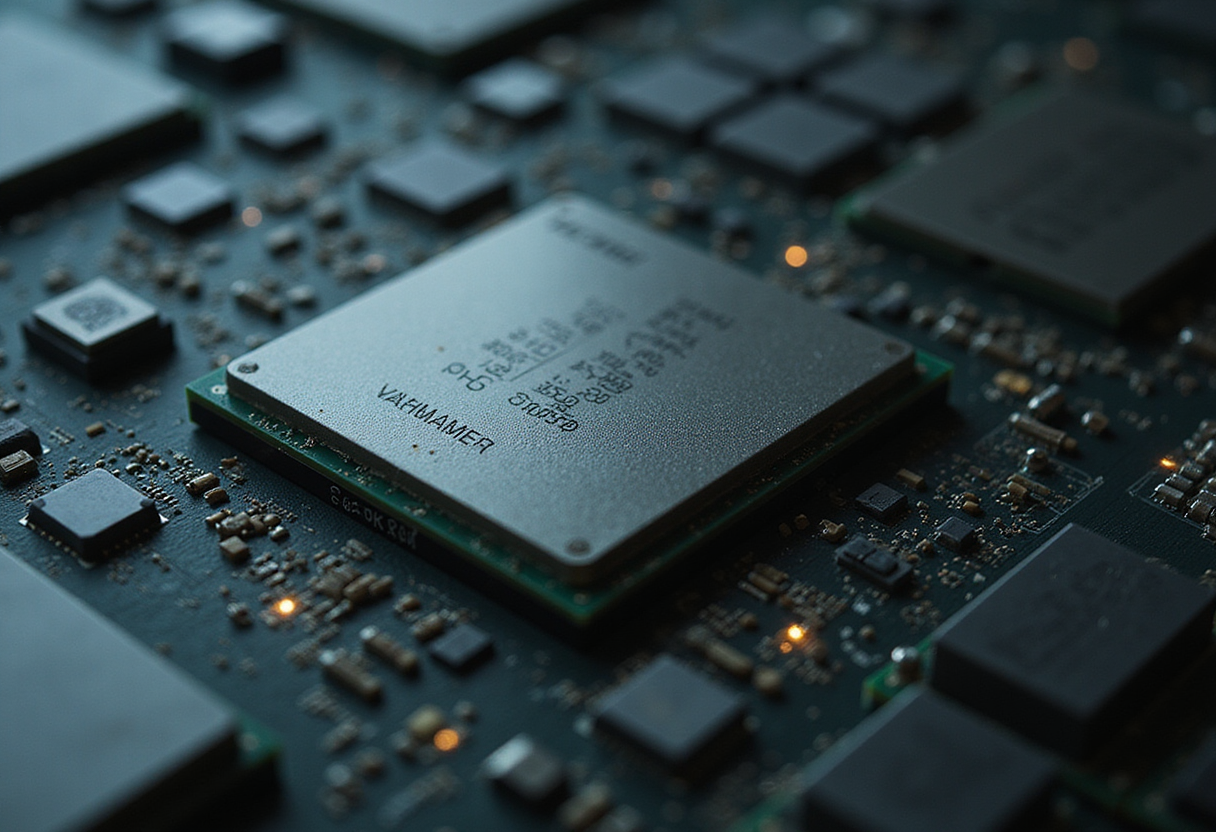
Elon Musk told his social media followers that NVIDIA artificial intelligence processors will reach orbit next year aboard SpaceX vehicles, according to Yahoo Finance. No chip model, satellite count, or contract value accompanied the statement.
- By
- Grace Kim
- Filed
- Channel
- AI & Compute
- Read
- 3 min read
Elon Musk told his social media followers that NVIDIA artificial intelligence processors will reach orbit next year aboard SpaceX vehicles, according to a Yahoo Finance report.
The disclosure frames the AI accelerator market's largest supplier as a participant in SpaceX's push toward orbital compute infrastructure. No chip model, satellite count, contract value, or mission profile accompanied the statement.
What did Musk announce?
Musk identified NVIDIA (NVDA) and SpaceX as the named partners in the deployment, with NVIDIA supplying AI silicon and SpaceX providing the orbital platform. He set the timeline at the calendar year following the disclosure, which corresponds to 2026. The statement appeared on his X social media account.
Yahoo Finance's headline referenced "SPCX" alongside SpaceX. SpaceX remains a privately held company without a public listing. The ticker reference appears to reflect the publication's internal symbol rather than a publicly traded security. Secondary-market transactions during 2024 and 2025 placed the company above $300 billion in implied valuation.
Why orbital silicon matters for the chip industry
NVIDIA's data center revenue reached record figures through 2024 and 2025 on demand from cloud customers and AI training clusters. Extending shipments into orbit creates a new deployment category distinct from terrestrial accelerators and embedded edge devices. The announcement places the chip company inside a satellite operator's long-term compute plan for the first time at commercial scale.
SpaceX's Starlink constellation already carries custom radiation-hardened processors for routine satellite operations. Those parts handle pointing, beam steering, and link management. Adding NVIDIA silicon would signal a different workload entirely: general-purpose AI inference adjacent to the spacecraft rather than ground-side data centers, with implications for parts pricing, qualification timelines, and revenue mix at NVIDIA.
Musk has framed orbital data centers as an alternative to terrestrial AI compute in prior public remarks. Solar arrays in low Earth orbit receive nearly continuous sunlight above the terminator line. Thermal rejection through radiators works without water cooling. Bandwidth to ground stations remains the gating factor for any deployment at meaningful scale.
What stays unclear after the announcement
The chip family is unspecified. NVIDIA's H100, H200, and Blackwell-series products dominate AI training. The Jetson line targets edge inference and embedded applications. Each carries different power draw, thermal envelope, and price point, factors that influence which part would survive the radiation environment of low Earth orbit and which would not without redesign.
Launch cadence and payload mass also remain open. SpaceX's Starship vehicle completed multiple integrated test flights through 2024 and 2025. A high-mass orbital compute payload would test the vehicle's payload capacity for the first time at meaningful commercial scale, a milestone the launch industry has tracked since Starship's first integrated orbital attempt in 2023.
Radiation tolerance tops the parts list. GPUs are not designed for the proton and heavy-ion flux encountered in low Earth orbit. Shielding, error correction code, and graceful-degradation firmware become mandatory before any launch slot can be confirmed for AI silicon.
Where this sits in the competitive picture
The disclosure arrives as Amazon's Project Kuiper, OneWeb, and Chinese state-owned satellite operators expand low Earth orbit constellations. Orbital compute remains a niche application measured against terrestrial GPU demand. Tens of thousands of accelerators ship to hyperscale data centers each quarter, while satellite payloads number in the dozens or low hundreds per mission.
Radiation-hardened yields, launch slot pricing, and thermal management in vacuum will govern how the silicon performs in deployment. A demonstration flight could open a long-term market for AI accelerators in orbit if the parts survive the radiation environment and operate through their design lifetime in vacuum.
The announcement places NVIDIA inside SpaceX's orbital roadmap for 2026. Whether the silicon reaches orbit, and at what scale, will depend on Starship's flight rate, on radiation qualification of the chosen chip family, and on the price SpaceX pays per launch.
Source: Google News: AI chips
More from Grace Kim
Show full bio
Market editor covering people, launches and day-to-day practice in Semiconductors, chip manufacturing, hardware, AI compute at Chip Dispatch.
365 articles
Related articles
spacex-eyes-40-billion-ai-chip-purchase-7d2809c0
SpaceX Eyes $40 Billion AI Chip Purchase
spacex-seeks-40-billion-to-buy-nvidia-ai-chips-e9f3aea5
SpaceX Seeks $40 Billion to Buy Nvidia AI Chips
spacex-may-borrow-40-billion-to-buy-nvidia-ai-chips-2bea3ace
SpaceX May Borrow $40 Billion to Buy Nvidia AI Chips
spacex-seeks-40-billion-to-buy-ai-chips-as-default-risk-hits-record-bda8def0
SpaceX Seeks $40 Billion to Buy AI Chips as Default Risk Hits Record