Nvidia eyes eight German nuclear sites for AI data centers
Nvidia and PreussenElektra will assess decommissioned German nuclear sites, likely eight, for AI data centers, focusing on grid, land and industrial links without nuclear power.
- By
- Sophie Lindqvist
- Filed
- Channel
- AI & Compute
- Read
- 3 min read
By Sophie Lindqvist
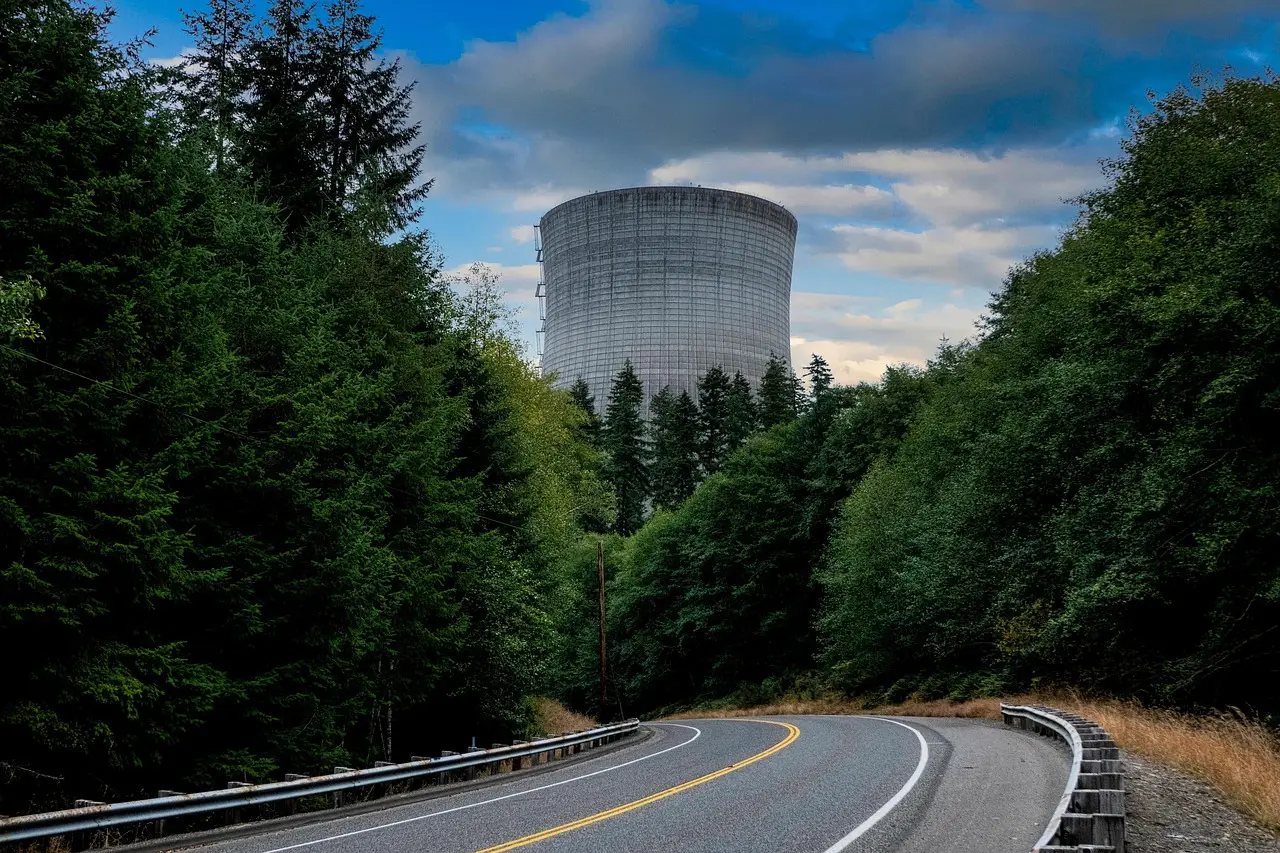
Eight German nuclear power plant sites are the likely focus of a new Nvidia feasibility study, announced October 21 by the chipmaker and PreussenElektra GmbH (PEL). The wording remains preliminary; neither company has selected a conversion site.
Nvidia, the U.S. chipmaker, and PreussenElektra, a German energy firm, entered a preliminary partnership to test whether decommissioned nuclear sites can host high-performance AI data centers. The project would reuse infrastructure. It would not restart or use nuclear generation.
What could the former plants provide?
The study will compare each candidate with the operating requirements of Nvidia’s “AI factories.” Its stated scope covers three categories:
- Connections to the energy grid
- Available land
- Existing industrial infrastructure
Here, “AI factories” means prospective high-performance computing sites, not semiconductor wafer fabs.
The commercial argument rests on assets that a greenfield data center must otherwise obtain. Nvidia and PEL cite four claimed advantages:
- Well-located land
- Industrial-zone approvals
- Proximity to water infrastructure for cooling
- High-voltage grid connections
Reusing those assets could shorten development and lower cost, because the alternative is building a massive data center from scratch. No company has quantified either saving.
PEL Management Board Chairman Guido Knott said:
“Our former power plant sites have valuable industrial infrastructure and offer opportunities for new, future-oriented uses. Together with NVIDIA, we intend to conduct a sound assessment of whether and how these conditions can be leveraged for AI factories. In doing so, we are combining the responsible reuse of our sites with new economic opportunities for the regions.”
Nvidia senior regional director Markus Hacker said:
“AI factories require access to power, land and high-capacity infrastructure, and former industrial sites could provide a strong foundation for this next generation of computing. Together with PreussenElektra, we will assess how its sites could meet the technical and operational requirements of AI factories and contribute to Germany’s high-performance AI infrastructure.”
Why Germany offers a pipeline of sites
Germany permanently shut its last operational nuclear power plants in April 2023, following the Fukushima nuclear disaster, according to the announcement. The country is now dismantling about 30 nuclear power plants.
PreussenElektra is responsible for decommissioning and dismantling eight of them. Those eight are the likely sites for Nvidia’s assessment. The announcement does not name individual locations or establish that every plant has suitable infrastructure.
What has actually been committed?
Nothing beyond a preliminary assessment. The companies disclosed no investment amount, approved development plan or definitive construction agreement. They also gave no construction date, compute capacity, power contract or customer commitment.
The announcement explicitly describes the initiative as open-ended and strictly experimental. No conversion decision follows automatically from the review.
The plan explicitly excludes nuclear power. The feasibility work concerns infrastructure, not reactor operation. No site conversion, financing decision or construction start has been announced.
Several commercial questions remain open. The announcement provides no site-level grid capacity, water-infrastructure proximity, zoning detail or build schedule. It also does not identify AI hardware, server configurations or a capacity target in megawatts. Those omissions matter because the claimed benefits depend on local infrastructure remaining usable.
Can reuse alter the cost equation?
If the assessment succeeds, converted former nuclear sites could avoid some greenfield constraints involving land, approvals, cooling and grid access. That could reduce cost and development time relative to a new-build AI campus. The claim remains unquantified and conditional.
The next decision gate is site-specific feasibility. It would require usable grid connections, developable land and industrial infrastructure, followed by approvals, financing and construction commitments. Until then, the partnership adds no confirmed German AI data center capacity and supports no firm claim on customer pricing.
Source: Tom's Hardware
More from Sophie Lindqvist
Show full bio
News editor covering money, funding and market shifts around Semiconductors, chip manufacturing, hardware, AI compute at Chip Dispatch.
733 articles
Related articles
israeli-startup-in-herzliya-targets-ai-chip-market-1feb38d4
Israeli Startup in Herzliya Targets AI Chip Market
scaleway-to-build-amd-powered-ai-supercomputer-in-sweden-743484cb
Scaleway to Build AMD-Powered AI Supercomputer in Sweden
scaleway-to-build-amd-powered-ai-supercomputer-in-sweden-2d1d62fb
Scaleway to build AMD-powered AI supercomputer in Sweden
nvidia-s-new-ai-chips-could-enter-chinese-market-ea3a07e1
Nvidia's New AI Chips Could Enter Chinese Market