onsemi SiC Modules Lift Utility Battery Storage Efficiency Past 99%
onsemi's hybrid SiC-silicon modules lift Sungrow's PowerTitan 3.0 storage platform past 99.3% peak efficiency, saving 475 MWh yearly per 100 MW plant.
- By
- Tom Whitfield
- Filed
- Channel
- Semiconductors
- Read
- 3 min read
A 0.4% gain in inverter efficiency can save more than 475 MWh of energy per year in a 100 MW battery storage plant, according to onsemi's analysis — and the company has now found a design win for the silicon carbide technology that delivers it. onsemi is supplying hybrid SiC power modules for Sungrow's PowerTitan 3.0, a utility-scale battery energy storage platform whose peak conversion efficiency exceeds 99.3%.
The partnership targets a market that grid operators are expanding quickly. Battery energy storage systems (BESS) buffer electricity from solar and wind, feed the grid during peak demand, and back up facilities such as factories and data centers. AI workloads in particular impose highly variable power demands, and a storage plant can act as a shock absorber that supplies extra power during spikes.
What does the new module actually do?
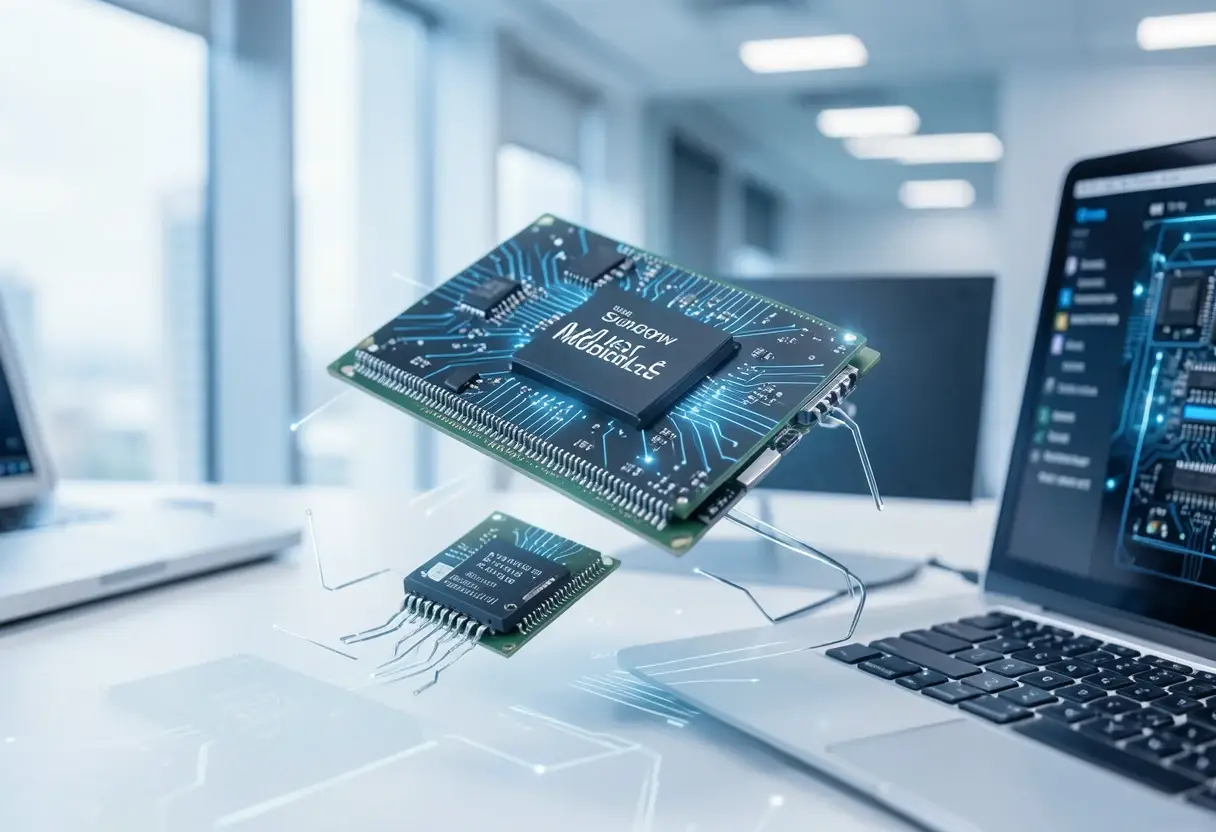
Sungrow's PowerTitan 3.0 platform uses onsemi power integrated modules (PIMs) built for the three-level inverter topologies common in grid-connected batteries. Each module mixes two materials. SiC MOSFETs handle the high-frequency switching stages, where wide-bandgap silicon delivers the highest efficiency and power density. Conventional silicon power devices serve the remaining parts of the circuit.
The split is deliberate. Silicon carbide switches faster and wastes less energy, but it costs more than silicon. Using each material only where it pays off improves what onsemi calls the system economics of the storage installation.
How much efficiency is on the table?
The numbers onsemi reports are inverter-level figures, not lab curiosities. Compared with the previous-generation platform, the new architecture improves inverter efficiency by 0.4%. The design supports power-conversion units rated up to 450 kW, which allows higher-power deployments without sacrificing conversion performance.
Peak efficiency above 99.3% matters because every lost percentage point turns into heat at utility scale. Less heat means simpler cooling, better thermal headroom, and higher overload capability — properties that help a storage plant absorb the violent load swings of an AI data center and stay reliable while doing it.
"At utility scale, even small improvements in power-conversion efficiency can have a meaningful impact on battery energy storage system performance and total cost of ownership," said Sergio Fissore, vice president and general manager of the IPD power division at onsemi.
Where do the savings come from?
onsemi's own analysis puts a number on the gain. In a 100 MW installation, the 0.4% efficiency improvement delivered by the hybrid module yields more than 475 MWh of additional energy per year relative to the previous module generation.
That energy would otherwise be lost as heat during DC-to-AC conversion. Recovered energy means more electricity available for grid delivery, lower operating costs, and better returns on the storage asset itself. Fissore notes that at this scale, small efficiency steps compound into large effects on both performance and cost.
Sungrow frames the deal as part of a broader push on storage performance. Chen Peng, general manager of energy storage conversion products for Sungrow's Energy Storage business, said the architecture supports "the deployment of higher-performance storage solutions that deliver greater value throughout the lifecycle of energy assets." He added that collaborating with partners such as onsemi accelerates that deployment.
Why the SiC angle matters now
The design win extends silicon carbide beyond its established beachheads in EV traction inverters and onboard chargers. Grid-scale storage is volume business, and it rewards exactly the trade this module makes: pay for SiC only in the switching stages where it earns its cost back, and use silicon everywhere else.
For onsemi, Sungrow is a channel into utility deployments that are scaling with data center demand. For Sungrow, the 450 kW conversion units and 99.3% peak efficiency give it a platform it can sell against rising performance expectations in the storage market.
Neither company disclosed volumes, pricing, or a deployment timeline for PowerTitan 3.0. If the 475 MWh-per-100 MW figure holds in field operation, expect competing module makers — Infineon, STMicroelectronics and Wolfspeed among them — to push similar hybrid SiC-silicon architectures into grid storage designs.
Original: sungrowpower.com
More from Tom Whitfield
Show full bio
Staff writer covering companies, deals and strategy in Semiconductors, chip manufacturing, hardware, AI compute at Chip Dispatch.
685 articles
Related articles
onsemi-rolls-out-advanced-packaging-aimed-at-ev-inverter-efficiency-5f2c8257
onsemi Rolls Out Advanced Packaging Aimed at EV Inverter Efficiency
sungrow-taps-on-semi-elitesic-is-on-now-undervalued-55cf73ff
Sungrow Taps ON Semi EliteSiC — Is ON Now Undervalued?
power-semiconductor-industry-targets-data-center-efficiency-853d039f
Power Semiconductor Industry Targets Data Center Efficiency
u-s-government-picks-navitas-for-10-kv-sic-power-program-7d8795c3
U.S. Government Picks Navitas for 10 kV SiC Power Program