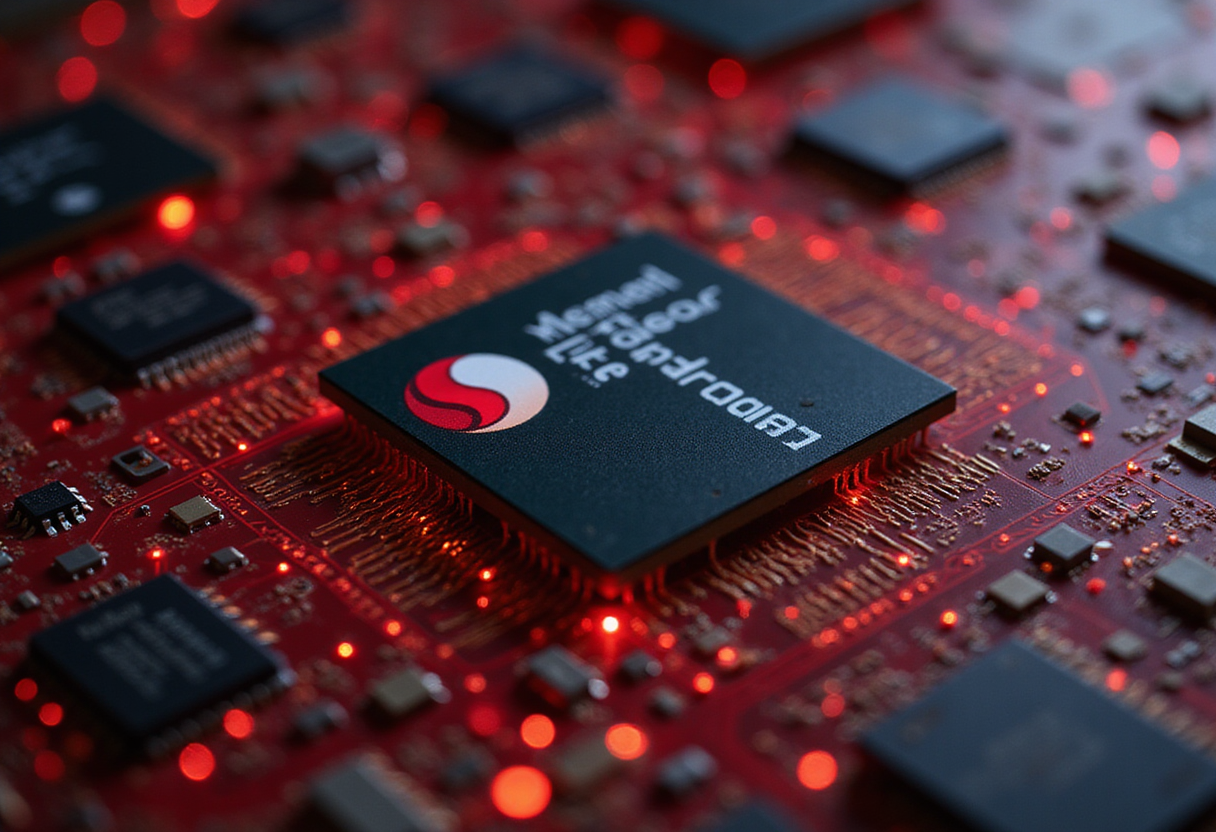
Qualcomm Extends AI Silicon Work From Phones To Cars And Edge
Qualcomm is extending its AI silicon and software work from smartphones into automotive cockpits and edge devices, according to a Yahoo Finance analysis, reframing growth beyond the handset.
- By
- Grace Kim
- Filed
- Channel
- Semiconductors
- Read
- 3 min read
By Grace Kim
Qualcomm is extending its AI silicon and software work from smartphones into automotive cockpits and edge devices, according to a Yahoo Finance analysis. The shift reframes the company's growth strategy around markets beyond the handset.
The smartphone segment supplied the original base for the company's AI engineering work. Phone NPUs drove the design of on-device inference and small-model execution. Saturation in premium handset replacement cycles pushed the search for new product sockets for the same neural network blocks.
What does the automotive push change?
Automotive design cycles run longer than phone cycles. Silicon content per vehicle also runs higher than per phone. A modern digital cockpit integrates multiple displays, driver monitoring, and natural-language assistants on a single compute domain, drawing on the same NPU IP that powers premium mobile platforms.
The company's existing cockpit and ADAS platforms already serve production vehicles across multiple global OEMs. Shipment volumes have not been disclosed. AI workloads in the cabin grow as carmakers add generative assistants and 360-degree perception features.
The strategy reuses validated silicon blocks across product lines. Reuse lowers per-design engineering cost and shortens time to automotive production. The same neural processing unit can serve a flagship phone in one quarter and a luxury sedan in the next.
Why does the edge market matter now?
Edge AI moves inference off remote cloud servers. Industrial machines, retail terminals, and autonomous robots all need low-latency decision making. The on-device AI blocks developed for phones can carry these edge workloads without architectural redesign.
The smartphone served as the proving ground for on-device generative AI. Thermal limits and battery constraints forced hard trade-offs between model size and runtime speed. Edge devices face the same constraints, often running fanless in sealed enclosures.
The engineering lessons transfer directly between the two markets. Thermal envelope, memory bandwidth, and model quantization behave the same way across phones, factory robots, and retail kiosks.
The concrete comparison here is a single AI accelerator now serving three end markets. Unit volume per market falls. Total addressable silicon content rises.
How does this reshape the competitive map?
The move mirrors a wider industry pattern. Chip vendors across categories now push AI silicon into new end markets. AMD, Intel, and Nvidia follow similar paths from their own starting points. The shared bet across the industry assumes compute engines refined for one vertical can serve the next with only limited redesign work and incremental validation effort.
Nvidia dominates high-end automotive AI training infrastructure. Mobileye targets mass-market ADAS at lower price points. Qualcomm sits between the two. The edge market fragments across many MCU vendors, leaving room for higher-performance SoC plays in premium industrial and robotics designs.
What does the shift mean for investors?
For investors, the test comes in fiscal year results. Automotive and IoT revenue must keep climbing. Handset AI must still carry the base load. Until those two lines converge in dollar terms, the reweighting remains a roadmap, not a result.
The company must still execute the plan. Phone replacement cycles drive near-term cash flow. New automotive and edge design wins take years to convert into volume. The next four quarters of earnings will show whether the strategic reweighting has reached the income statement or remains a deferred story for the following fiscal year.
Source: Google News: AI chips
More from Grace Kim
Show full bio
Market editor covering people, launches and day-to-day practice in Semiconductors, chip manufacturing, hardware, AI compute at Chip Dispatch.
365 articles
Related articles
qualcomm-bets-on-agentic-ai-with-snapdragon-8-elite-gen-6-e11c4d64
Qualcomm Bets on Agentic AI With Snapdragon 8 Elite Gen 6
novatek-quarterly-revenue-passes-nt-30-billion-on-smartphone-edge-ai-strength-528f1836
Novatek Quarterly Revenue Passes NT$30 Billion on Smartphone, Edge AI Strength
qualcomm-lands-deal-to-supply-amazon-with-custom-ai-silicon-8aad8dfa
Qualcomm Lands Deal to Supply Amazon With Custom AI Silicon
ai-moves-from-designing-chips-to-designing-chip-design-itself-44494fc2
AI Moves From Designing Chips to Designing Chip Design Itself