RUM Group revenue jumps 290% as Quake AI drives growth
RUM Group posted $96.6 million in Q3 2026 revenue as Quake AI supplied $68.2 million, while $85.2 million in depreciation and amortization left a $79.9 million GAAP net loss.
- By
- Grace Kim
- Filed
- Channel
- AI & Compute
- Read
- 3 min read
RUM Group reported Q3 2026 revenue of $96.6 million, up 290% from $24.8 million a year earlier. The renamed parent of video platform Rumble attributed the increase to its new AI compute business. The result exceeded the top of company guidance by 3.8% and beat the $89.0 million FactSet estimate, according to MT Newswires.
Shares rose about 6% to $5.42 in early Wednesday trading, Nov. 11, 2026, according to 24/7 Wall St.
How did Quake AI reshape the revenue mix?
Quake AI, the GPU cloud and data center business acquired with Northern Data, contributed $68.2 million in its first full quarter. More than 70% of RUM Group’s revenue came from that unit. The Northern Data acquisition closed June 17, 2026, and RUM has consolidated its results since that date.
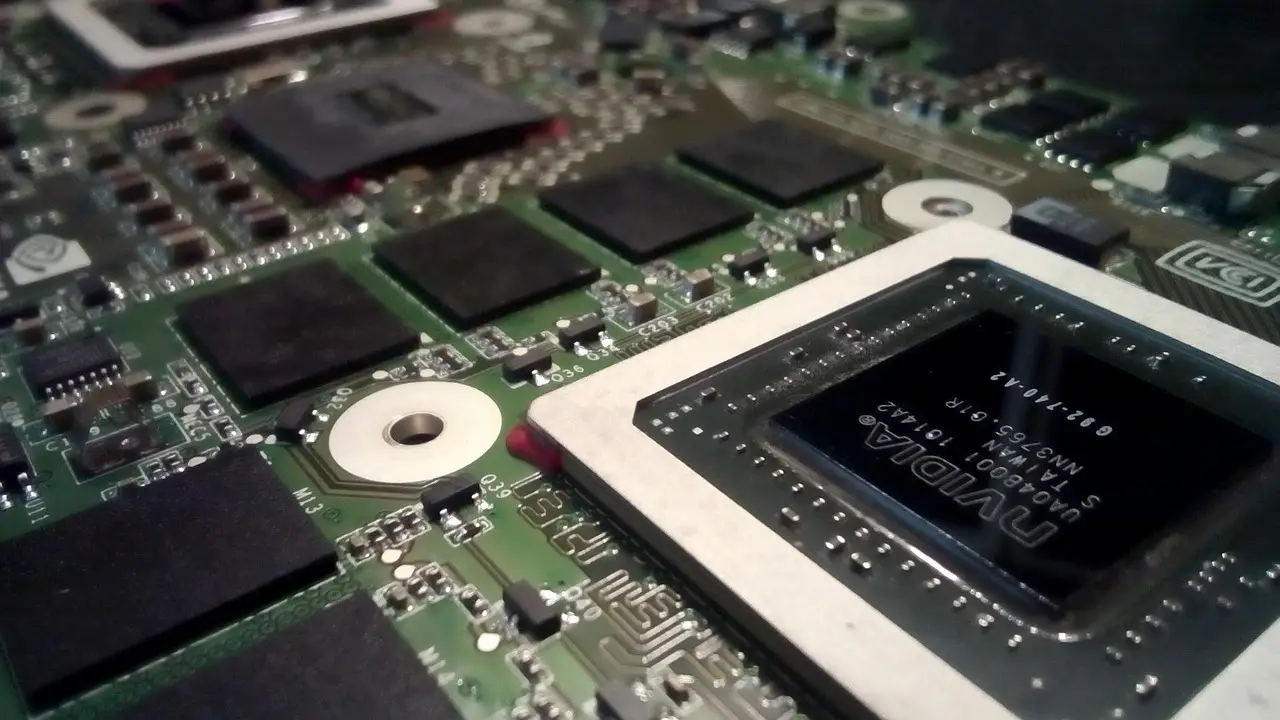
RUM Group said its fleet comprised about 22,000 NVIDIA GPUs. The fleet ran at roughly 85% utilization. CEO Chris Pavlovski said: “Quake AI is now the engine of our business. Our 22,000-GPU estate is nearly sold out at 85% utilization.” Together, the sales contribution and utilization rate place the acquired infrastructure business at the center of RUM Group’s operating scale and earnings profile.
Rumble’s video business added $3.6 million of year-on-year revenue. Advertising increased by $5.6 million, while subscriptions and other services fell by $2.0 million. Thus, the acquired infrastructure operation supplied most of the growth, while the original platform remained a small and mixed contributor.
Why did profit measures diverge?
Adjusted EBITDA turned positive at $4.4 million, compared with a $15.1 million loss a year earlier. It was the first positive quarter in RUM Group’s history on that measure.
On a GAAP basis, the net loss attributable to RUM Group widened to $79.9 million, or $0.19 per share, from $16.3 million. FactSet had expected a loss of $0.11 per share.
Depreciation and amortization rose to $85.2 million from $3.9 million and was the main reason for the divergence. The figures show adjusted earnings turning positive at the same time sharply higher depreciation overwhelmed reported profitability and kept the bottom line deeply negative.
The reported quarterly revenue sequence was:
| Quarter | Revenue |
|---|---|
| Q1 2025 | $23.7 million |
| Q2 2025 | $25.1 million |
| Q3 2025 | $24.8 million |
| Q4 2025 | $27.1 million |
| Q1 2026 | $25.5 million |
| Q2 2026 | $40.4 million |
| Q3 2026 | $96.6 million |
EPS stood at negative $0.19 in Q3 2026, negative $0.28 in Q2 2026 and negative $0.06 in Q3 2025.
What does the forward guidance signal?
RUM Group guided fourth-quarter revenue to $88 million to $94 million, below its $96.6 million third-quarter result. It said market conditions may push part of its 250 MW of unmonetized capacity beyond the 2027 target.
RUM had targeted that capacity for 2027. The outlook therefore pairs a sequential revenue decline with uncertainty over the pace at which RUM Group can monetize the unmonetized megawatts.
How did ownership and financing change?
RUM Group raised its Northern Data stake to about 98% from 85.2%. It started a squeeze-out of remaining holders and expects to complete the process in early 2027.
At September 30, the company combined $134.4 million of cash with 94.68 bitcoin worth $7.9 million, for reported total liquidity of $142.3 million. Cash alone stood at $237.9 million at the end of 2025.
The balance sheet now carries $358.8 million of convertible notes. RUM Group said it qualifies as a well-known seasoned issuer. It expects to file automatic shelf registrations that week, including one covering shares held by Tether.
The near-term test is whether RUM can sustain utilization of its nearly sold-out GPU estate while monetizing the targeted 250 MW, particularly after management warned that some capacity could slip beyond 2027.
Source: mlq.ai
More from Grace Kim
Show full bio
Market editor covering people, launches and day-to-day practice in Semiconductors, chip manufacturing, hardware, AI compute at Chip Dispatch.
866 articles
Related articles
nvidia-supply-commitments-jump-to-279-billion-amid-governance-probe
Nvidia Supply Commitments Jump to $279 Billion Amid Governance Probe
amazon-targets-7b-deal-in-direct-challenge-to-nvidia-f0c8d57d
Amazon Targets $7B Deal in Direct Challenge to Nvidia
nvidia-at-186-64-doubled-revenue-meets-congress-and-a-spy-probe
Nvidia at $186.64: Doubled Revenue Meets Congress and a Spy Probe
coreweave-lifts-revenue-outlook-to-13-3b-pulling-nvidia-up-3-8
CoreWeave Lifts 2026 Revenue Outlook to $13.3B, Pulling Nvidia Up 3.8%