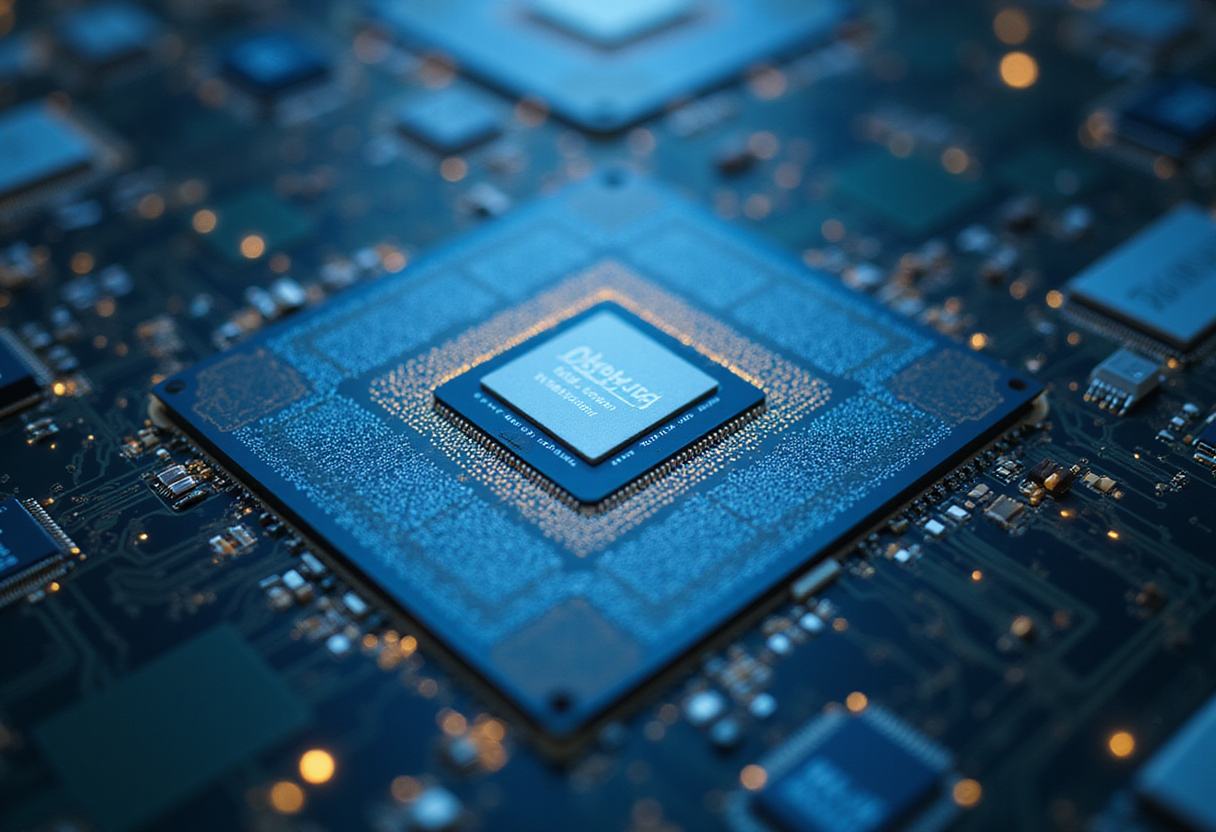
Samsung Foundry Bets on AI Chips to Close Gap With TSMC
Samsung Foundry is betting that surging AI chip demand will help it close the market share gap with TSMC, the dominant leader in advanced contract chip manufacturing.
- By
- Tom Whitfield
- Filed
- Channel
- Chip Manufacturing
- Read
- 3 min read
Samsung's foundry business is wagering that demand for AI chips will narrow the distance between it and TSMC, the Taiwanese contract manufacturer that has held the industry's top spot for years.
The strategy, as reported by Android Headlines, positions artificial intelligence silicon as the growth engine for a foundry unit that has struggled to match its rival's dominance in advanced nodes. Samsung Foundry is one of only two companies in the world — TSMC being the other — with the capability to manufacture leading-edge logic at scale, yet it has consistently trailed in market share at the most advanced process generations.
AI accelerators are the clearest target. The market for chips that train and run large models has grown into the most valuable segment of the semiconductor industry, and the customers buying that capacity — hyperscalers, AI labs and chip designers — need advanced packaging and high-yield wafer supply. A foundry that wins even a portion of those orders changes its revenue trajectory quickly, because AI processors carry premium pricing and large die sizes that consume substantial wafer capacity.
For Samsung, the pitch to AI chip customers is straightforward. The company can offer a second source outside TSMC's orbit, an option that has gained commercial weight as buyers weigh concentration risk in advanced logic manufacturing. Geopolitical exposure of Taiwan-based capacity has pushed several major AI spenders to qualify additional suppliers, and Samsung is the only credible alternative at the leading edge.
TSMC remains the reference point because it holds the majority of global foundry revenue and manufactures the bulk of the world's most advanced AI processors. Any share Samsung takes in this segment comes directly at the leader's expense, which is why the gap between the two firms functions as the central scoreboard in contract chipmaking.
The stakes run beyond foundry revenue alone. Samsung's logic business shares technology and capital investment with its broader semiconductor organization, and success in AI silicon strengthens the company's hand in adjacent product lines. Winning AI chip customers also validates Samsung's advanced process and packaging roadmap for the wider merchant market, which in turn attracts design teams deciding where to place their next product.
Execution is the open question. Closing a gap that has persisted across multiple technology generations requires more than a favorable market; it demands yields, delivery schedules and customer trust that match what the incumbent provides. AI chip buyers are famously demanding on all three counts, given how tightly their product cycles depend on wafer supply.
Still, the market timing favors a challenger. AI chip demand has outpaced available advanced capacity, and buyers actively seek suppliers who can commit wafers on predictable schedules. In a supply-constrained environment, a second leading-edge foundry with open capacity holds real negotiating leverage.
Whether Samsung converts that leverage into durable share gains against TSMC will hinge on the coming cycle of AI chip orders, where foundry selection decisions made now will shape capacity allocations and revenue splits for years to come.
Source: Google News: TSMC
More from Tom Whitfield
Show full bio
Staff writer covering consumer brands and retail at Chip Dispatch.
120 articles
Related articles
ai-demand-drives-foundry-2-0-revenue-up-25-tsmc-extends-lead-9ef7552a
AI Demand Drives Foundry 2.0 Revenue Up 25%, TSMC Extends Lead
tsmc-capacity-crunch-opens-door-for-samsung-foundry-b52a49ba
TSMC Capacity Crunch Opens Door for Samsung Foundry
tsmc-lifts-foundry-2-0-share-to-42-as-ai-demand-drives-record-96-6b-quarter-2597d266
TSMC Lifts Foundry 2.0 Share to 42% as AI Demand Drives Record $96.6B Quarter
piper-sandler-tsmc-capacity-sold-out-through-2028-on-ai-demand-6f0410a7
Piper Sandler: TSMC Capacity Sold Out Through 2028 on AI Demand