Samsung's $30 Billion Texas Fab Town Now Leads U.S. in Home-Seller Desperation
Taylor, Texas, home to Samsung's $30 billion chip fab, now ranks as the U.S. city with the most desperate home sellers, per 24/7 Wall St., as housing speculation outran the plant's jobs timeline.
- By
- Nathan Brooks
- Filed
- Channel
- Chip Manufacturing
- Read
- 2 min read
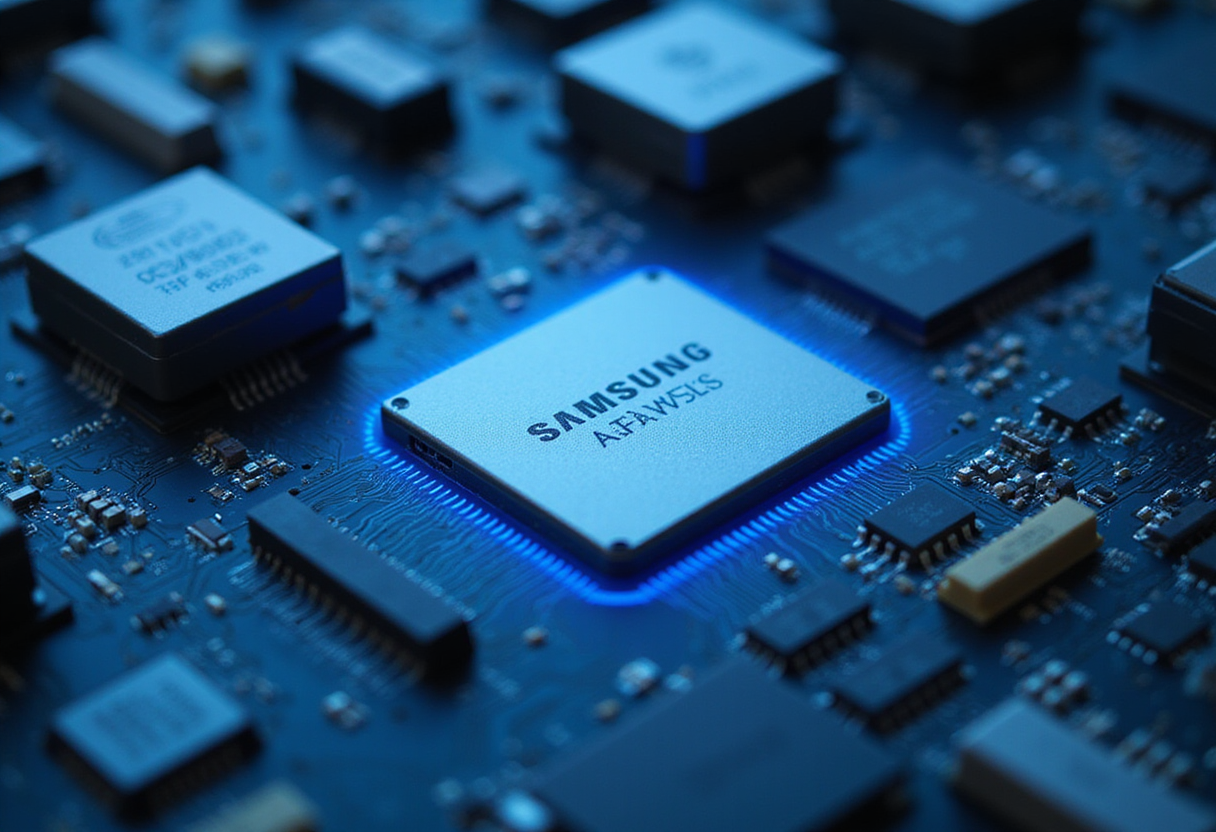
Taylor, Texas — a town of roughly 16,500 people northeast of Austin — hosts a $30 billion semiconductor factory under construction by Samsung Electronics, and, according to an analysis by 24/7 Wall St., it also now has the most desperate home sellers in the United States.
The juxtaposition is stark. Samsung broke ground in Taylor on a leading-edge fabrication campus that the company has billed as one of the largest single chip investments in U.S. history. The plant anchors the town's transformation from a quiet agricultural and railroad community into one of the most visible nodes in America's semiconductor buildout, a push accelerated by federal incentives aimed at reshoring advanced chip manufacturing.
Yet the housing data tell a different story. 24/7 Wall St.'s ranking identifies Taylor as the U.S. metro area where sellers are most desperate — a designation the outlet bases on indicators of housing-market stress, including elevated price cuts, growing inventory and homes lingering longer on the market. The exact metrics and figures behind the ranking appear in the outlet's full analysis.
The dynamic illustrates a pattern that has followed other megafab announcements. Speculative buying surged around Taylor once Samsung confirmed the site in 2021, with investors and newcomers betting on an influx of high-paying fab jobs and the contractor workforce needed to build the plant. That wave of demand pushed prices up faster than local incomes could support. Now, according to the 24/7 Wall St. analysis, sellers who bought at or near the peak are cutting prices in a market with fewer willing buyers.
For Samsung, the Taylor project remains the centerpiece of its U.S. manufacturing strategy. The company has said the fab will produce advanced logic chips on 300mm wafers, serving customers including artificial intelligence and data-center chip designers, with production targeted in the middle of this decade. Samsung has also indicated the Taylor site could expand with additional modules over time, though the company has adjusted the pace of some U.S. spending in line with broader market conditions.
The commercial stakes for Taylor are considerable either way. A fully staffed fab typically employs several thousand workers directly and generates thousands more construction and supplier jobs — headcounts that local infrastructure, schools and housing stock must absorb. The current seller desperation suggests the town's housing market ran ahead of the actual arrival of that employment, a gap between speculation and occupancy that other fab-adjacent communities, from Phoenix to Columbus, Ohio, have also had to manage.
The 24/7 Wall St. finding does not signal weakness in the factory itself. Rather, it marks a correction in residential real estate that outpaced the industrial timeline. As Samsung's Taylor fab moves from construction toward production ramp, local demand fundamentals — renters, transplant workers, supplier staff — will determine whether the housing market rebalances or the town's sellers face a longer squeeze.
Source: Google News: chip factory investment
More from Nathan Brooks
Show full bio
Senior reporter covering industry trends and analytics at Chip Dispatch.
92 articles
Related articles
16-8-billion-chip-plant-confirmed-for-grimes-county-texas-1cdfde6f
$16.8 Billion Chip Plant Confirmed for Grimes County, Texas
samsung-electro-mechanics-6-78-trillion-won-buildout-draws-customer-backing-46af6b69
Samsung Electro-Mechanics' 6.78 Trillion Won Buildout Draws Customer Backing
apple-s-u-s-chip-strategy-builds-on-20b-tsmc-commitment-51140594
Apple's U.S. Chip Strategy Builds on $20B TSMC Commitment
samsung-builds-out-ai-ecosystem-beyond-chips-f8065829
Samsung Builds Out 'AI Ecosystem' Beyond Chips