AI & Compute · 4 min read
Sarvam's Token Factory Draws Scrutiny Over Chinese Models
Sarvam's Token Factory serves DeepSeek and other open models on local GPUs with Rupee billing, but faces scrutiny over Chinese models, data retention defaults and idle-capacity economics.
Key takeaways
- Sarvam's Token Factory hosts DeepSeek, Kimi and Gemma 4 31B alongside Sarvam 105B via one API, at promotional ₹0.25 per million tokens until end-2026.
- Arcfront, founded by Scaler's Anshuman Singh, reportedly generated $80 million revenue in September 2026.
- Indian startups raised $291.3 million across 22 deals last week, up 1,056% week-on-week.
- MoEngage breach via a third-party vendor affected less than 1% of customer accounts.
- Fi Money narrowed FY26 net loss 25% to ₹153.3 crore as revenue fell 21.1% to ₹38.7 crore.
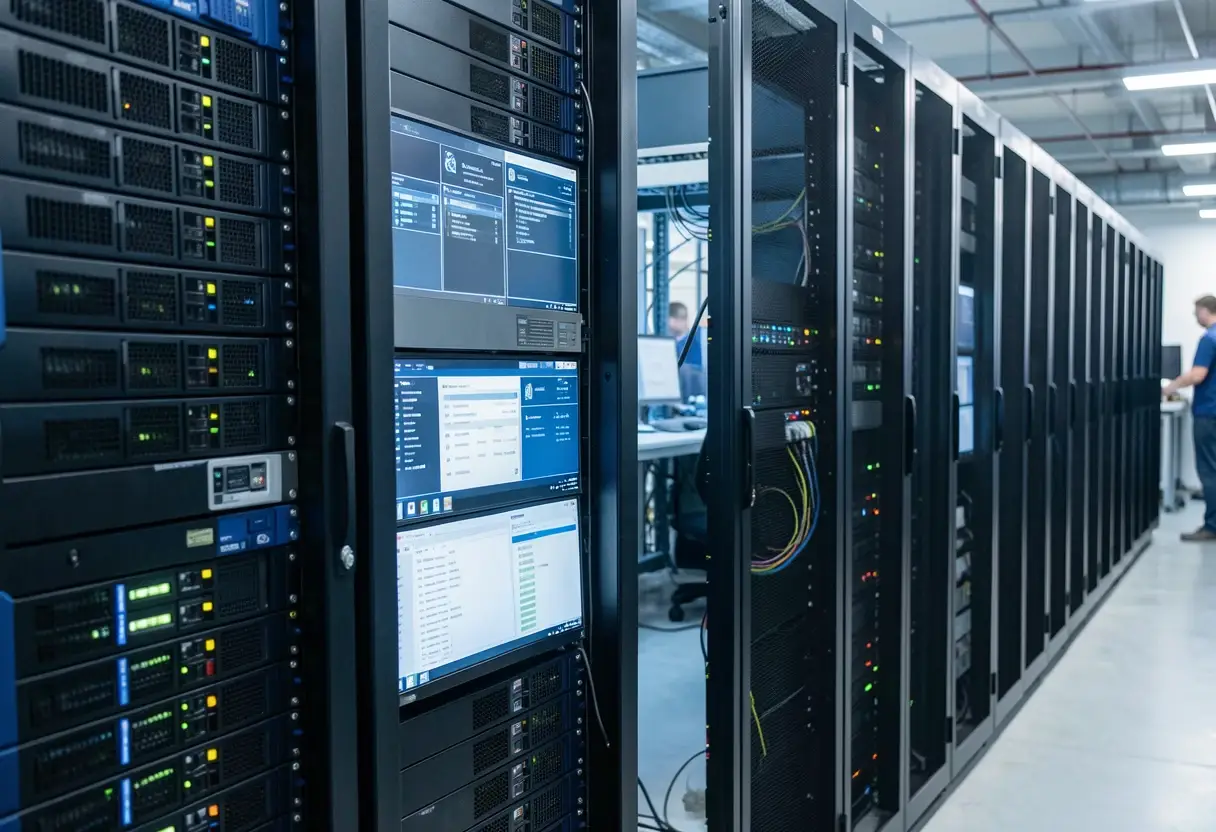
Indian AI unicorn Sarvam has opened Token Factory, a commercial inference platform that serves global models on local GPUs with Rupee billing — and it is already drawing fire over hosting Chinese models and questionable unit economics.
Token Factory lets developers toggle between Sarvam 105B and open-weight models from DeepSeek, Kimi and Gemma 4 31B through a single API. Critics questioned whether subsidised GPUs under the IndiaAI Mission were powering the service. Sarvam clarified that it runs Token Factory on its own hardware. Questions around its unit economics, however, remain unanswered.
What determines whether Token Factory makes money?
Running the platform on owned GPUs means Sarvam carries the full cost of idle capacity. Utilisation, not volume, will decide profitability. The company also faces a pricing cliff: promotional rates of ₹0.25 per million tokens expire by end-2026, and that deadline will test whether developers who arrive for cheap open models stay for Sarvam's proprietary stack.
Data policy adds another layer of risk. Sarvam offers zero data retention only on request, which means Token Factory by default uses customer data to fine-tune its models unless clients explicitly disable the feature. For enterprises handling sensitive or proprietary information, that default could be a dealbreaker.
How crowded is India's inference layer?
Sarvam is not alone. Construction giant L&T is scaling its Vyoma.AI token factory. E2E Networks is expanding through Jarvislabs. Utho Cloud plans a 2027 entry. Mirror Security is carving out a niche in encrypted inference, while OpenAI and Anthropic are localising workloads in India. In this contested field, price, speed and reliability are likely to become the main differentiators.
Scaler founder launches Arcfront
Scaler co-founder Anshuman Singh has launched Arcfront, a startup that studies how professionals solve problems and converts that data into training material for AI models. He is building the venture with former Google executive Naman Bhalla. Singh claims Arcfront already serves four frontier AI labs, without naming them. Angel investor Gokul Rajaram said the startup generated $80 million in revenue in September 2026. Arcfront joins a growing list of startups building training datasets, testing tools and simulated work environments for AI developers; Inc42 data projects India's homegrown AI ecosystem as a $126 billion opportunity by 2030.
Celcius targets ₹100 crore
Cold-chain logistics provider Celcius is in advanced talks to raise nearly $10.8 million in a Pre-Series C round from existing backers IvyCap Ventures, Omnivore and Eurazeo, with the deal expected to close by mid-2027. The round, expected to combine equity and debt, would fund technology infrastructure, business scaling and India-wide expansion. Founded in 2020, Celcius runs a digital platform connecting shippers with transporters and cold storage providers across more than 50 distribution hubs. The startup has raised $52 million to date.
MoEngage suffers third-party breach
SaaS startup MoEngage said cyberattackers unauthorisedly accessed a limited part of its cloud infrastructure through a compromised third-party vendor account. The company claims it contained the incident in late October and strengthened its security measures. Some clients faced platform access difficulties for nearly seven days, though MoEngage denied any service disruption and said less than 1% of customer accounts were affected. The incident follows data breaches at State Bank of India, CoinDCX and Optimizely in the past week, intensifying concerns about AI-assisted cyberattacks on global tech infrastructure.
Startup stocks flat; Fi Money narrows loss
Of 69 new-age tech stocks under Inc42 coverage, only 22 ended last week with gains; 47 closed in the red. Zappfresh and TAC Infosec shed the most, while Zelio and Veefin led gains. Combined market capitalisation held nearly flat at $176.9 billion, down about $100 million week-on-week. Investors will track crude oil prices, West Asia developments, domestic GDP data and interest rates for near-term cues.
Fintech startup Fi Money cut its consolidated net loss 25% year-on-year to ₹153.3 crore in FY26, but operating revenue fell 21.1% to ₹38.7 crore, signalling shrinking scale. Total expenses dropped 22.8% to ₹207.5 crore from ₹268.9 crore a year ago. Founded in 2019 as a neobank, Fi Money has pivoted to B2B AI and enterprise tech and has raised $137 million to date.
Funding rebounds; OXG Space targets orbit
Indian startups raised $291.3 million last week across 22 deals, up 1,056% in value and 144% in deal count week-on-week. Dreamteam took $53 million and Style Union $51.8 million. AI startups led with $114 million across seven deals; ecommerce followed with $66.8 million across three startups. Accel was the most active investor.
Space startup OXG, founded this year and backed by Aum Ventures, is building an orbital relay network for near-real-time satellite data delivery, initially targeting a 1 Gbps-class link with a roadmap toward 64 Gbps per spacecraft. Its 12-month Mission Synapse programme will demonstrate antenna, ground-link and in-orbit computing technologies in a global Earth-observation market projected to reach $7.2 billion by 2030. Whether Sarvam's Token Factory and its peers can convert promotional pricing into durable inference revenue will show in 2027, when subsidy-free economics take hold.
inc42.com (Source)
More from Grace Kim
Show full bio
Market editor covering people, launches and day-to-day practice in Semiconductors, chip manufacturing, hardware, AI compute at Chip Dispatch.
1,228 articles