Seagate's FireCuda Forge Revives Hybrid Drives at $699 for 8TB
Seagate's $699 8TB FireCuda Forge ships as a hard drive that only works once the buyer installs their own M.2 SSD into its side bay.
- By
- Tom Whitfield
- Filed
- Channel
- Memory & Storage
- Read
- 4 min read
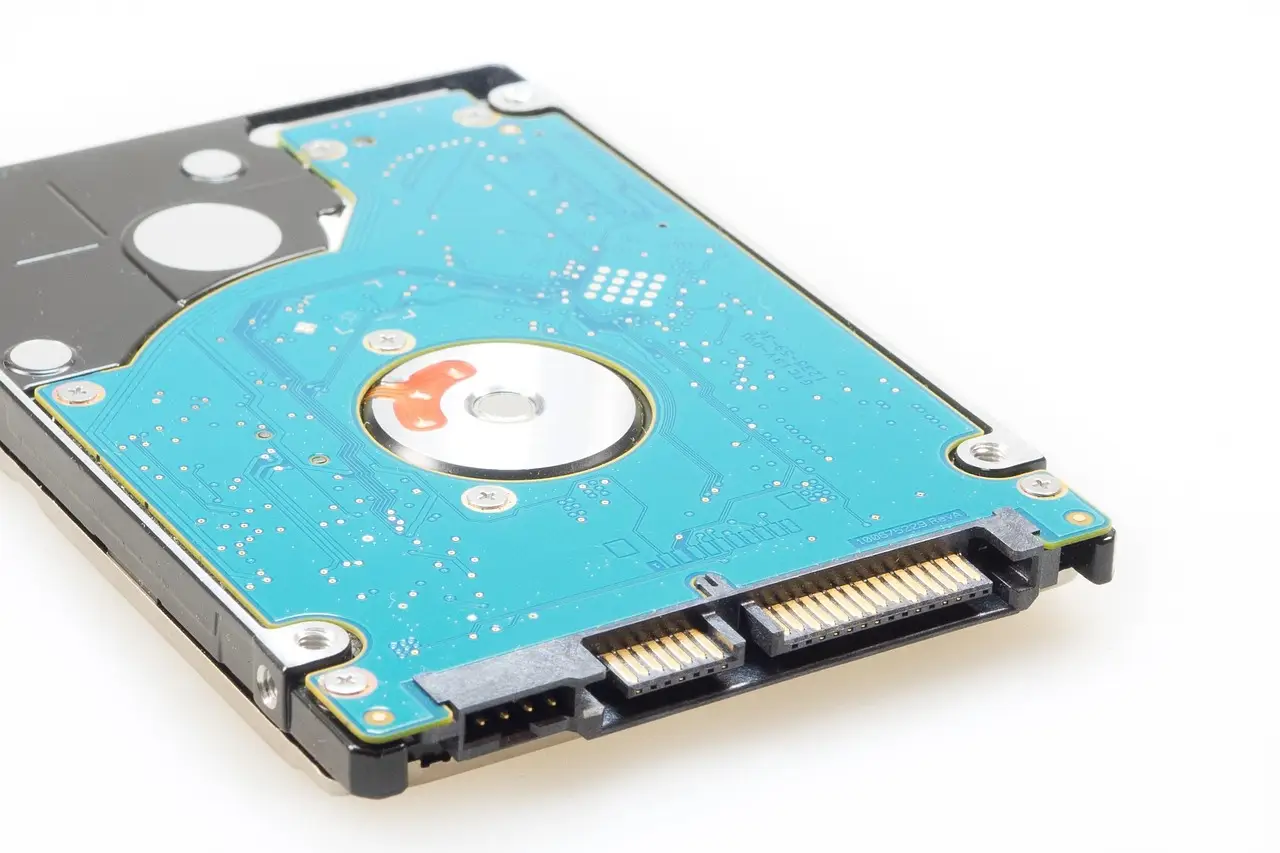
Seagate will sell an 8TB external hard drive for $699 that does not function until the buyer opens the enclosure and installs their own M.2 2280 SSD. The FireCuda Forge, also offered in a 20TB version at $899, revives the hybrid storage concept Seagate first tried in 2010, when flash was too expensive to buy in volume.
The logic behind the product is price. SSDs have become expensive again, driven by demand from AI hyperscalers, while hard drives have also seen price jumps. The Forge lets a buyer pair a cheap-terabyte spinning disk with a small, fast flash pool of their own choosing. Seagate recommends 1TB drives with DRAM, and performance caps out at PCIe Gen3 speeds. Faster and larger SSDs work, but they do not improve results.
How does the hybrid system work?
Seagate calls the data-handling architecture Alkemi. According to the company, it combines "onboard processing" with the hard drive and the user-supplied SSD to "prioritize active data without requiring users to manually manage separate drives."
Alkemi observes workloads, gives priority to frequently used data, and adapts over time to user behavior. Seagate describes it as an "on-device dynamic caching and workload-aware data-prioritization technology." Machine learning plays a part in this, but Seagate repeatedly stresses in its materials that it does not use generative AI — likely to distance the product from reported cases of AI agents deleting user data.
The approach mirrors the SSHDs of the early 2010s, but with a far larger fast pool. Those old hybrids carried only 4–16GB of flash; the Forge accepts up to 1TB. The takeaway is that the Forge is old caching logic rebuilt at a scale the first hybrids never reached.
What is installation like?
The buyer removes four screws from the bottom, using an included hex-bit driver, and slides the SSD into a side-mounted bay. A tiny mounting screw is required, and Seagate does not include a Phillips screwdriver. Six more hex screws release the hard drive itself for future capacity upgrades.
Two thick thermal pads press the SSD against the bay wall and the outer shroud, but all contact surfaces are plastic, with only a foil layer on the shroud. In testing, the SSD side of the enclosure grew noticeably warm but never hot — acceptable for bursty workloads, less so for sustained multi-hour transfers.
The qualified-SSD list is short: Samsung's 990 Pro, WD/SanDisk's SN850X and GX Pro 850X, and the SN710/GX7100. Once the SSD is in place and the USB-C cable and external power adapter are connected, the drive appears in Windows 11 as a single 8TB volume with no software setup. Seagate says macOS 26 and later are also supported. The external brick is needed because a 3.5-inch drive plus an M.2 SSD draws more power than some USB-C ports can deliver.
What do the benchmarks show?
The Forge connects over USB4, and Seagate claims up to 2,500 MB/s read and 2,000 MB/s write. In PCMark 10 trace testing, it beat recent traditional hard drives and Samsung's T5, but Kingston's fast flash drive and SanDisk's Desk Drive scored higher — the Desk Drive nearly doubled the Forge's score, as expected for a full external SSD.
In DiskBench transfer tests with a 50GB custom dataset, the Forge beat platter-only drives and the Samsung T5 Evo on writes, losing only to the Desk Drive. On reads, it led the field. CrystalDiskMark showed the USB4 interface paying off: sequential reads and writes jumped ahead of every other drive on the chart, all of which top out at 10 Gbps.
Who should buy it?
At 8TB, the math is shaky. SanDisk's Desk Drive offers a slower 10Gbps interface but is a genuine SSD, and it sells for $999 — barely above the Forge once you add the cost of the required M.2 drive. The Forge makes its case at 20TB, where no consumer external SSD option exists at all. Full performance verdicts, including game load testing, will have to wait for a complete review, but the Forge's viability hinges on whether SSD prices stay high enough to keep hybrid storage relevant.
Source: Tom's Hardware
More from Tom Whitfield
Show full bio
Staff writer covering companies, deals and strategy in Semiconductors, chip manufacturing, hardware, AI compute at Chip Dispatch.
782 articles
Related articles
samsung-portable-ssd-p9-hits-4-000-mb-s-at-a-649-price
Samsung Portable SSD P9 hits 4,000 MB/s at a $649 price
beegfs-now-runs-natively-inside-huawei-s-oceandisk-1610-storage-d7000550
BeeGFS Now Runs Natively Inside Huawei's OceanDisk 1610 Storage
biwin-m560-2tb-review-dram-less-pcie-5-0-ssd-rated-at-1-7m-iops
Biwin M560 2TB Review: DRAM-less PCIe 5.0 SSD Rated at 1.7M IOPS
sandisk-nas-800-review-14pbw-endurance-at-a-45-65-price-premium-a661de8b
Sandisk NAS 800 Review: 14PBW Endurance at a 45-65% Price Premium