Seoul Targets Southwest Korea for Semiconductor and AI Shipbuilding Push
Seoul is stepping up government support for a southwestern semiconductor project and an AI-driven shipbuilding initiative, part of a coordinated regional push, BusinessKorea reports.
- By
- Grace Kim
- Filed
- Channel
- Chips & Policy
- Read
- 4 min read
South Korea's government is expanding direct support for two industrial projects in the country's southwestern region: a semiconductor initiative and a shipbuilding program built around artificial intelligence, according to a report by BusinessKorea.
The announcement signals that Seoul intends to concentrate state-backed industrial policy outside its traditional capital-region corridors. The southwest — long anchored by heavy industry and shipyard clusters along the coast — now sits at the intersection of two of the government's highest-priority sectors: chips and AI-advanced manufacturing.
What is the government actually backing?
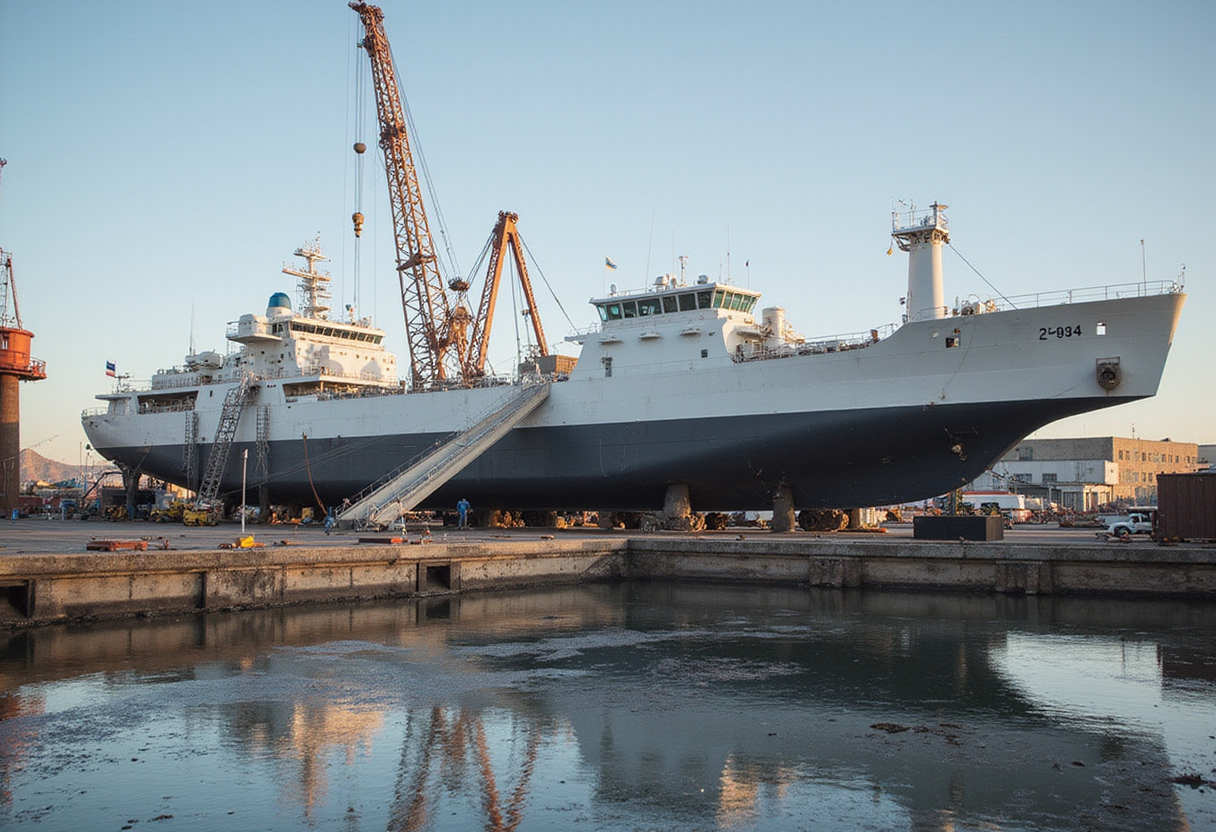
The support package covers two tracks. The first targets semiconductor projects in the southwestern region, extending a national strategy that has so far concentrated on larger established complexes elsewhere in the country. The second track backs shipbuilding initiatives that apply artificial intelligence to design, production planning and yard operations — a combination Seoul treats as essential to defending Korea's position in commercial shipbuilding against price-competitive rivals.
BusinessKorea characterizes the move as a step-up: an intensification of existing support rather than a fresh program announced in isolation. The report frames both projects as part of a broader government effort to spread high-value manufacturing capacity beyond the greater Seoul area and the established southeast industrial belt.
Why pair chips with shipbuilding?
The pairing is less odd than it first appears. Both sectors face the same structural pressure: Korean chipmakers compete against heavily subsidized rivals in memory and foundry, while Korean yards compete against Chinese shipbuilders whose pricing benefits from state support and enormous order books.
AI is the connective tissue. In shipbuilding, AI-assisted design and production scheduling are the main levers yards have for cutting lead times and labor costs as Korea's workforce ages. In semiconductors, AI-driven demand is reshaping investment decisions across the supply chain — and governments from Washington to Tokyo to Brussels have responded with targeted subsidies.
Seoul's move to formalize support for both sectors in one regional package suggests it views southwestern Korea as a test case for place-based industrial policy: using state coordination to attract supply chains, skilled labor and infrastructure to regions that existing clusters have not reached.
What is confirmed versus prospective?
What the BusinessKorea report confirms:
- The government is increasing support for a semiconductor project located in the southwestern region.
- It is simultaneously backing an AI-focused shipbuilding initiative in the same geography.
- The two efforts form part of a coordinated regional development strategy rather than separate agency actions.
What remains open:
- Specific funding amounts, capacity targets, participating companies and construction timelines have not been detailed in the report.
- The report does not specify which process technologies or wafer sizes a southwestern semiconductor facility would involve, nor which shipyards would deploy the AI systems.
- It is not yet clear whether the support takes the form of direct subsidies, tax incentives, infrastructure spending or a combination.
Readers should treat capacity figures and financial terms as pending until the responsible ministries or participating companies publish them.
Geopolitical and commercial context
The policy lands amid intensifying global competition in both target sectors. Semiconductor supply chains are being redrawn by export controls, onshoring incentives and AI-driven capacity demand, with national governments treating fab investment as a strategic asset. Shipbuilding has moved the same direction: the sector is now a recognized theater of industrial rivalry, and Korea has repeatedly framed yard modernization — including automation and AI — as the answer to rivals whose cost advantage rests on scale and state financing.
By directing support at the southwest, Seoul also addresses a domestic political economy problem: regional concentration of high-wage manufacturing jobs. Semiconductor fabs and modernized shipyards are capital-intensive, but they anchor supplier ecosystems, construction employment and long-term technical workforces — exactly the profile regional policymakers have sought.
What comes next
The immediate marker to watch is whether the government attaches concrete figures — subsidy amounts, capacity commitments, participating corporate partners or construction schedules — to the southwestern package. Until then, the announcement functions as a directional commitment: Seoul is signaling that the next round of Korean industrial investment in chips and AI shipbuilding will not be confined to existing clusters, and that regions with shipbuilding heritage are first in line to capture it.
Source: Google News: semiconductors
More from Grace Kim
Show full bio
Market editor covering industry trends and analytics at Chip Dispatch.
306 articles
Related articles
seoul-sends-minister-to-audit-800-trillion-honam-chip-buildout-186b3def
Seoul Sends Minister to Audit ₩800 Trillion Honam Chip Buildout
thailand-puts-ai-and-semiconductors-at-heart-of-next-five-year-plan-de6f5232
Thailand Puts AI and Semiconductors at Heart of Next Five-Year Plan
seoul-s-budget-chief-signals-more-fabs-for-honam-cluster-beyond-four-f9e02ff8
Seoul's Budget Chief Signals More Fabs for Honam Cluster Beyond Four
seoul-minister-park-denies-coercion-claims-in-honam-fab-cluster-push-03db2fce
Seoul Minister Park Denies Coercion Claims in Honam Fab Cluster Push