Memory & Storage · 2 min read
SK Hynix ADR Swings 30% Below July IPO Price at $101.92 Low
SK Hynix's U.S. ADR slid to a post-IPO low of $101.92, down about 30% from its July listing price of $149, after peaking at $199.87 in September, even as HBM supply is sold out through 2029.
Key takeaways
- SKHY listed at $149 in July, peaked at $199.87 in September and hit a $101.92 post-IPO low on Wednesday.
- SK Hynix says its HBM and advanced-server DRAM are effectively sold out through 2029.
- The ADR is ramping HBM4 production and supplies Nvidia's AI accelerators.
- Current-quarter earnings are due in late January; a falling wedge with an upside pivot near $128.30 frames the chart.
- RSI is below neutral and the daily MACD is bearish, with the 12-day EMA under the 26-day EMA.
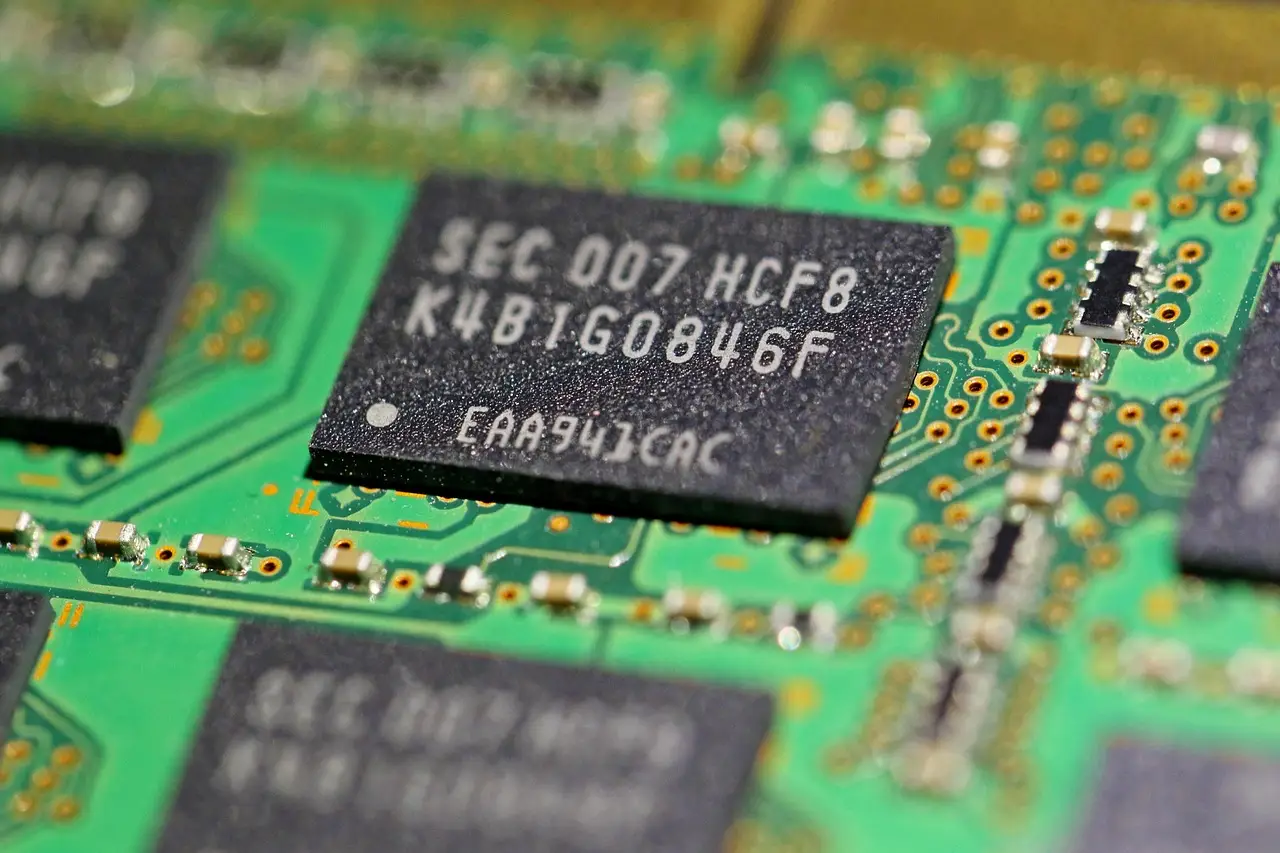
SK Hynix's U.S.-listed shares hit a post-IPO low of $101.92 on Wednesday, roughly 30 percent below the $149 level at which the ADR went public in July. The stock peaked at $199.87 in September before the AI-led selloff dragged it back down, leaving early U.S. investors with a round trip of more than 30 percent in both directions.
The listing gives American traders direct exposure to one of the world's largest memory makers, a South Korean firm that competes with Samsung Electronics and Micron Technology. SK Hynix leads in high-bandwidth memory, the stacked DRAM used inside AI accelerators, and it has been a primary supplier to Nvidia. The company is currently ramping HBM4 production, and it recently reported that its HBM and advanced-server DRAM output is effectively sold out through 2029.
What has the stock done since July?
The ADR, trading under the symbol SKHY, has been listed for only about four and a half months. The author of the underlying analysis, a markets commentator at Moomoo writing on TradingView, waited for the chart to develop a readable pattern before applying technical tools.
The record so far shows three distinct phases: the run from the $149 IPO price to the $199.87 September high, the decline that broke the 50-day simple moving average in early October, and a brief reclaim of the 21-day exponential moving average a few weeks later. That recovery failed, the commentator wrote, because swing traders did not get behind the name.
What does the chart say now?
A falling-wedge pattern, typically read as a bullish reversal setup, formed over the past month and continues at present. The price recently rebounded off the wedge's lower trendline, though the commentator cautioned that if the setup fails, a breakout in the counterintuitive direction tends to be pronounced.
The indicated upside pivot sits near $128.30, where the wedge's upper trendline meets the 21-day EMA. The stock trades well below that level after Wednesday's $101.92 low.
The remaining indicators lean bearish:
- Relative Strength Index is weaker than neutral but not yet oversold.
- The MACD histogram, based on the 9-day EMA, remains in negative territory.
- The 12-day EMA runs below the 26-day EMA, and both sit below the zero line.
On the fundamentals side, SK Hynix will not report current-quarter earnings until late January, so the technical picture is the main read available to traders until then. The commentator held no position in SKHY at the time of writing.
The core tension is straightforward: a memory maker with HBM capacity spoken for through 2029, and a share price that has swung 30 percent in both directions since July. Whether the falling wedge resolves upward, or breaks in the opposite direction, will set the tone for SKHY into the January earnings report.
tradingview.com (Source)
More from Tom Whitfield
Show full bio
Staff writer covering companies, deals and strategy in Semiconductors, chip manufacturing, hardware, AI compute at Chip Dispatch.
1,289 articles