SoftBank's $3.7B Turbine Write-Off Meets a 'No Default' Denial
SoftBank's $3.7 billion turbine write-off supports Elon Musk's claim that orders were cut, while the company denies any default and GE Vernova says it absorbed no impact.
- By
- Rebecca Stone
- Filed
- Channel
- AI & Compute
- Read
- 5 min read
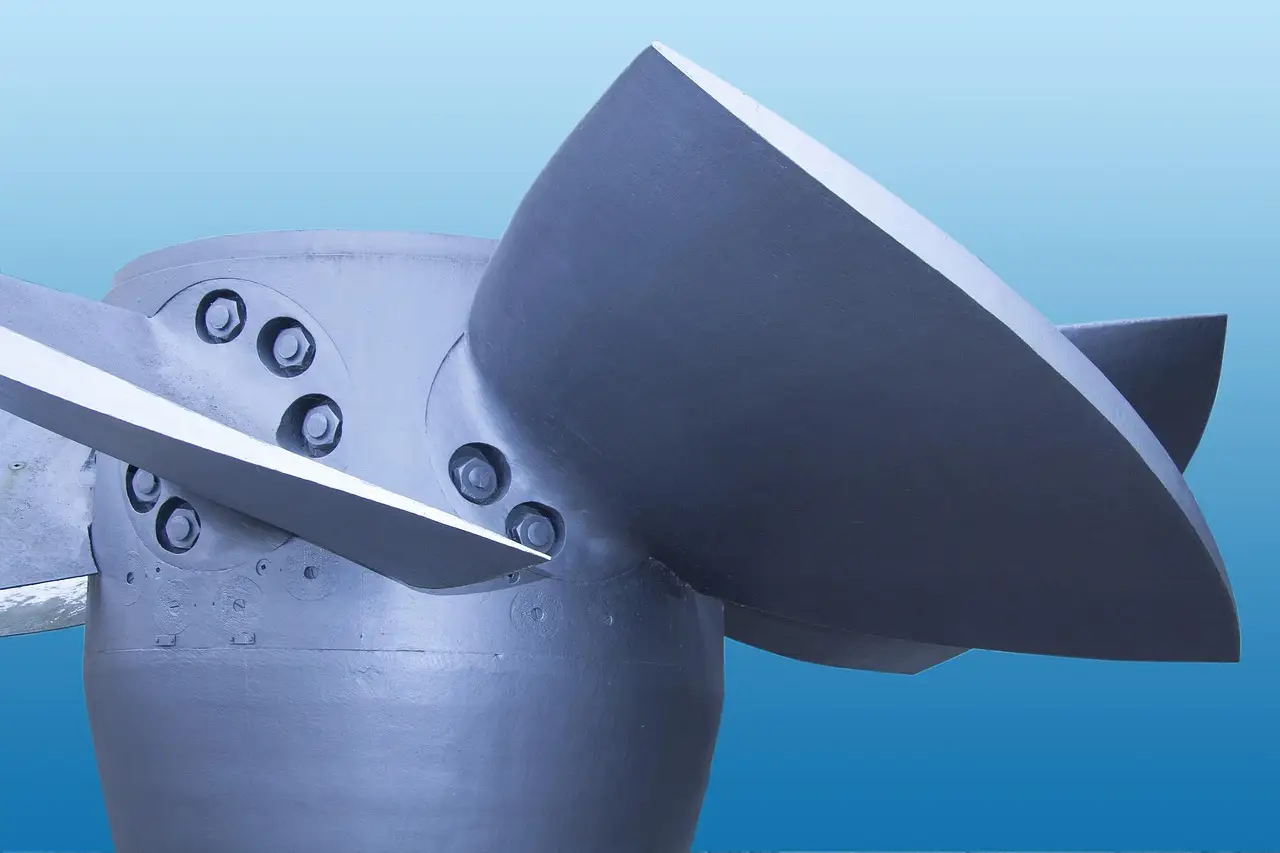
SoftBank booked a 597.2 billion yen loss—about $3.7 billion—on power-generation equipment it will not take, after prepaying $9.5 billion for U.S. AI data-center manufacturing slots and gear.
At SoftBank’s November 10 fiscal second-quarter briefing in Tokyo, CFO Yoshimitsu Goto rejected Elon Musk’s turbine-default claim. “This is simply not correct at all. There is no such default,” Goto said, in The Wall Street Journal’s translation.
Musk had made the claim at 1:25 a.m. Eastern on Friday, November 6, replying to Katie Miller on X: “SoftBank is defaulting on their turbine orders.” He named no supplier, contract or amount. SoftBank’s Tokyo-listed shares closed 10.83% lower that day.
Both can be true. SoftBank says it broke no contract, yet abandoned $2.9 billion of paid-for turbine equipment. Musk’s “defaulting” went beyond the facts, which show that SoftBank scaled back orders; SoftBank calls it a procurement change.
What does the $3.7 billion charge cover?
SoftBank prepaid $9.5 billion through September 30 to lock manufacturing capacity and power-generation gear because it expected shortages and long lead times. In the quarter, it declined delivery of roughly $2.9 billion, or 460 billion yen.
Chief accounting officer Kazuko Kimiwada said the prepaid fees were unrecovered. About $0.8 billion of the charge came from contract changes and settlements. The abandoned gear leaves $6.6 billion on deposit for equipment SoftBank still plans to take.
How much can rebates recover?
SoftBank can claim up to $2.1 billion in rebates on future purchases over 10 years, or $210 million annually if spread evenly. They arrive only if SoftBank keeps buying from the same suppliers, recovering at most 72% of the forgone deposits over a decade.
How large was the turbine order?
Citing people familiar with the orders, The Wall Street Journal reported that SoftBank reserved more than 13 gigawatts of gas turbines from late 2025 through early 2026, mostly from GE Vernova, then canceled reservations it could not use.
SoftBank’s quarterly net loss reached 1.12 trillion yen, about $7.1 billion, its first loss in nearly two years. Analysts had expected a 129 billion yen profit, creating a 1.25 trillion yen swing from the forecast.
What did GE Vernova report?
GE Vernova told The Journal the moves had no negative or positive effect. On October 28, it reported a $197 billion total backlog, including 64 gigawatts of gas-power equipment and 58 gigawatts under slot reservations.
The gas-power pipeline therefore totaled 122 gigawatts, and the company expected at least 130 gigawatts under contract by the end of 2026. Its board raised the share-buyback authorization to $20 billion in October.
The canceled 13 gigawatts equal about 11% of that book, while $6.6 billion of deposits still supports equipment SoftBank will take. Reservation fees remain with the manufacturer when a customer releases a slot, which can be sold to the next buyer in line. A customer write-off need not become a supplier loss.
How did the stocks react?
GE Vernova fell 3.9% to $797.04 on Tuesday, when SoftBank’s results reached U.S. trading, then closed Wednesday at $808.24. At 11:10 a.m. Eastern Thursday it traded near $836, up 3.4% that day.
The shares remained 28.8% below their June 30 record close of $1,174.86 and 9% below the November 3 close before Musk’s post. SoftBank’s U.S. over-the-counter ADR closed at $12.49 Wednesday.
What does the write-off say about AI power?
The deal shows an AI power buildout and overordering by one buyer. SoftBank paid for scarce manufacturing places, reserved capacity it could not use and surrendered nonrefundable deposits. SoftBank shareholders bore the loss; the turbine maker kept the cash and booked more gas equipment.
The conclusion has limits: only one customer changed course, GE Vernova reported no impact, and Musk supplied no contract evidence. Still, a few deep-pocketed AI builders can change demand in one quarter, exposing utilities and investors in the same generation cycle.
What does one retiree’s position show?
A 67-year-old retired GE engineer held 400 GE shares through the April 2, 2024 split-up. The spin-off granted one GE Vernova share for every four GE shares, leaving him with 100 shares that closed at $140 on their first trading day, worth $14,000.
At GE Vernova’s June 30 record close, the 100 shares were worth $117,486. They closed Wednesday at $80,824 and reached $83,594 Thursday. Results cost the retiree $3,230 Tuesday; Thursday’s rebound returned $2,770, leaving him $33,892 below the peak, though the position remained worth roughly six times its first-day value.
He also owns GE Vernova indirectly through the S&P 500, which has included it since the spin-off; every S&P 500 index fund in his retirement account holds a sliver, exposing investors who never considered turbines. For him, the investment question is concentration, not SoftBank’s turbine order.
How would trimming change the exposure?
The 100 shares carried a $69,594 unrealized gain on a $140 basis. Under IRS Revenue Procedure 2025-32, if he and his wife have 2026 taxable income below $613,700, the federal long-term capital-gains rate is 15%; selling all shares would cost $10,439.
Selling 25 shares at Thursday’s price would raise $20,898 and realize a $17,398 gain. At 15%, the federal tax would be $2,610, or $3,271 if their modified adjusted gross income exceeds $250,000 and the 3.8% net investment income tax applies.
The remaining 75 shares would be worth $62,695 and would no longer depend on the next AI builder keeping turbine slots.
The next test is whether SoftBank converts $6.6 billion of deposits into operating capacity while GE Vernova converts reservations into contracts and reaches its stated expectation of at least 130 gigawatts under contract by year-end 2026. Supplier terms still protect manufacturers when buyers retreat; the next orders will determine who funds the power gap.
Source: 247wallst.com
More from Rebecca Stone
Show full bio
Correspondent covering technology and product news in Semiconductors, chip manufacturing, hardware, AI compute at Chip Dispatch.
892 articles
Related articles
softbank-books-3-7-billion-loss-after-canceling-13-gw-of-turbine-orders
SoftBank Books $3.7 Billion Loss After Canceling 13 GW of Turbine Orders
softbanks-3-73b-charge-sends-ge-vernova-shares-nearly-10-lower
SoftBank’s $3.73B charge sends GE Vernova shares nearly 10% lower
softbank-posts-7-billion-quarterly-loss-on-power-write-off-and-intel-hedges
SoftBank Posts $7 Billion Quarterly Loss on Power Write-Off and Intel Hedges
gas-turbine-shortage-turns-used-power-plants-into-premium-assets
Gas Turbine Shortage Turns Used Power Plants Into Premium Assets