Software May Be the Cheapest Fix for Hyperscaler AI Power Squeeze
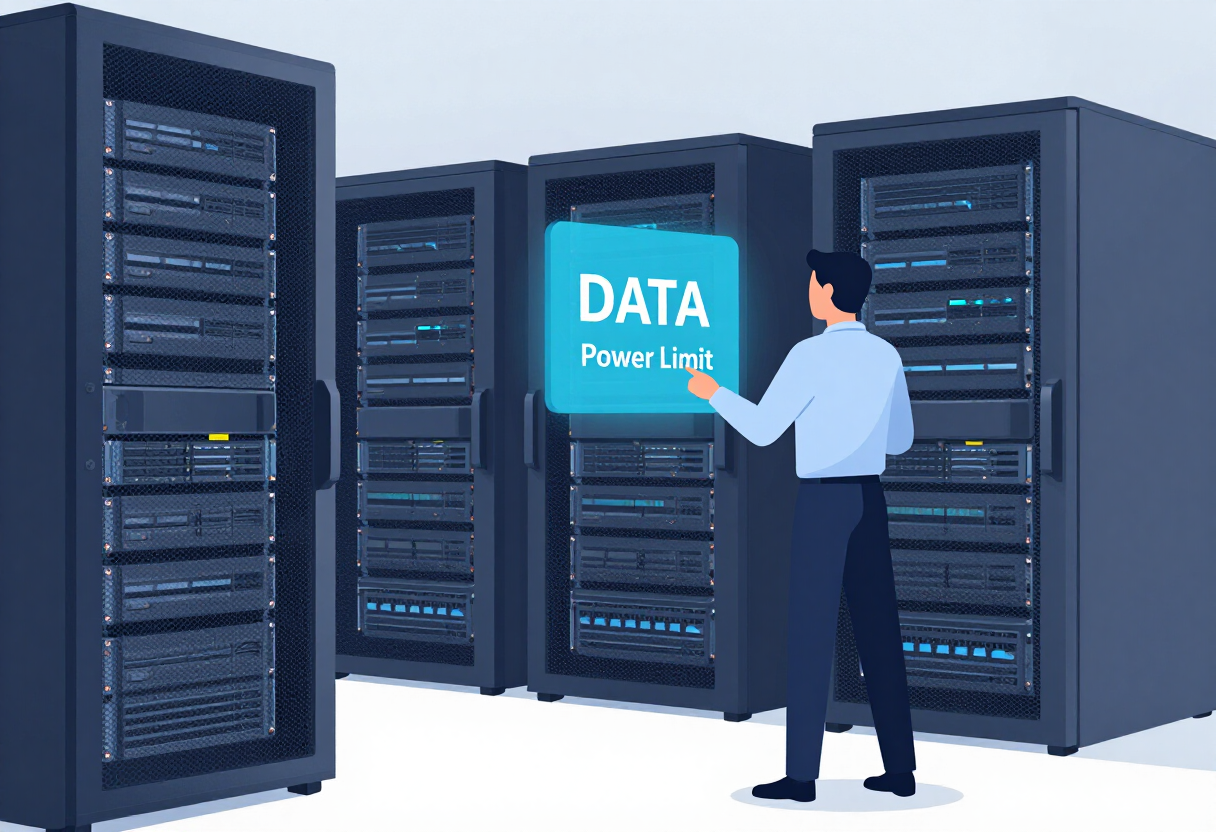
Researchers cited by Tom's Hardware argue that software optimization offers the fastest, cheapest path through hyperscalers' AI power crunch, beating new generation capacity and grid upgrades on timeline and cost.
- By
- Sophie Lindqvist
- Filed
- Channel
- AI & Compute
- Read
- 3 min read
Researchers have pitched software optimization as the lowest-friction lever for hyperscalers trying to absorb AI's rising electricity demand, arguing that code-level changes can deliver relief faster than new generation capacity or grid buildouts. The framing appeared in a Tom's Hardware piece by contributor Chris Stokel-Walker, headlined "Software could be the easiest fix for hyperscalers' AI power squeeze, researchers say."
What problem are the researchers targeting?
Hyperscaler operators — the cloud platforms run by Microsoft, Google, Amazon Web Services, Meta and a small set of peers — have spent the past three years scaling training clusters and inference fleets for large language models and generative services. Electricity procurement, rather than leading-edge wafer supply, has increasingly become the binding constraint on AI deployment, with multi-year interconnection queues reported in the major U.S. data-center clusters in Northern Virginia, Texas and the Phoenix corridor. The researchers' case, as captured in the headline, is that software is the shortest path through that squeeze.
Why software, specifically?
The lever set the researchers point to is broad: model quantization, sparsity exploitation, compiler and runtime optimization, kernel-level scheduling, and inference-time batching all reduce the joules-per-token figure that ultimately shows up on a hyperscaler's utility bill. The commercial logic is straightforward — a software patch can ship in days, while a new gas turbine, a power-purchase agreement, or a substation upgrade operates on multi-year timelines. The same logic has historically driven hyperscalers to design custom silicon, including Google's TPU family and Amazon's Trainium and Inferentia lines, where power efficiency per operation is part of the spec sheet rather than an afterthought.
Where the chip market fits in
If the software-first thesis holds at scale, demand for raw FLOPs at the leading edge could moderate at the margin, easing the allocation tightness that has kept NVIDIA's H100 and H200 GPUs on long lead times and AMD's MI300X in short supply. The effect would likely tilt procurement toward inference-optimized parts — LPU, custom ASIC, and the next TPU and Trainium generations — where energy per token, not peak training throughput, is the scorecard. Packaging and HBM roadmaps, from vendors including SK hynix, Micron and Samsung, would remain on their announced tracks; the variable is how much of the demand curve gets absorbed by efficiency rather than raw capacity.
Who is making the case
The piece comes from Chris Stokel-Walker, a Tom's Hardware contributor who covers the tech sector's impact on daily life. Stokel-Walker is the author of "How AI Ate the World" (2024) and "TikTok Boom," and holds a PhD in journalism from Newcastle University, where he also teaches. He has reported for major publications for more than a decade and regularly appears on the BBC, CNN, ABC and Times Radio.
What to watch next
The countervailing view, common among chip vendors, holds that efficiency gains historically get spent on more compute rather than less power — Jevons' paradox applied to silicon. How that balance plays out across the next two to three hyperscaler capacity buildout cycles will determine whether power bills plateau, or simply rise more slowly, as software optimizations and new inference-oriented accelerators land in deployed fleets.
Original: stokel-walker.com
More from Sophie Lindqvist
Related articles
google-readies-first-orbital-ai-compute-test-wsj-reports-4f7434db
Google Readies First Orbital AI Compute Test, WSJ Reports
power-not-accelerators-now-caps-data-center-ai-scaling-6bd78ff3
Power, Not Accelerators, Now Caps Data Center AI Scaling
spacex-to-launch-google-ai-chips-into-orbit-2963b082
SpaceX to Launch Google AI Chips Into Orbit
google-targets-orbit-project-suncatcher-to-test-ai-chips-in-space-ef8261e1
Google Targets Orbit: Project Suncatcher to Test AI Chips in Space