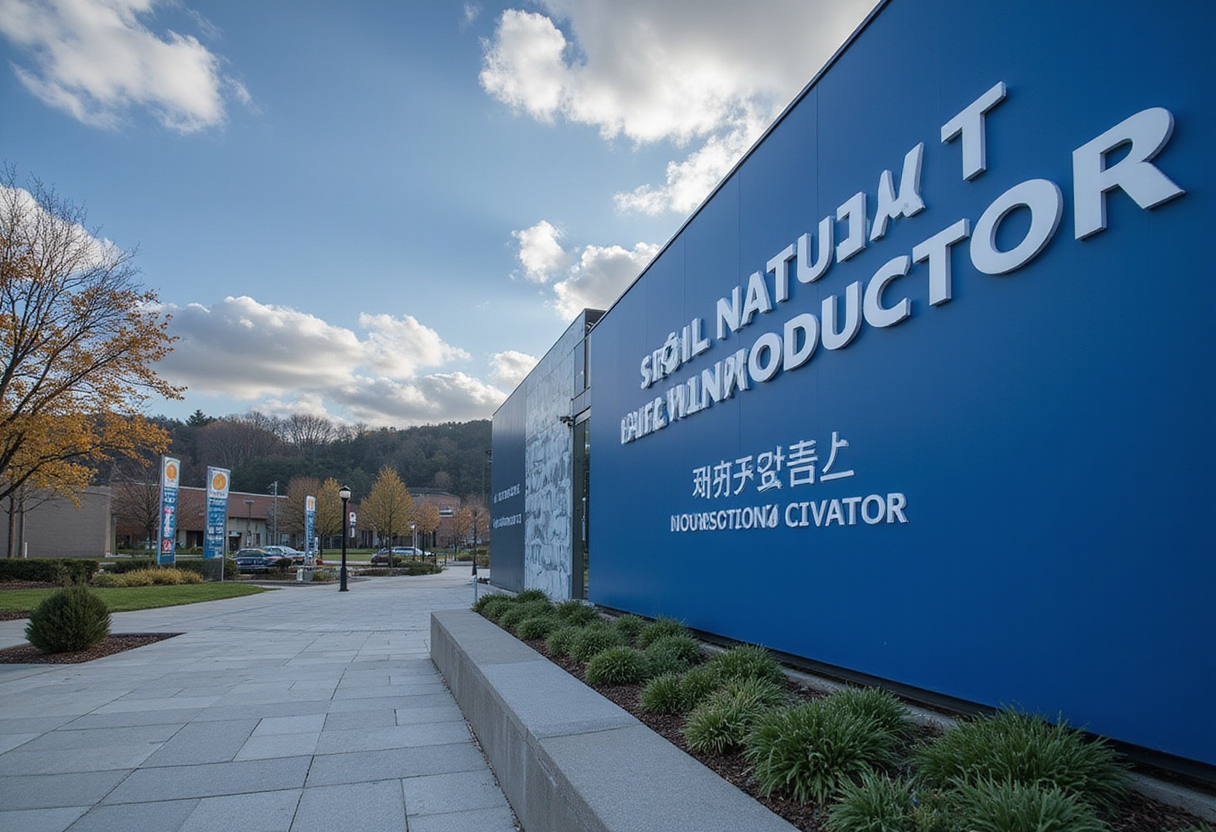
South Korea Funds SNU AI Chip Research Center With $1.5M Annual Budget
Seoul National University opened its AI Semiconductor Innovation Research Center on September 29 as the fourth industry-academia hub under South Korea's K-AI semiconductor initiative. The six-year program, directed by ex-Sapeon CEO Ryu Soo-jung, will graduate 110 professionals.
- By
- Grace Kim
- Filed
- Channel
- Chips & Policy
- Read
- 3 min read
Seoul National University opened its AI Semiconductor Innovation Research Center on September 29 with backing from South Korea's Ministry of Science and ICT and the Institute of Information and Communications Technology Planning and Evaluation (IITP). Government funding will average 2 billion won ($1.5 million) per year. The center will operate for up to six years under a 3+3 model. First-year support totals 1 billion won ($740,000).
The new facility sits inside Seoul National University's Semiconductor Research Institute. It will link South Korean fabless firms with university research teams. The goal is industrial-grade AI chip technology and graduate-level talent. Five research divisions will run jointly with corporate partners.
The hub plans to graduate more than 110 master's and doctoral professionals trained in chip architecture, AI workloads, and system integration across its six-year funding window. Enrollment opens with 10 students this year and rises to 20 per year from next year onward.
Ryu Soo-jung leads the center as director. He spent 15 years at Samsung Electronics across Samsung Advanced Institute of Technology and the System LSI division. There he worked on DSP, GPU, and NPU architectures. Ryu served as the first CEO of Sapeon Korea after SK Telecom spun the company off in 2022.
After Sapeon merged with Rebellions, he joined Seoul National University as a visiting professor. He now also serves as CEO of the AI chip company Xenos Cube Korea. His industry career spans more than 20 years.
What will the research divisions cover?
The five divisions target edge-oriented AI semiconductors, server-oriented AI semiconductors, next-generation intelligent computing systems, ultra-low-power AI semiconductors, and high-efficiency AI optimization. Integrated teams will pair university researchers with corporate staff and graduate students for field-driven joint research. Specialized technical training for students and corporate dispatch programs will also operate.
NPU-based research projects became mandatory this year. NPUs are processors specialized for AI computation, a category South Korean fabless suppliers now prioritize. The mandate reflects the industry's shift from GPU-centric designs toward high-performance, low-power architectures including NPUs, processing-in-memory (PIM), and chiplets, according to the Ministry.
Partner organizations include LG Electronics, FuriosaAI, Xenos Cube Korea, Analog AI, and SqueezeBits, which Rebellions acquired. The center will run the full cycle from R&D through technology verification and corporate demand linkage, operating a training pipeline connecting coursework, research, internships, and direct hiring at Korean fabless firms.
How does this fit South Korea's strategy?
Seoul National University is the fourth hub university in the government's industry-academia AI semiconductor program. Yonsei University and Sungkyunkwan University joined last year. Hanyang University joined this year alongside Seoul National University. The wider program targets super-gap AI leading technologies and talent through industry-academia collaboration.
Lee Do-gyu, Director General of ICT Policy at the Ministry of Science and ICT, said: "As AI semiconductors rapidly evolve toward high performance and ultra-low power, consolidating next-generation AI semiconductor technology capabilities is essential for the success of the K-AI semiconductor full-package ecosystem." He added: "The government will spare no support to strengthen industry-academia collaboration centered on Seoul National University's AI Semiconductor Innovation Research Center, generate world-class research outcomes, and cultivate core talent."
The center will also participate in the K-AI semiconductor full-package ecosystem initiative. Domestic NPU talent pipelines will shape how quickly South Korean fabless firms can compete with Nvidia and other foreign AI accelerator suppliers across data center and edge segments over the next decade, though the six-year funding horizon limits near-term commercial impact.
Original: img.biggo.com
More from Grace Kim
Show full bio
Market editor covering people, launches and day-to-day practice in Semiconductors, chip manufacturing, hardware, AI compute at Chip Dispatch.
401 articles
Related articles
seoul-national-university-opens-ai-semiconductor-research-center-a560392a
Seoul National University Opens AI Semiconductor Research Center
seoul-national-university-to-train-110-ai-chip-experts-over-six-years-4a80eed2
Seoul National University to Train 110 AI Chip Experts Over Six Years
snu-ai-semiconductor-center-to-train-110-chip-specialists-574751b7
SNU AI Semiconductor Center to Train 110 Chip Specialists
south-korea-funds-33-private-universities-for-chip-and-ai-talent-118174d8
South Korea Funds 33 Private Universities for Chip and AI Talent