South Korea Targets Two-Year Acceleration of Gwangju Fab
Moving one Gwangju fab forward by two years could pull 50 trillion won in revenue into South Korea sooner, while one expert questions demand behind an 18.4 GW data-center plan.
- By
- Nathan Brooks
- Filed
- Channel
- Chips & Policy
- Read
- 5 min read
Building South Korea’s planned Gwangju semiconductor fabrication plant two years early could pull forward about 50 trillion won in revenue, Trade, Industry and Energy Minister Kim Jeonggwan said on Nov. 2. The estimate depends on completing a roughly five-year project in around three years; it remains a forecast rather than booked revenue.
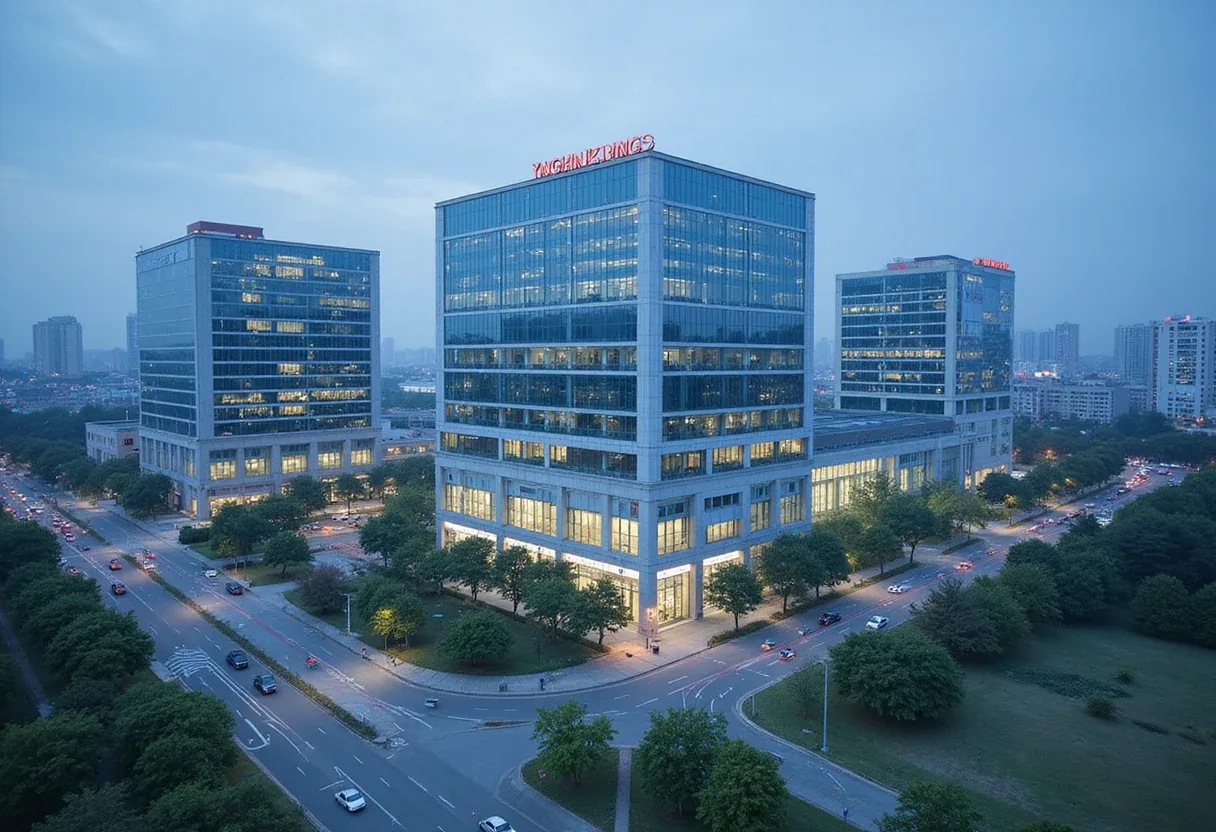
Kim made the claim at the Presidential National Economic Advisory Council’s open forum on three mega-projects, held at Ferum Hall in Ferum Tower, Jung District, Seoul. “For the Gwangju fab, we are trying to bring the timeline forward by about two years compared with the normal pace,” he said. The target compresses a normal five-year schedule to around three.
Power, water, permits and site regulations are the main obstacles to turning plans into output. Seoul plans to streamline approvals and enact a special law on ultra-wide-area special zones. Kim said resolving those issues could bring one fab forward and start production earlier.
The cited gross regional domestic product for Gwangju and South Jeolla Province is about 150 trillion won. Kim put the claimed 50 trillion won in revenue at roughly one-third of that figure, which he described as a synergy from pooling resources efficiently.
What does the 1,600 trillion won plan cover?
Seoul is trying to turn 1,600 trillion won in planned private investment across semiconductors, AI data centers and physical AI into a national growth platform. Kim put the proposed scale near 60% of GDP.
He compared that scale with the Gyeongbu Expressway at 2.4% of GDP and the U.S. New Deal at roughly 40%. The comparisons describe ambitions, not money already spent or revenue already earned. If the plans materialize, Kim said, they could reverse slow growth and ease regional imbalance because recipients lie outside the capital area.
Kim also said South Korea’s potential growth rate had declined for more than a decade and could fall into the 0% range. He framed the AI revolution and changing global economic order as a crossroads: the country could move upward or fall further behind.
He chose “project” over “policy” or “strategy” because a project must produce results. The label covers policies, strategies, visions and plans, but also carries a promise of delivery.
How does M.E.G.A. connect the supply chain?
M.E.G.A. defines how the government intends to organize the three projects. Its four functions move from gathering capabilities to spreading their effects:
- Mobilize: bring together government, private-sector and academic capabilities.
- Engage: encourage participation by all economic stakeholders.
- Generate: create new industries and growth engines.
- Amplify: spread results throughout the economy.
The intended ecosystem links semiconductor-based AI computing with data centers that support model training and use, then physical AI on factory floors. Kim argued that government, companies, universities and research institutions must collaborate because no single organization knows every answer or can carry the project to the end.
Kim said ambitious projects launched from the top often go wrong when officials hesitate to admit mistakes because a minister or president backed them. “The most important kind of speed in this project is not simply moving fast. It is the ability to quickly change course and make improvements once a problem is recognized.”
Is memory expansion enough?
Lee Jun, director of the Strategic Industries Research Center at the Korea Institute for Industrial Economics and Trade, said the 881 trillion won in private semiconductor investment within the mega-projects concentrates on expanding memory capacity. South Korea has secured a market share approaching 80% in high-bandwidth memory, Lee said, but remains relatively weak in non-memory semiconductors.
Non-memory semiconductors represent 76% of the global semiconductor market, according to Lee. He urged South Korea to build a domestic ecosystem of system-chip companies, materials suppliers, parts makers and equipment firms, rather than treating additional fab capacity as a complete strategy.
Lee proposed connecting the plan’s 550 trillion won of AI data-center investment with semiconductor demand from physical AI in robotics, automobiles and shipbuilding. The linkage would connect compute investment with industrial chip demand while developing the domestic chip industry.
How much AI data-center demand is firm?
Jung Byungseon, a professor at Sogang University’s Graduate School of Technology and Innovation Management, reported an analysis of the AI data-center pipeline. The study put planned capacity for 2035 at 18.4 GW. Contracts with key customers and other evidence support about 2.5 GW, he said.
He proposed approving projects in stages according to actual demand and grid capacity. If projects fail to meet requirements within a specified period, the government should reclaim their sites and power allocations, he said. The mismatch makes contracted load and grid access more important than headline megawatts.
Can factory-floor data become an industrial asset?
Park Minwon, president of Changwon National University, said manufacturers should treat factory-floor process data and skilled expertise as assets for physical AI. Global technology companies already use process data and work know-how from Korean manufacturers to train AI, he argued. Institutional rules should govern data-use rights and compensation for skilled workers.
His proposal places control of training data and skilled-worker compensation on the same agenda as robot deployment. It treats manufacturing knowledge as an industrial asset, not an incidental by-product of automation.
What must become a national growth platform?
Kim Sungsik, vice chairman of the National Economic Advisory Council, said debate must move beyond investment scale and fab locations toward turning the three projects into a national growth platform. He called for action on power-grid constraints, talent development and technological innovation. The semiconductor supercycle offers an opportunity to strengthen Korean industrial competitiveness, he said.
The commercial test is straightforward: Seoul must convert approvals, grid access and staged project reviews into operating capacity on schedule. If the Gwangju fab starts in around three years, the 50 trillion won revenue case moves closer to realization. If the data-center pipeline remains mostly uncontracted, investment can still outrun demand.
Memory’s near-80% HBM share gives South Korea scale, but its weaker non-memory position will test whether this cycle produces industrial breadth or mainly additional memory output. Permits, grid connections, the Gwangju construction timetable and customer contracts will show whether the headline investment becomes operating capacity and a broader industrial base.
Source: Google News: semiconductors
More from Nathan Brooks
Show full bio
Senior reporter covering people, launches and day-to-day practice in Semiconductors, chip manufacturing, hardware, AI compute at Chip Dispatch.
721 articles
Related articles
korea-breaks-ground-on-yongin-cluster-pushing-17-fab-memory-buildout-9dc5c273
Korea Breaks Ground on Yongin Cluster, Pushing 17-Fab Memory Buildout
south-korea-semiconductor-panel-includes-dessert-cafe-ceo
South Korea Semiconductor Panel Includes Dessert Cafe CEO
1-600-trillion-won-bet-korea-told-fabs-alone-will-not-win
1,600 Trillion Won Bet: Korea Told Fabs Alone Will Not Win
semiconductors-split-south-korea-s-regional-economies-64cbd778
Semiconductors Split South Korea's Regional Economies