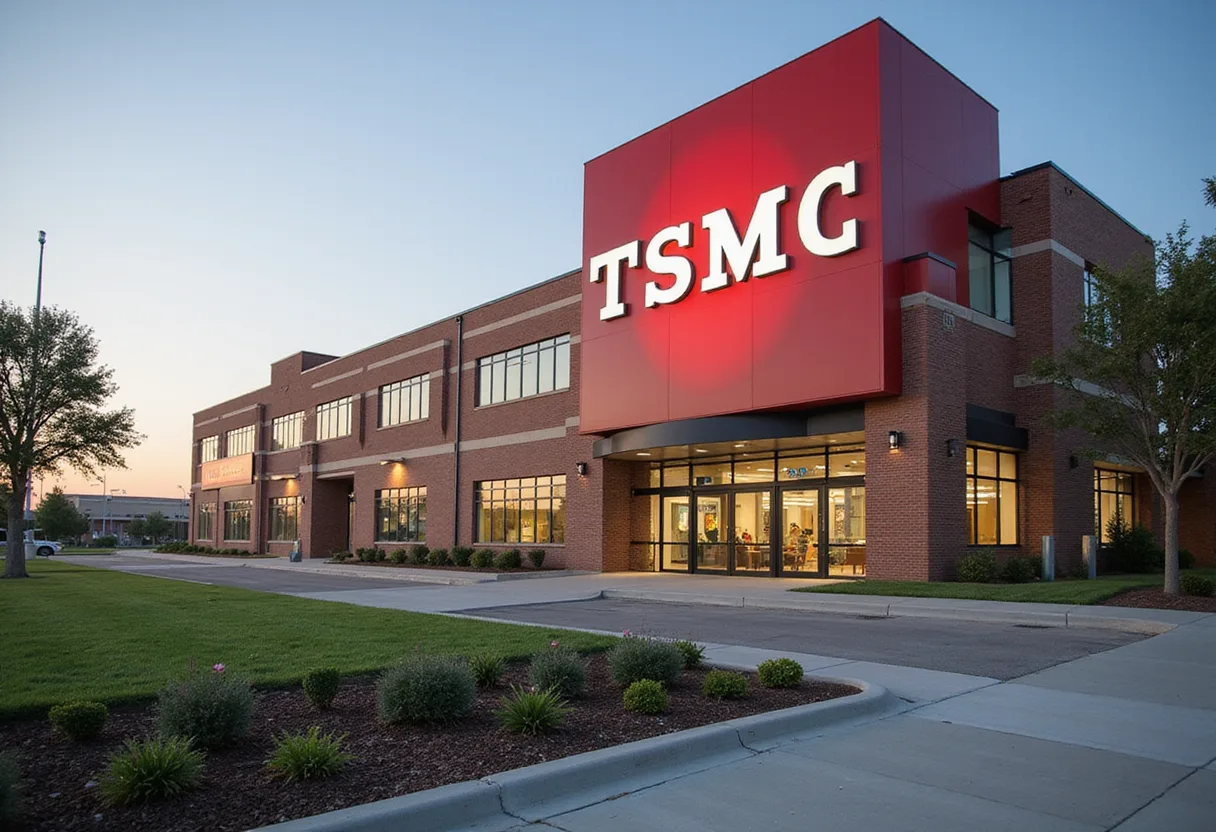
Taiwan Weighs $4 Billion Texas Complex for Nvidia AI Supply Chain
Taiwan reportedly plans a $4 billion Texas complex serving the Nvidia AI supply chain, while tightening AI chip exports to China — two moves reshaping where AI hardware gets built.
- By
- Tom Whitfield
- Filed
- Channel
- Chip Manufacturing
- Read
- 3 min read
Taiwan is reportedly preparing a roughly $4 billion industrial complex in Texas dedicated to the Nvidia AI supply chain, according to a TradingView report citing the plan. The figure, if confirmed, would rank among the larger single commitments by Taiwanese manufacturing interests on US soil.
The reported Texas complex would serve the production chain around Nvidia's artificial intelligence hardware. TradingView's item gives no confirmed site, groundbreaking date or capacity figure, so the $4 billion number should be read as a plan under discussion rather than a signed investment.
The same report pairs the Texas plan with a second development: Taiwan is tightening exports of AI chips to China. Together, the two moves describe one commercial logic. Manufacturing capacity moves closer to Nvidia's largest customers, while advanced silicon finds it harder to reach the market Washington and Taipei regard as a strategic rival.
What does the $4 billion complex actually cover?
The reported sum points to facilities that support AI hardware production rather than leading-edge wafer fabrication alone. Supply chains around Nvidia's data-center products typically include:
- advanced packaging and board-level assembly,
- server and rack integration for AI systems,
- testing and logistics close to end customers.
TradingView's report does not break the $4 billion down by function, and it does not name the Taiwanese entities that would fund or operate the complex. Until official announcements follow, the number functions as a signal of intent.
The investment would deepen a pattern that is already visible. AI server demand has pushed suppliers across Taiwan's electronics sector to add capacity in the United States, where Nvidia's largest cloud customers operate. A Texas site would place assembly and integration work near those customers rather than near the wafer sources in East Asia.
In plain terms: this is capacity chasing demand, and the demand for Nvidia systems sits largely in American data centers.
Why tighten China AI chip exports at the same time?
The reported export controls form the other half of the picture. Taiwan joins the United States in restricting the flow of advanced AI chips to China, a step that narrows the addressable market for exactly the hardware the Texas complex would support.
That restriction carries commercial weight. It redirects supply toward buyers in the United States and allied markets, and it raises the value of US-based manufacturing close to those buyers. For Taiwanese suppliers, tighter China rules make American capacity less a hedge and more a necessity.
The geopolitical context here changes the commercial arithmetic directly. Export controls do not merely slow one sales channel; they reshape where suppliers build, test and ship AI hardware. A $4 billion Texas complex and tighter China export rules are two instruments of the same realignment.
What remains unconfirmed?
Several core facts still need official confirmation:
- the final investment amount and its phasing,
- the identity of the Taiwanese companies involved,
- the location and timeline of the Texas complex,
- the precise scope of the new China export restrictions.
Each of these carries real risk of revision. Investment plans of this size often change before ground breaks, and export rules can be tightened or relaxed as policy shifts.
What comes next
If the report holds, expect formal announcements from Taiwanese suppliers and possibly from Nvidia itself, alongside published export-control language from Taipei. The story to watch is whether the $4 billion plan survives contact with permitting, labor costs and customer commitments — and whether it marks the first of several Taiwanese AI-supply-chain investments on US soil rather than a single bet.
Source: Google News: chip export controls
More from Tom Whitfield
Show full bio
Staff writer covering companies, deals and strategy in Semiconductors, chip manufacturing, hardware, AI compute at Chip Dispatch.
564 articles
Related articles
taiwan-reportedly-readies-4-billion-texas-site-for-nvidia-29ab82d8
Taiwan Reportedly Readies $4 Billion Texas Site for Nvidia
tsmc-weighs-multibillion-dollar-texas-fab-campus-amid-ai-demand-surge-bb2479c7
TSMC Weighs Multibillion-Dollar Texas Fab Campus Amid AI Demand Surge
tsmc-reportedly-eyes-fresh-texas-investment-to-expand-us-output-c99d3c8b
TSMC Reportedly Eyes Fresh Texas Investment to Expand US Output
tsmc-prepares-to-pour-265-billion-into-u-s-fab-buildout-762fb55c
TSMC Prepares to Pour $265 Billion Into U.S. Fab Buildout