Tesla Would Keep Control in Any TSMC 'Terafab' Venture, Musk Says
Elon Musk confirms Tesla would retain control in any proposed 'Terafab' manufacturing partnership with TSMC, keeping authority over its silicon roadmap intact.
- By
- Grace Kim
- Filed
- Channel
- Chip Manufacturing
- Read
- 3 min read
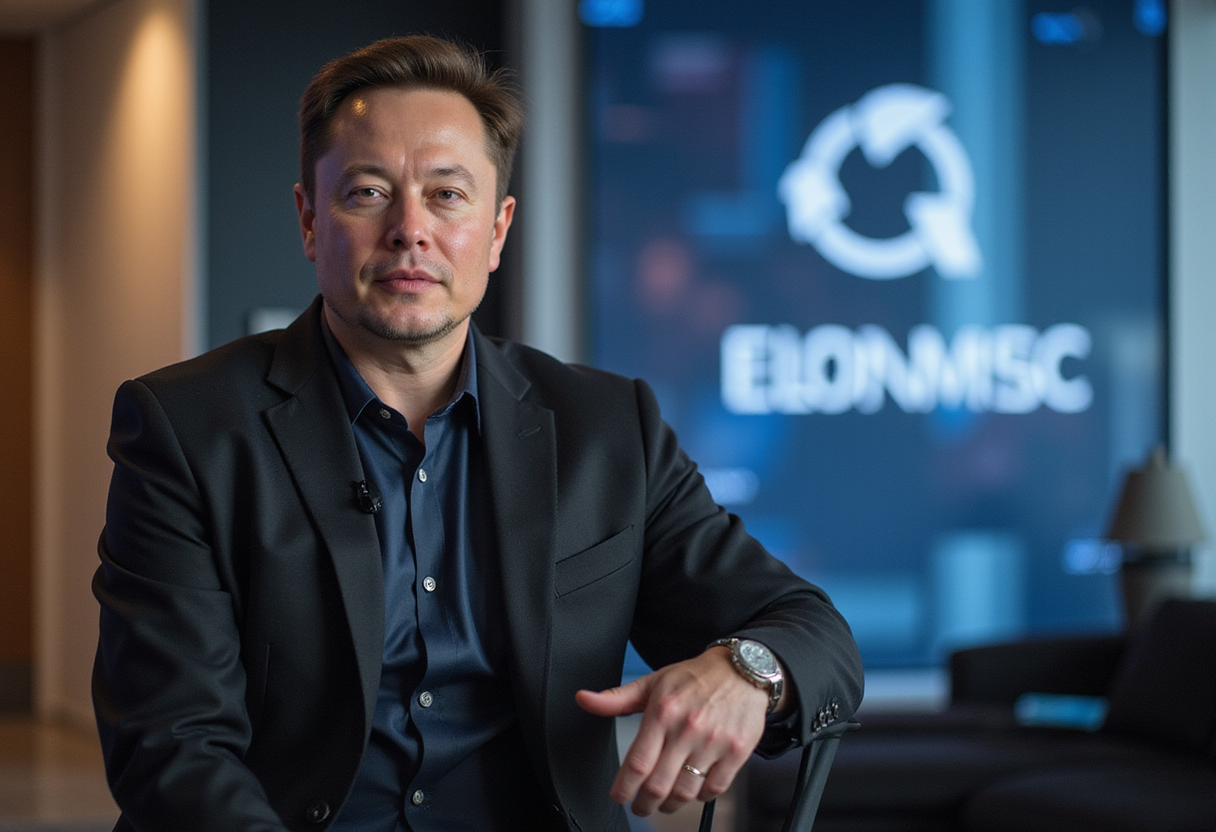
Elon Musk has confirmed that Tesla would retain control of its side of any manufacturing partnership with TSMC under what is being discussed as a "Terafab" arrangement — a mega-scale fabrication concept that pairs Tesla's demand for advanced logic with the world's largest contract foundry.
The confirmation, reported by Global Sources, is the clearest signal yet that talks between the two companies concern a structured partnership rather than an acquisition, a merger of manufacturing assets, or Tesla ceding decision-making authority over its silicon roadmap to a supplier.
For Tesla, control is the issue. The automaker designs custom silicon in-house — a strategy that has pushed it away from merchant chip suppliers toward bespoke silicon for vehicle compute and its AI infrastructure. Any fabrication deal at Terafab scale would commit Tesla to enormous wafer volumes over many years. Musk's statement that Tesla retains control tells investors and suppliers that the company intends to keep architectural and scheduling authority in its own hands, even while relying on TSMC's process technology and manufacturing muscle.
What does "Terafab" actually mean here?
The term describes fabrication capacity an order of magnitude beyond a conventional gigafab — a plant complex sized to serve not one product line but an entire ecosystem of them. In a Tesla–TSMC context, the logic is straightforward. Tesla's compute needs span vehicle autonomy silicon, training infrastructure and energy products. Each of those demand curves points toward advanced nodes, and advanced nodes point toward TSMC, which remains the dominant producer of leading-edge logic worldwide.
A Terafab-class partnership would let Tesla lock in capacity at scale while TSMC gains an anchor customer whose volumes help justify the staggering capital cost of leading-edge capacity expansion.
Why does control matter commercially?
Musk's confirmation answers the central question any such deal raises: who decides what gets made, on which process, and in what priority. The answer is Tesla.
That has consequences across the supply chain. Automotive-grade silicon sits in a different qualification and reliability regime than consumer chips, and Tesla has historically demanded tight integration between its silicon teams and its software stack. Retaining control means Tesla keeps that integration intact rather than handing product definition to a foundry partner.
It also matters geopolitically. TSMC's leading-edge capacity remains concentrated in Taiwan, and any large automotive customer committing to TSMC processes is implicitly accepting the geographic risk that concentration carries. Washington's push to expand domestic fabrication capacity has already pulled TSMC into building in the United States, and Tesla — an American manufacturer with domestic assembly plants — is a natural counterpart for any US-based expansion of that relationship. Musk's statement does not specify where a Terafab partnership would place capacity, but the control question he answered is a precondition for everything downstream of it.
What remains unconfirmed?
Neither company has disclosed a deal value, a capacity figure, a process node, a wafer size or a timeline. No formal agreement has been announced. What Musk has confirmed is narrower and, in some ways, more telling: the negotiating framework. Tesla talks to TSMC as a customer and partner that keeps final authority over its own manufacturing destiny, not as a company shopping for a turnkey solution.
For TSMC, that distinction is familiar — it is how the foundry operates with every large customer. For Tesla, stating it publicly signals that the company sees its silicon strategy as core intellectual property worth protecting even inside a deep manufacturing alliance.
The next concrete signal to watch is whether the discussions produce a disclosed capacity commitment, a site announcement or a multi-year wafer agreement — any of which would convert a confirmed principle into a signed commercial structure.
Source: Google News: TSMC
More from Grace Kim
Show full bio
Market editor covering industry trends and analytics at Chip Dispatch.
181 articles
Related articles
musk-confirms-tsmc-talks-over-terafab-chip-supply-6c199c7d
Musk Confirms TSMC Talks Over Terafab Chip Supply
tesla-will-build-and-run-its-own-terafab-musk-says-no-tsmc-72c207ff
Tesla Will Build and Run Its Own Terafab, Musk Says — No TSMC
musk-rules-out-tsmc-operational-role-at-terafab-chip-plant-30fbece1
Musk Rules Out TSMC Operational Role at Terafab Chip Plant
musk-his-team-will-build-and-run-the-terafab-not-tsmc-7029234e
Musk: His Team Will Build and Run the Terafab, Not TSMC