AI & Compute · 3 min read
Trump's Overseas Data Center Tax Threat Meets 52 Local Rejections
Trump threatened a "tremendous tax" on U.S. firms building data centers abroad on Nov. 20, one day after new AI chip export licensing rules took effect for five countries.
Key takeaways
- Trump threatened a 'tremendous tax' on U.S. companies building data centers abroad on Nov. 20, with no rate or mechanism specified.
- BIS rules effective Nov. 19 require licenses for certain AI chip shipments to Indonesia, Malaysia, Singapore, Thailand, and Brazil.
- Voters backed data center restrictions in 52 of 53 ballot measures across 13 states in November, per Ballotpedia.
- Amazon plans ~$220B, Alphabet ~$200B in capex this year; Microsoft's fiscal 2026 capex hit $115.95B.
- The Senate voted 73-25 to advance a bill making data center developers pay their own grid-upgrade costs.
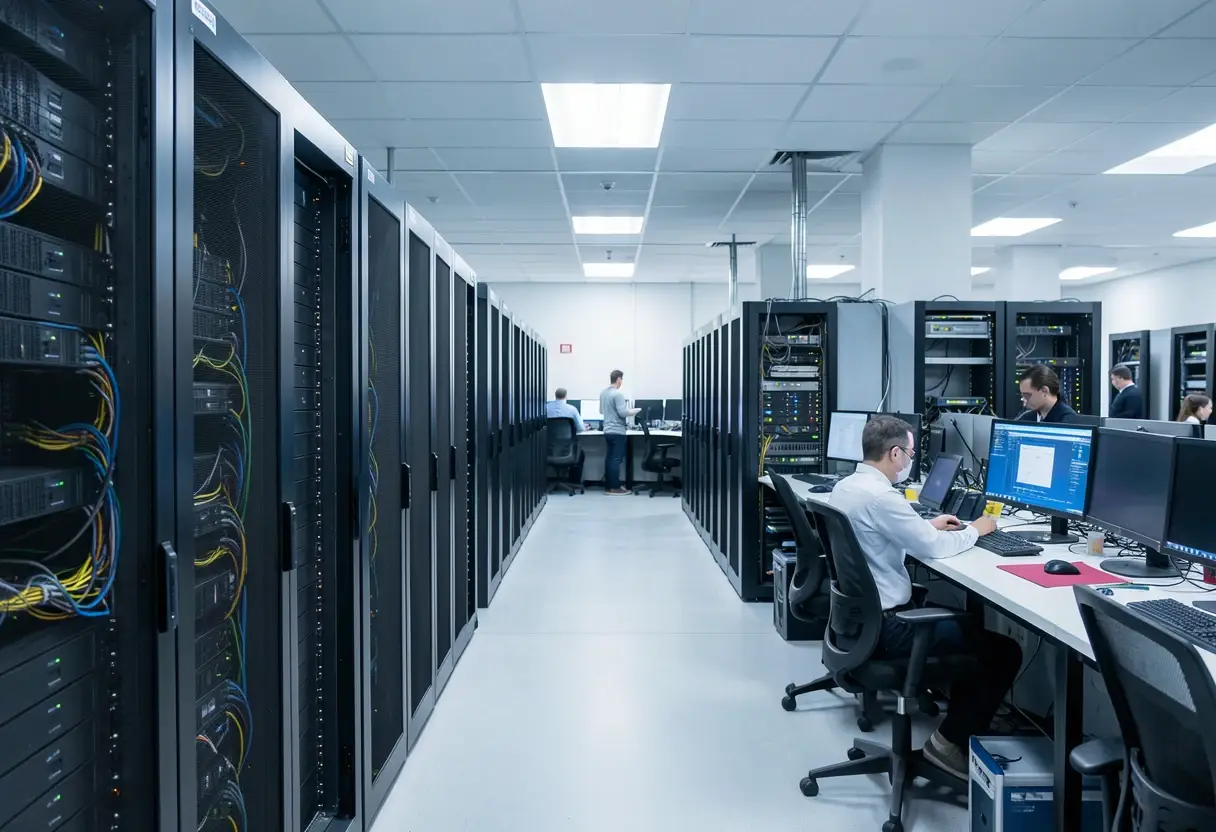
President Donald Trump on Nov. 20 threatened a "tremendous tax" on American companies that build data centers abroad — one day after the Commerce Department's Bureau of Industry and Security began requiring licenses for certain advanced AI chip shipments to Indonesia, Malaysia, Singapore, Thailand, and Brazil.
The two moves land on an industry already squeezed from the other direction. Voters favored restrictions on data center development in 52 of 53 ballot measures across 13 states in the November elections, according to Ballotpedia. Earlier in the month, voters rejected or curbed AI data center projects in 40 of 41 local contests.
Washington wants the infrastructure at home. Local governments keep saying no.
What did Trump actually propose?
Speaking at a White House news conference, Trump said American companies should build their data centers in the United States rather than overseas. He offered no tax rate, no implementation date, and no legal mechanism. The threat, so far, is a threat.
Reuters reported that the proposal could affect Equinix (NASDAQ:EQIX) and Digital Realty (NYSE:DLR), which operate data centers internationally. The bigger exposure runs through the hyperscalers: Amazon (NASDAQ:AMZN), Microsoft (NASDAQ:MSFT), and Alphabet (NASDAQ:GOOGL) all run global cloud networks serving customers on multiple continents.
Those facilities abroad aren't regulatory escapes. Companies need computing capacity near international customers to cut transmission delays and comply with local data rules. A tax on overseas construction could raise costs or force a rethink of expansion plans.
The Commerce Department rules are different — they're already in effect. Beyond the five-country licensing requirement, the new rules restrict overseas data centers that supply advanced computing capacity to certain Chinese-linked customers.
Why can't they just build in the U.S.?
Because the domestic pipeline is jammed. Residents aren't necessarily hostile to AI; they're hostile to the bill. Data centers demand enormous electricity supplies, cooling systems, and transmission upgrades, and communities worry those costs will land on household utility bills.
The numbers behind that worry are large. The International Energy Agency estimates global data center electricity consumption could double to roughly 1,000 terawatt-hours by 2030. The U.S. Senate has responded: it voted 73-25 to advance legislation requiring data center developers to cover their own electricity and grid-upgrade costs.
So the industry faces a vise. Growing resistance to domestic construction, and now threatened penalties for building elsewhere.
What's at stake for the cloud giants?
Plenty. Amazon plans approximately $220 billion in capital expenditures this year, and Alphabet expects around $200 billion, according to company guidance cited by 24/7 Wall St. Microsoft's fiscal 2026 capital spending reached $115.95 billion.
Management keeps spending because the cloud businesses keep growing:
- Alphabet — Google Cloud: 103% revenue growth
- Microsoft — Azure: 48%
- Amazon — AWS: 39%
Microsoft reported a $677 billion commercial backlog, with roughly 30% expected to convert into revenue within 12 months. That backlog gives visibility, but converting AI spending into profitable revenue still depends on getting capacity online. Delays push revenue out while financing, equipment, and construction costs keep running. Smaller operators reliant on borrowed money could feel more pressure than giants funding projects from operating cash flow.
Tax proposal or policy trajectory?
Trump's tax remains a proposal, not enacted policy, and investors shouldn't assume every international project will suddenly face penalties. But the direction is unmistakable: federal restrictions, local opposition, and rising infrastructure costs are narrowing the options for America's AI developers.
The boom isn't ending — demand for computing power keeps growing. The value is shifting toward companies that already hold power, permits, financing, and customers, advantages that get pricier as the next data center becomes harder to build. The question for investors is no longer who can spend the most on AI, but who can turn that spending into operating capacity before the rules change again.
247wallst.com (Source)
More from Rebecca Stone
Show full bio
Correspondent covering technology and product news in Semiconductors, chip manufacturing, hardware, AI compute at Chip Dispatch.
1,282 articles