TSMC Adds $100 Billion to Arizona Fab Investment
TSMC will add $100 billion to its Arizona investment, deepening the Phoenix chip factory complex at the center of its US manufacturing presence, according to KJZZ.
- By
- Tom Whitfield
- Filed
- Channel
- Chip Manufacturing
- Read
- 4 min read
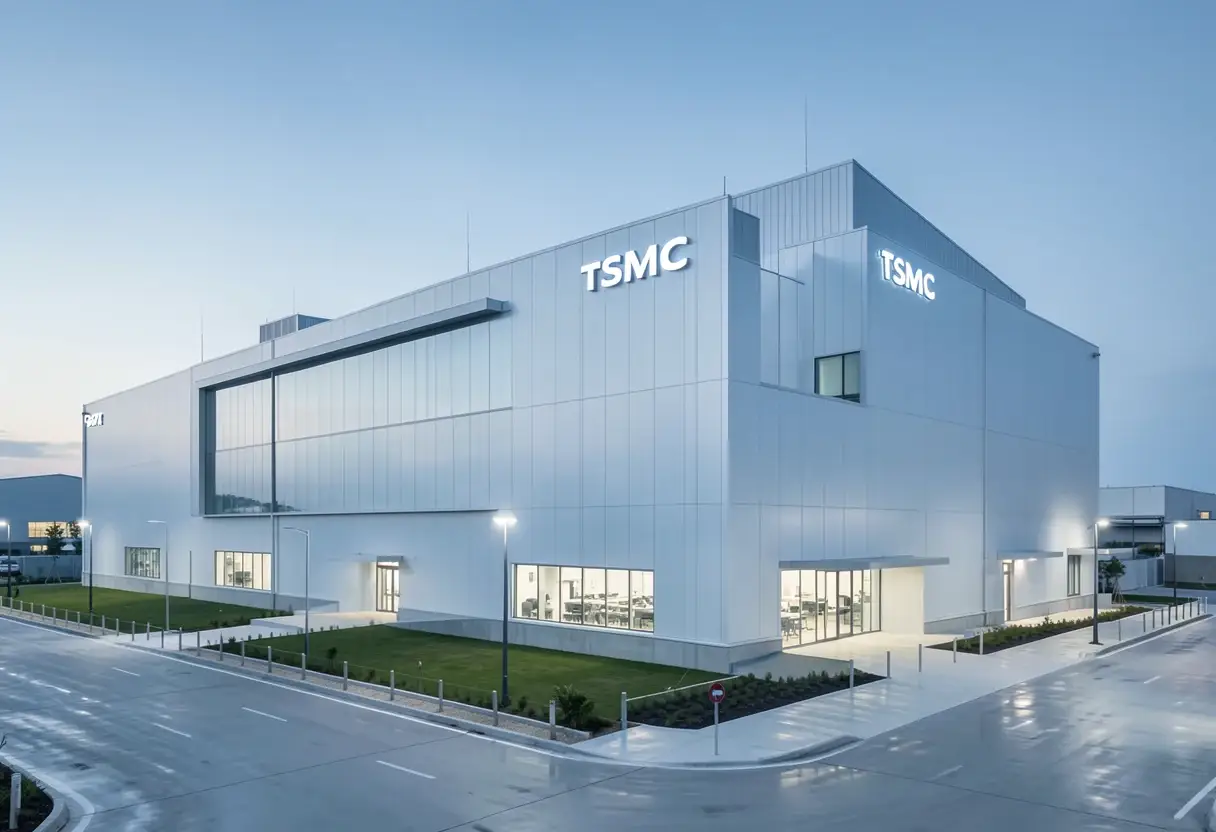
TSMC will add $100 billion to its Arizona investment, deepening the Phoenix chip factory complex at the center of its US manufacturing presence. The figure, reported by KJZZ, ranks among the largest single-site semiconductor capital commitments tied to any US location.
What sits behind the headline number
The headline figure represents an expansion of TSMC's previously disclosed Arizona spending. KJZZ identifies the Phoenix facility as the anchor for the new capital. The source does not break the $100 billion into fab phases, process nodes, capacity figures, or production schedules.
That absence of granularity matters. Semiconductor fab investments of this scale typically unfold across multiple construction phases, each tied to a specific process generation and tooling set. Until TSMC publishes a per-phase breakdown, the $100 billion functions as a top-line capital envelope rather than a confirmed capex schedule.
The funding gap between this number and the per-phase figures TSMC has previously announced is itself a story. The earlier disclosed Arizona phases totaled a few tens of billions of dollars across multiple fabs. The new envelope implies more fabs, more aggressive node migration, or both.
The Phoenix site as anchor
TSMC's Arizona program began with a Phoenix fab announced in 2020, the company's first US-based leading-edge production site. Subsequent announcements added additional fabs at the same campus. Federal incentives under the CHIPS and Science Act have supported each disclosed phase, lowering the effective capital cost for the project.
Phoenix keeps TSMC's leading-edge US production geographically consolidated. The site selection avoids the dispersion a multi-state footprint would create. It also lets tooling vendors, chemical suppliers, and workforce pipelines cluster around a single metro rather than fragment across regions. The Phoenix campus is now the anchor for every additional US dollar TSMC commits to its US build-out.
Arizona state and local incentives have supplemented federal support. The combination has made Phoenix one of the most heavily subsidized greenfield fab sites in US history. The new $100 billion commitment builds on that foundation rather than starting from scratch.
Why a $100 billion expansion now
The commitment scales the Arizona program well beyond the per-phase budgets previously disclosed. KJZZ's framing positions the expansion as a continuation of TSMC's US strategy rather than a pivot. The funding envelope now extends across more years and more process generations than the original Phoenix roadmap implied.
The strategic logic is straightforward. The bulk of TSMC's leading-edge capacity sits in Taiwan, and US customers and policymakers have signaled sustained interest in onshore alternatives. A larger Arizona spend addresses that exposure over a longer horizon, even if the Phoenix output remains a minority of TSMC's total leading-edge wafer volume.
Tariff policy and export-control discussions have raised the cost of concentrating advanced production in any single geography. The Phoenix expansion hedges that exposure directly. TSMC's customers also face pressure from their own US government buyers to source onshore wafers for defense, aerospace, and selected AI workloads.
What changes for chip supply
For US chip supply, the move reduces the concentration of advanced node production in Taiwan. Each additional Phoenix phase shifts a share of TSMC's leading-edge wafer output from Hsinchu and Tainan to Arizona. The transition is gradual, measured in fab construction cycles of two to three years rather than quarters.
For TSMC's customers, the additional capacity provides another onshore source for advanced wafers. US-headquartered fabless designers can plan product roadmaps around Arizona-built die without depending solely on trans-Pacific wafer shipments. The shift also shortens logistics paths for buyers who require domestic sourcing.
Pricing dynamics will follow the capacity ramp, not the announcement. Wafer pricing at Phoenix reflects the higher US cost base, but the gap narrows as volume scales and yield matures. The longer-term effect on TSMC's blended margins depends on how the $100 billion is allocated across nodes with different gross profiles.
What to watch next
The bottom line: TSMC is committing $100 billion in Arizona, with Phoenix as the operational anchor. The investment deepens US access to advanced foundry capacity and reshapes the geographic balance of leading-edge chip production. The forward question is how TSMC allocates the sum across fab shells, process nodes, and timeline.
Source: Google News: chip factory investment
More from Tom Whitfield
Show full bio
Staff writer covering companies, deals and strategy in Semiconductors, chip manufacturing, hardware, AI compute at Chip Dispatch.
595 articles
Related articles
tsmc-adds-100-billion-to-arizona-plan-as-q2-profit-jumps-77-43a13106
TSMC Adds $100 Billion to Arizona Plan as Q2 Profit Jumps 77%
tsmc-commits-165-billion-to-six-fab-arizona-buildout-1c603c35
TSMC Commits $165 Billion to Six-Fab Arizona Buildout
tsmc-pours-record-money-into-arizona-while-china-pressures-taiwan-8a891185
TSMC Pours Record Money Into Arizona While China Pressures Taiwan
tsmc-s-265-billion-u-s-buildout-may-grow-beyond-plan-e6201baa
TSMC's $265 Billion U.S. Buildout May Grow Beyond Plan