Science & Technology · 3 min read
Umbra's Freetail 5 Radar Satellite Targets Hundreds of 25 cm Images Per Day
Umbra's Freetail 5 promises hundreds of 25 cm SAR images daily with 5 cm peak resolution and hourly revisit from 2028 — but no customers or prices are named yet.
Key takeaways
- Umbra unveiled Freetail 5 (FT-05) on Nov. 23, a 200-kg-class SAR satellite for hundreds of 25 cm images per day.
- Launch readiness is targeted for Q1 2028, with commercial availability by midyear 2028.
- The spacecraft claims 4x radar power, 2x antenna area (20 sq m deployed) and bandwidth up to 4 GHz.
- Umbra builds satellites at a 50,000-sq-ft Goleta, California facility; 90% of components are in-house.
- The company has flown 14 SAR satellites and booked launches for its next seven, Via Satellite reported.
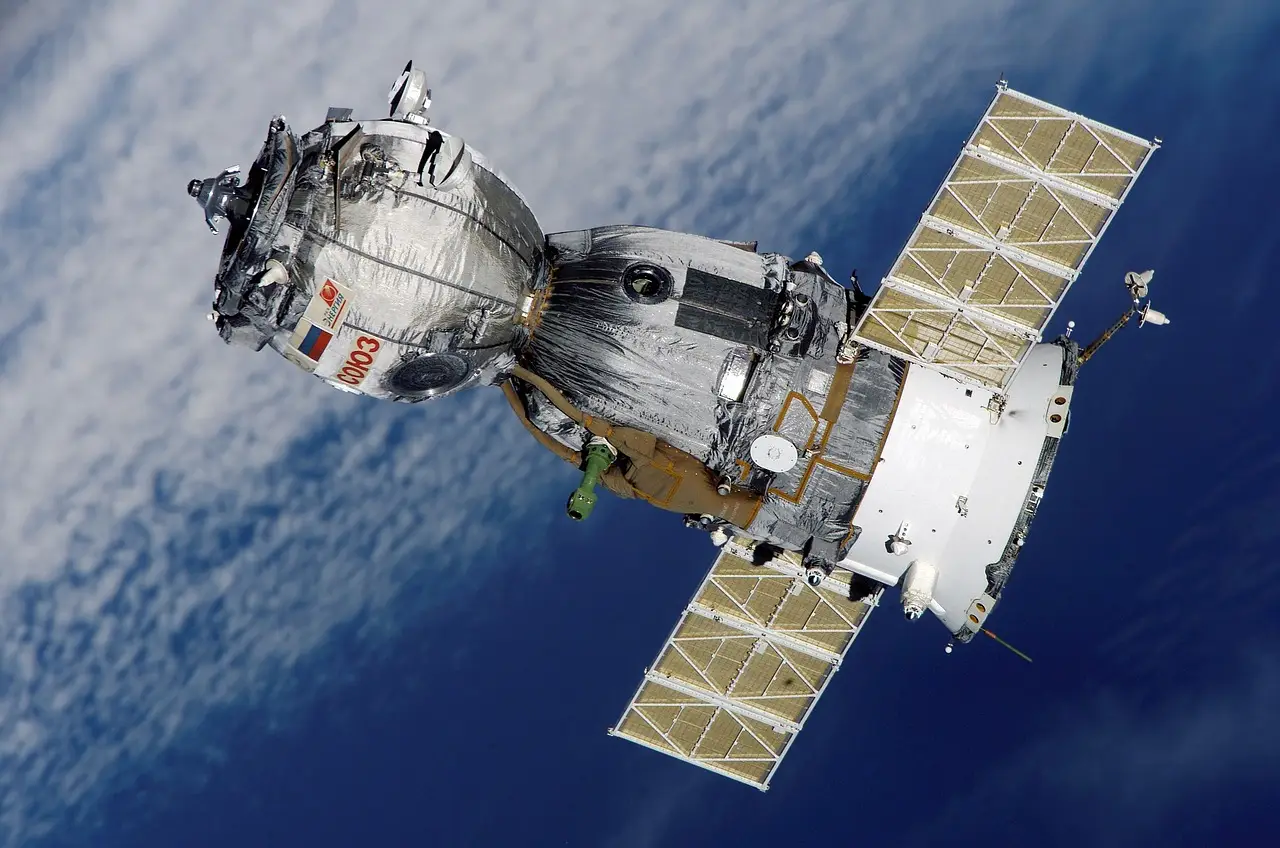
Umbra unveiled a 200-kg-class synthetic aperture radar satellite on Monday, Nov. 23, designed to collect hundreds of 25-centimeter images per spacecraft per day. The first model in the new Freetail family, Freetail 5 (FT-05), reaches resolution as fine as 5 centimeters, the company said.
Those are vendor claims, not flight data. The design exists on paper and in a factory, not in orbit. Umbra says the spacecraft will be launch-ready in the first quarter of 2028, with commercial availability by midyear and a larger constellation to follow. That is a roadmap, and a distant one — more than three years out.
What does the company promise?
CEO David Langan framed the pitch around per-satellite output. "The next generation of space capability will be measured by what each spacecraft can achieve," Langan said in the announcement.
The claimed specifications are specific:
- Four times the radar power of Umbra's current spacecraft.
- Twice the antenna area, with a 5-meter high-gain antenna built on Umbra's patented mesh technology.
- 20 square meters of deployed antenna area.
- Imaging bandwidth configurable up to 4 GHz.
- Hourly global revisit.
Umbra plans to fly Freetail in polar and mid-inclination orbits. Polar coverage serves high-latitude targets. Mid-inclination orbits improve revisit over populated latitudes. The mix suggests a constellation intended for persistent monitoring, not occasional tasking.
Notably absent from the announcement: any named customer, any contract value, and any per-image or subscription pricing. Umbra says the platform targets US and allied operational and research missions, which is a market description rather than a sales figure. Government demand exists, but the company offers no evidence of committed orders.
What missions does the platform claim?
The mission list is broad — perhaps too broad. Umbra lists multistatic imaging, formation flight, single-pass 3D imagery, non-Earth imaging, direct-to-theater downlink, hosted payloads, sub-centimeter coherent change detection, single- and multi-satellite search and geolocation, and wide-area maritime vessel search.
That spans intelligence, maritime domain awareness, space domain awareness and third-party payload hosting. Each mission type carries different certification and contracting burdens. The announcement does not say which of these missions the first Freetail units will actually fly, or when.
How does Umbra build it?
The company manufactures the satellites at a 50,000-square-foot facility in Goleta, California. Vertical integration is the stated strategy: Umbra says its flight software is entirely developed in-house and 90% of components are Umbra-built. The bus design draws on 14 prior missions.
That heritage is real, if modest. Umbra recently released first images from its 13th and 14th SAR satellites, Via Satellite reported, and has secured launch capacity for its next seven spacecraft. Fourteen flown missions give the company flight-proven hardware and software. They do not prove the fourfold power increase or the hourly-revisit architecture that Freetail 5 promises.
Is the 2028 timeline credible?
The company has flown hardware at a steady cadence, and its launch bookings cover seven future spacecraft. Those are confirmed facts. The Freetail specifications are not. A jump to four times radar power, a 5-meter deployable mesh antenna and hundreds of daily 25-centimeter images represents a substantial engineering step from a 14-satellite baseline.
The commercial SAR market is also getting crowded. Competitors are pushing resolution, revisit and constellation size simultaneously. Umbra's answer — more capability per satellite rather than more satellites — is a defensible cost argument, but the company has not published cost figures to support it.
The verdict on Freetail 5 arrives in 2028. Until then, the strongest confirmed facts are a factory in Goleta, 14 satellites flown and seven launches booked; the rest is a promise that hardware must still keep.
mlq.ai (Source)
More from Sophie Lindqvist
Show full bio
News editor covering money, funding and market shifts around Semiconductors, chip manufacturing, hardware, AI compute at Chip Dispatch.
1,270 articles